
Kiddipedia
Demonstrating a loving, healthy relationship to your children is one of the best gifts you can give them. What you both role model now becomes their blueprint for what a loving relationship looks like, and it’s worth providing positive opportunities to show them.
They’re watching, even when you think they’re not.
Valentine’s Day is a great chance to spend special time with your partner and remind them how much you love them. But it’s also an opportunity to show your children how love is expressed in healthy, everyday ways. The gestures you make, big or small, teach your kids that love is kind, respectful, and consistent.
Make It Fun, Break the Routine
Life as a parent is full of schedules, school drop-offs, work commitments, and household chores. Special days like Valentine’s Day give you permission to slow down, enjoy small moments, and add a bit of joy to the everyday chaos.
This can be as simple as saying “I love you” and “Happy Valentine’s Day”, or waking up a little earlier to cook heart-shaped pancakes for everyone. These small acts are more than cute, they show your children that love isn’t just about grand gestures, it’s about thoughtfulness, care, and shared experiences.
A Day to Celebrate Love in All Its Forms
Valentine’s Day is often seen as a day for couples, but it’s also a chance to include your kids in celebrating love. It’s an opportunity to model how affection, appreciation, and connection can be shown in many ways, through words, actions, and quiet moments together.
Research shows that children who witness healthy interactions between parents are more likely to develop emotional intelligence, empathy, and secure social relationships. Even small, intentional gestures of love leave lasting impressions.
Sometimes, the simplest moments are the most meaningful: a handwritten note, a heart-shaped breakfast, or a few minutes of undistracted attention. These experiences teach children that love is about kindness and presence, not perfection.
Ideas to Celebrate Love with Your Family
Here are a few ways to make Valentine’s Day, and every day, a little more special — not through perfection, but through intentional modeling of the kind of relationships you hope your children will one day have.
Date Night at Home
If a babysitter isn’t an option, resist the temptation to write the night off. Instead, signal to your children — gently and confidently — that your relationship deserves protected time.
When the kids go to bed, change the energy of the space. Lower the lights. Sit facing each other. Ask questions that aren’t about logistics.
Children who grow up seeing their parents intentionally reconnect internalise something powerful: love requires maintenance. Not drama. Not grand gestures. Just consistent tending.
From an attachment perspective, when children feel secure in their parents’ bond, their own sense of safety deepens. They don’t need to carry the emotional weight of holding the family together. They can just be children.
Leave Specific Notes of Appreciation
Instead of “Love you,” try:
“I noticed how patient you were this morning.”
“I love the way you handled that tricky moment.”
“You make our home feel calm.”
Specific acknowledgment strengthens emotional security because it tells your child — and your partner — that they are seen in detail, not just in role.
Research shows that children build self-worth through attuned reflection. When they hear what you value in them, their internal narrative shifts from Am I enough? to I am valued.
And when they see you express appreciation toward your partner, they learn that admiration is spoken, not silently expected.
Cook Together, Imperfectly
Heart-shaped pancakes are lovely. But the real magic is in the mess.
Let your child crack the eggs. Let the pancake flip badly. Let there be laughter instead of correction.
When children are invited into contribution, rather than managed for efficiency, they develop agency. They feel capable.
Family rituals — even small ones — create predictability. Predictability builds safety. And safety is the foundation of emotional regulation.
They won’t remember whether the pancake looked perfect. They’ll remember how it felt.
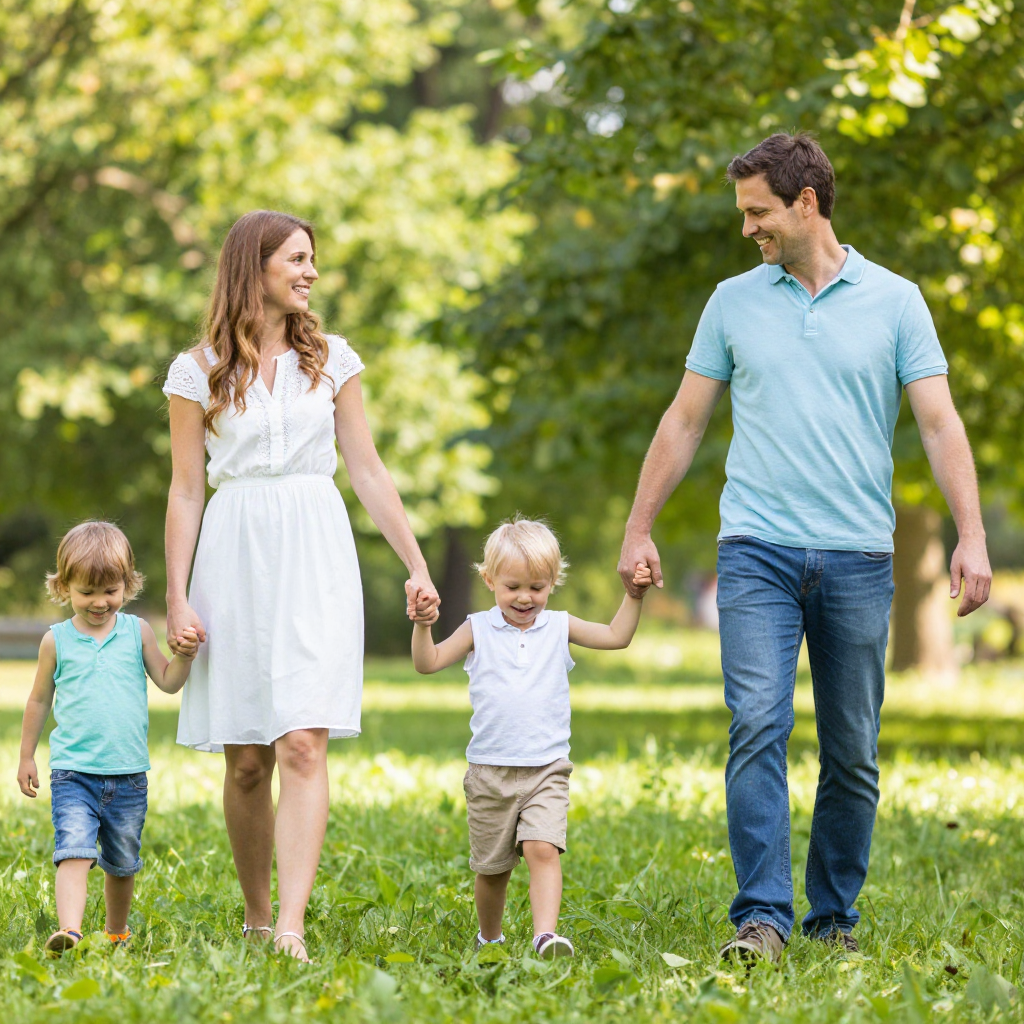
Take a Walk, Side by Side
Walking next to someone, rather than sitting across from them, naturally lowers defensiveness. It’s why some of the best conversations happen in the car or on a footpath.
Ask open-ended questions. Share your own reflections.
When children see parents walking and talking calmly together, they absorb a template for communication: connection doesn’t require intensity. It requires availability.
Time in nature also lowers cortisol levels — for adults and children. A regulated parent is a safer parent. And children borrow our regulation before they learn to generate their own.
Let Them See You Repair
This is the one most families skip.
If you disagree with your partner — and you will — let your children see the repair.
A calm, “I’m sorry for snapping earlier,” or “Thank you for hearing me out,” models something more important than constant harmony: healthy conflict resolution.
Children who see respectful repair learn that disagreement does not equal disconnection. That lesson alone can shape their future friendships and relationships.
Perfection is not the goal. Repair is.
Gift Thoughtfully, Receive Graciously
If your child makes a card or brings a small gift, receive it fully. Make eye contact. Express genuine gratitude.
Children learn how to give by watching how we receive.
When gifts are thoughtful rather than extravagant, they reinforce that love is relational, not transactional.
Unplug Without Announcement
Instead of declaring a digital detox, quietly place your phone in another room.
Sit at the table after dinner and ask each person to share one thing they appreciated about someone else that day.
Moments of undivided attention regulate a child’s nervous system. Eye contact. Tone of voice. Presence. These are attachment builders.
In a world of constant distraction, sustained attention feels like love.
Protect Couple Time Without Guilt
Let your children know, calmly and confidently, that your partnership matters.
“Mum and Dad are having some time together now.”
Children don’t feel threatened by healthy boundaries. They feel reassured by them. Clear roles create stability.
When children understand that their parents are partners — not just co-managers of logistics — they grow up with a clearer blueprint of adult love.
Why This Matters More Than We Realise
Children don’t learn about love from lectures. They learn from patterns.
They watch how you speak to each other when you’re tired.
They notice whether apologies happen.
They feel whether the home is tense or steady.
Secure attachment is built in ordinary moments — not grand ones.
When children consistently observe warmth, respect, repair, and presence, they internalise a quiet belief:
Love is safe.
Love is steady.
Love is something I deserve.
And that belief becomes the foundation of every relationship they build in the future.
Why Taking Time for Each Other Matters
Amid parenting, work, and household demands, it’s easy to forget to prioritise your partner. Valentine’s Day reminds us to carve out connection. Even short daily check-ins, a few minutes of conversation over coffee, strengthen your bond.
If you can arrange childcare, uninterrupted time together is invaluable. But even small gestures at home, a shared activity, quiet moment, or special meal, reinforce that relationships are worth nurturing.
Psychologists agree that children who see consistent, respectful, and affectionate relationships at home are more likely to develop strong social and emotional skills, better problem-solving, and healthier friendships in the future.
Valentine’s Day Is About More Than Gifts
Chocolates and flowers are lovely, but the real value is time and intentionality. You don’t need an elaborate plan; it’s the small, thoughtful gestures that have the most impact. Your children notice when you show love and appreciation, learning that love is active, not just ceremonial.
Love Should Be Celebrated Every Day
Valentine’s Day is a reminder, but love is a year-round practice. Showing kindness, respect, and support every day sets a lasting example. Your children learn that relationships aren’t perfect; they require effort, understanding, and care.
By consistently modelling love, you teach children resilience, empathy, and healthy ways to manage conflict. They’ll grow up knowing that love is about teamwork, respect, and connection, not just grand romantic gestures.
The Long-Term Impact on Your Family
Prioritising love and connection strengthens your relationship and creates a nurturing environment for your children. They feel secure, supported, and valued, learning skills they’ll carry into their own relationships.
Every small gesture, holding hands, a kind word, a shared laugh, is a building block for your child’s understanding of healthy relationships. You’re laying the foundation for a family culture of love, respect, and kindness that will last for generations.
Remember, it’s not about perfection, it’s about presence, consistency, and intention. The little things matter more than we often realise.
You may also like to read:
Valentine’s Day is a chance to role model a loving relationship to your children
8 Ways to Model a Healthy Relationship to your Children
Why Valentine’s Day Is Often a Missed Opportunity for Dads
How to positively demonstrate your relationship to your children
Children Learn How to Have Adult Relationships from Observing their Parents