
Kiddipedia
Amidst the chaos of juggling work, family life, and everything in between, one topic often gets put off for another day: teaching the kids about money. Yet doing so could be costing them – and you – dearly.
That is because our core beliefs are formed by the age of 7 with our childhood brains absorbing everything like a sponge with no filter. Core beliefs are the guidelines we have told our subconscious that we want to live by, so it will do everything in its power to keep them safe and real. Healthy beliefs set us up for the rest of our days. Conversely, poor beliefs can lead to lifelong bad decisions.
Where money is involved, core beliefs can mean the difference between financial independence and never really leaving the nest, crimping their parents’ lives and retirement in the process. To avoid that fate and set them up with healthy habits for life, here are some easy goals to get started:
Goal #1: Learn the concept of money
Think about money from a toddler’s perspective: to buy something at the shops, we tap a plastic card. To get cash out, we press a few buttons and a machine in the wall spits it out. Children, especially when young, need to see and touch something to properly understand it. Show your kids that stuff costs money – have them handle cash, take it to the store and physically hand it over. They will soon learn this is a trade – money is exchanged for things. And once spent, it is gone. Their own bank account can help kids develop ownership over their money. Look for high-interest savings accounts with zero fees. A debit card is generally unnecessary before their teenage years.
Goal #2: Develop cashflow awareness
“Money doesn’t grow on trees!” Do you remember hearing this? For kids though, it essentially does – unless you expressly teach them where it comes from and where it goes. Explain:
-
How you earn money (i.e. by working)
-
That you receive a certain amount each payday.
-
How your income needs to cover essentials (food, clothes, housing) and whatever is left can go towards things you enjoy.
-
The differences in ways to pay – just because you don’t use physical cash, doesn’t mean you aren’t spending your money.
While shopping, explore different prices, compare price deals, and calculate discounts.
When paying bills, show your kids an energy or phone bill and explain how long you had to work to pay that bill, helping them build the connection between work and spending.
Goal #3: Involvement in decision-making
There’s no better way to learn than by doing. Get your kids involved in making decisions about spending and saving, such as by:
-
Checking deals at the supermarket
-
Price-matching at different stores
-
Planning an event like their birthday party
-
Updating the family budget together
-
Brainstorming ideas to save money
It’s easier to get their buy-in if they can see cause and effect. For example, “we could afford this holiday if we save $X”.
Goal #4: Learn to earn
Linking pocket money with household chores is a valuable way of teaching kids the effort required to earn money and hence to appreciate its value. Adapt the chores to their age and ability. Set boundaries on what tasks are payable versus expected (such as making their bed or tidying their room).
Apps like the pocket money calculator on Spriggy can help determine how much is suitable. Withhold pocket money for tasks that are unfinished or done poorly – teaching them that actions have consequences and that we only get paid when work is done to a certain standard.
Goal #5: Understand needs versus wants
Managing money effectively means knowing the difference between ‘needs’ and ‘wants’. Discuss these with your kids and encourage them to think before spending. This helps them:
-
Manage expectations against reality
-
Avoid the trap of “keeping up with the Joneses”
-
Practice gratitude for what they have
Goal #6: Start saving
Give your kids incentive to save, help them set realistic goals, and teach them to prioritise spending. Free tools like Moneysmart’s savings goal calculator can help them track progress.
Explain the concept of opportunity cost – “if you buy this video game, you won’t be able to buy those shoes”. When your child wants to make an impulse buy, remind them of the goal they’re saving for and work out how much longer they’ll have to wait if they spend money now.
In truth, most adults haven’t mastered all (or any!) of these goals. Helping your children do so from a young age will put them well on their way to a life that’s healthy, wealthy, and wise!
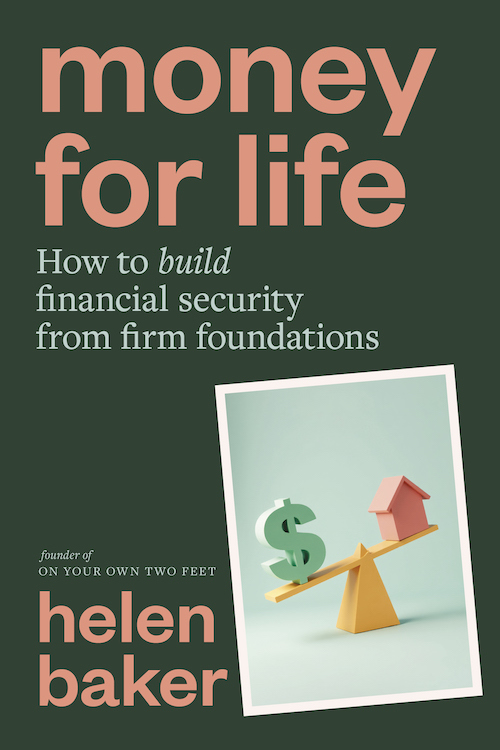
 Helen Baker is a licensed Australian financial adviser and author of the new book, Money For Life: How to build financial security from firm foundations (Major Street Publishing $32.99). Helen is among the 1% of financial planners who hold a master’s degree in the field. Proceeds from book sales are donated to charities supporting disadvantaged women and children. Find out more at www.onyourowntwofeet.com.au
Disclaimer: The information in this article is of a general nature only and does not constitute personal financial or product advice. Any opinions or views expressed are those of the authors and do not represent those of people, institutions or organisations the owner may be associated with in a professional or personal capacity unless explicitly stated. Helen Baker is an authorised representative of BPW Partners Pty Ltd AFSL 548754.