


kiddi
You can see it on the balconies of Bondi, on the verandahs in Fremantle, and along Fitzroy’s narrow terraces, where succulents share space with herbs and hanging vines catch the light. Australians are turning to plants in record numbers, bringing softness, texture and a sense of calm into kitchens, bathrooms, bedrooms, and anywhere a pot will fit.
But which patch of our sunburnt land is the most plant-obsessed? Aggregated data offers a snapshot of Australia’s top plant-loving regions—and it’s blooming with insight.
The Big Picture: Which State Buys the Most Plants?
Let’s start with the numbers. According to the Nursery Industry Statistics Survey Report 2021–22, Australians spent around $2.6 billion on plants in a single year. That’s a lot of soil, pots and shelf space.
One state, however, stands tall like a flowering gum in the backyard.
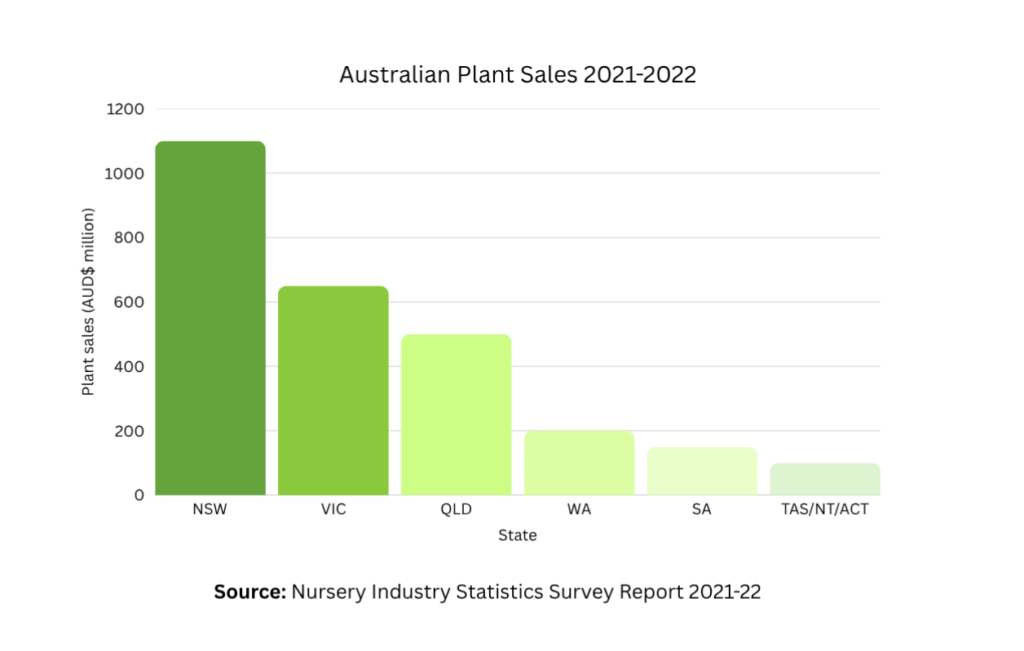 Source: Nursery Industry Statistics Survey Report 2021–22 (greenlifeindustry.com.au)
With over $1.1 billion in sales, New South Wales officially takes the title as Australia’s greenest state. From balcony jungles in the east to suburban citrus trees in the west, NSW has fully embraced its inner plant parent.
Why Now? The Post-Pandemic Plant Surge
When lockdowns hit, Australians turned inward. Our homes became everything—office, cafe, gym and retreat. And in that reimagining, plants stepped up.
According to the Greener Spaces Better Places Plant Trend Report 2022:
- 37% of Aussies said plants brought colour and life into their homes
- Indoor greenery helped soften hard surfaces, screens and routines
- Gardening was seen as a form of care—of nurturing something in uncertain times
This moment of pause sparked a gardening boom. Whether you had a backyard or a borrowed windowsill, the urge to green your space took root. And for many, it stuck.
Meet the Plant Parents (and Their Learning Curves)
Millennials have led much of the indoor plant wave, proudly claiming the title of “plant parent.” But as many know, enthusiasm doesn’t always mean instant success.
Global data suggests:
- The average millennial has unintentionally killed seven houseplants
- Around 50% of beginners lose more than half their plants in the first month
This isn’t failure—it’s feedback. Maybe the pothos needed more light. Maybe that maidenhair didn’t appreciate being right next to the toaster. Gardening, indoors or out, isn’t about perfection. It’s about building a relationship. And the good news? You can get better with every plant.
But if you’ve had one too many fern funerals—or your lifestyle just isn’t syncing with a watering schedule—there’s no shame in faking it.
Where Real Meets Realistic: The Rise of Artificial Greenery
More and more Australians are turning to artificial plants, because sometimes you just want the look without the work.
Artificial greenery offers flexibility for spaces where live plants struggle to thrive. Think dark hallways, steamy kitchens, or bookshelves that are more decorative than light-filled. They’re a welcome option for renters, frequent travellers, or anyone who simply prefers a “set and forget” approach to styling.
Following the 2020 bushfires, sales of artificial plants increased by 15% as fire-safe landscaping became a priority. Since then, demand has continued to climb. As of 2025, there are now more than 200 suppliers across Australia—many of them small, independent makers focused on natural aesthetics, such as The Plants Project.
Artificial plants have become go-tos for:
- Renters dealing with tricky light and limited space
- Households with curious pets or allergy concerns
- Busy people who want green vibes, minus the to-do list
With lifelike textures, sculptural forms and zero maintenance required, it’s easy to see why these plants have become a go-to way to add greenery and character to every nook and cranny.
Greenery as a Design Essential
One of the most exciting shifts in recent years is how plants are being treated as part of the design language of a home. They’re not an afterthought. They’re the layer that adds softness, height and movement.
Designers are now placing plants like artwork. Think:
- A bird of paradise to anchor a hallway
- A trailing pothos to lead the eye along a shelf
- A soft olive tree in the corner of a sunroom or home office
And for those spaces where light or layout limits what’s possible? Artificial options offer total freedom. They look great in wall planters, baskets, or ceramic pots—especially when styled with other natural textures, such as wood, linen, or terracotta.
It’s not about being a purist. It’s about creating a space that feels alive and sometimes that means mixing real with realistic.
The Social Effect: From #PlantTok to Backyard Veggie Beds
Social media has played no small part in this growth. TikTok trends like #PlantTok and Instagram’s feed of shelfies and garden makeovers have inspired a generation to give greenery a go.
From propagation experiments to indoor plant shelf styling, these platforms have turned gardening into something joyful, aesthetic and accessible. You don’t need acreage or deep expertise—just curiosity, some light, and a pot that sparks joy.
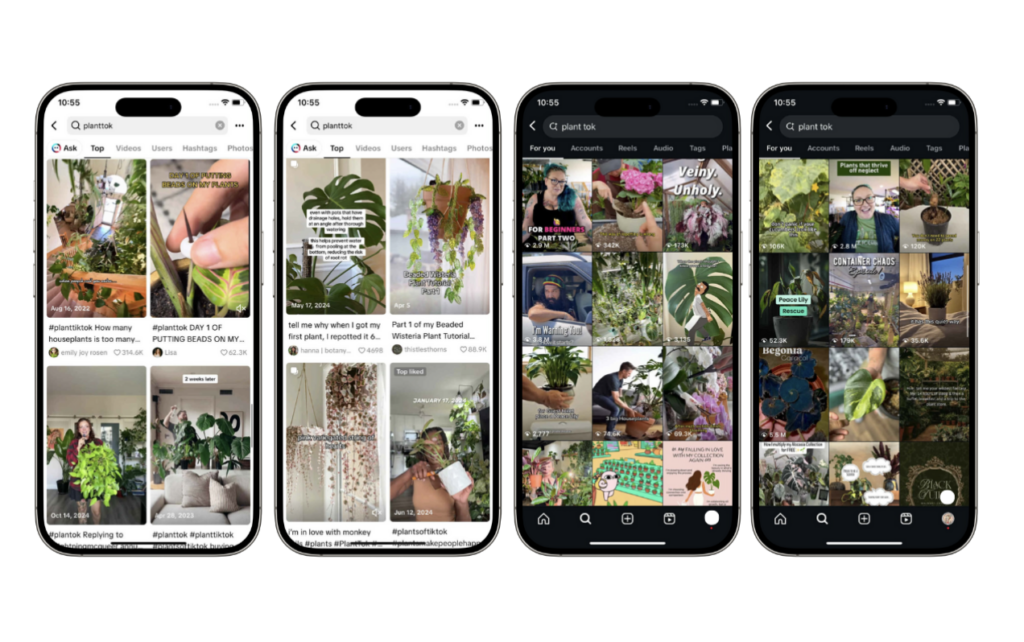
(Image: Social media influence of the green trend)
What’s more, it encourages people to share not just the wins, but the losses too. Dead leaves. Overwatered ferns. And in doing so, it’s made plant care feel more forgiving and more fun.
As the data shows, Australians aren’t just decorating with plants. They’re shaping their homes, routines, and moods around the presence of greenery. Whether it’s the satisfaction of watching something grow or the simplicity of styling with low-maintenance pieces, plants have become part of how we create comfort and express care in our spaces.


