The extent to which separation anxiety affects children differs. Some children feel uneasy and need lots of reassurance. Some experience full-blown anxiety about separation – causing physical symptoms like feeling sick, and getting a fight or flight response. It’s common that this leads to school refusal too.
This can have a big impact on parents and families. Life is busy to start with, and when children don’t want to say goodbye and go where they need to go, it gets extra stressful. When you’re rushing about in that morning routine is not the time to problem solve – there’s not enough time and emotions are running high. Putting some practical strategies can help make the process run smoother.
Here are some tips to manage when your child doesn’t want to separate from you.
As a psychologist I’m always saying that it’s better to do things to improve the problem at a time the problem is not actually happening. Like I said earlier, when things aren’t going well and everyone is stressed isn’t a great time to solve anything. Here are some things to do to help the separation worries ahead of time:
-
Talk to your child about how even when you’re apart, you are connected through the relationship you have. Through loving each other even when you’re apart. Books are a great way to introduce concepts and start conversations with your kids.
Owl Babies by Martin Waddell In this book some baby owls wake one night to find their mother gone and worry until she inevitably returns to them.
The Invisible String by Patrice Karst This book talks about how people who love each other are always connected by an invisible string – no matter how far apart they are.
The Kissing Hand by Audrey Penn In this book a little racoon is starting school and worried about being apart from its mother. The mother gives the racoon a kiss in its hand as a way of staying connected through the school day.
-
Develop a routine about connection. Having a connection between you and your child can help them feel connected to you when you are apart. This can be something like:
- Giving your child something of yours to take with them, so they can use it for comfort (like a scarf, hat etc)
- Have something the same that you both use – so your child can think about you, and know that you’re thinking about them. It could be a matching friendship band, t-shirt or something similar. My daughter and I have the same coffee cups. She doesn’t take it to school obviously, but when I take mine she knows I’ll be reminded of her.
- Use the kissing hand strategy from the book above – give your child a kiss on their hand that they can ‘take with them’. Beware this can sometimes lead to kids not wanting to wash their hands to wash it off! The kiss might need to be somewhere else in that case.
At the moment, here’s what you can do:
- Acknowledge your child’s feelings. The “You’ll be fine” approach doesn’t typically work – and reassurance actually can make anxiety worse. That’s because children don’t feel heard and listened to like you don’t really get it. Think of this in the context of yourself – if you’re all stressed out and someone says “Just don’t worry about it!”, is that helpful?! Think instead about acknowledging what your child is feeling, by saying things like “I see you’re worried about it – I know that must be really hard”.
- Acknowledge your child’s skills. The key to anxiety is to continue despite mild anxiety so that over time kids learn that it’s something they can handle. Acknowledge your child’s strengths here – like “You can handle doing this today, even though it’s difficult”.
- Just stick to the plan and execute it. This is not the time to be discussing or problem-solving – it just prolongs the situation. Reassure your child about when you’ll reunite and walk away. This is such a hard step!
You can read more about building a strong bond here: Hold On To Your Kids.
If you need more help, here are some links to more information. Support from a psychologist can help guide you through this time as well.
]]>To help you ease your child’s separation anxiety, we have listed 10 tips which might be useful for both parents and child.
- Set up a pattern for the day.
Setting up a routine is important for younger babies it will help them realize that within the day you as a parent will need to do other things rather than always being around. If you need to go every morning for work, set up a pattern for the day that you eat breakfast together and prepare them for the day like washing and dressing up for their daily activities. You can then start your day for work and be back for them and they will see you maybe before dinner. This will be a daily routine for them for the weekdays as you go about your work.
- Say a quick goodbye.
If you’re going to say goodbye, make it quick. Don’t overdo it. Don’t say long goodbyes as they would only trigger the anxiety even more. Keep a big smile and a happy mood that will show them you are confident in leaving them with somebody you can trust looking after them.
- Let your child know when you are leaving and when you will be back.
If you are going away for a few days let your child know of your plan. Tell them in ways they understand like telling them how many days you will be gone in ways they understand. You may tell them that you will be gone for two sleeps, which may mean two nights for them.
- Make sure your child is engaged in an enjoyable activity when you leave.
Let your child do their favorite activity that they enjoy doing when you need to leave them. This will distract them from the stresses of you leaving them. It will keep them preoccupied as they are concentrated on this enjoyable activity. Being with their favorite toy or just watching a few kiddie shows will help them be distracted and you can make your quick goodbye and go.
- Have a happy and relaxed look when you leave.
Put on a happy face and a relaxed look when you leave your child. This could give them a feeling that everything is good and that everything will be the same even if you have to leave for a while.
- Make sure to keep things familiar for your child.
Make sure to keep familiar things for your child to feel comfortable. If you are going to take them to grandma’s house make sure they are together with their siblings or a favorite toy or book and are familiar with the place and people you are leaving them to.
- Tell your child what to expect.
If you are leaving your child at home, tell them that they will be sleeping home with grandma or grandpa and or the caregiver. Explain to them why you need to go and assure them that you will be back soon. If that is for a few days, tell them that you’d be gone for a few sleeps but will be back soon. Then if possible after being away for a few days, as soon as you’re back, spend time with them. Do an activity that you have never done before and ask them what they did while you were away and you can do the same for them.
- Respect and listen to your child’s feelings.
Listen to what your child has to say about his feeling on separation. Understand their feelings and try to comfort them in the best possible way. Assure them that they are going to be alright and that in time he’ll get used to the routine.
- Keep in touch with your child.
Whenever you have a chance to call them, do so. Either a video call or a simple phone call, your child will definitely be excited to hear from you. It will let them know that you truly care for them even if you are far away. Just be brief and ask how they are and what have they done and you can do the same.
- Start early.
It will always be a good thing to start early. Maybe as early as 6 months, you can start practicing being away for a little while. Letting others be with them like Grandma or Poppy, while you do the groceries or do some household chores. They will begin realizing that there are other people there that will be around for them and be familiar.
Separation anxiety could be eased if both of you and your child will have a routine pattern for the day and the best way is to start early on. It’s felt by both parent and child and admit it we can’t always be with them 24/7. Thus, these tips can help out ease that feeling.
You may also like to read:
]]>
Nervous about your child starting at an early learning centre or kindergarten? Many parents are. Below are some tips from a psychologist, to ensure it’s a smooth transition for your little one.
Settling in can be a challenging time for some families, perhaps because you have a sensitive, very attached child, are anxious yourself or just aren’t sure how to manage the transition.
If it makes you feel any better, you’re in good company. Child psychologist Lisa Ford from The Resilience Co says that separation anxiety is one of her most popular talks when presenting to parents. “It’s a common problem and it can be just as distressing for the parent as it can be for the child,” she explains. “It’s not easy leaving your child when they’re upset and clinging to you; it’s an emotionally difficult journey, so of course people want tips and strategies.”
Why does separation anxiety occur?
It’s actually the most prevalent anxiety condition in children under 12, mainly in the 2-3 age group and then later when children start school, says Ford. “The temperament of the child can be a significant factor; fairly confident or independent children may have no trouble at all separating from mum or dad. However, separation anxiety can affect any child.”
Ford adds that separation anxiety can occur for many reasons. “It can also be triggered by changes such as moving house, a big holiday or family changes.”

3 ways to help your child adjust
There are lots of things you can do (and things you shouldn’t!) to help prepare your child for the transition to early learning or kindergarten – and lessen the impact of separation anxiety.
- Talk about it in the right way “You want to be really positive and upbeat about this wonderful experience they’re going to have,” says Ford, “but don’t overdo it or provide too much information – children will sense if you’re feeling anxious.”
- Help them get used to being away from you “Expose your child to gradual separations, leaving them with a grandparent or family friend for an hour or two. Early learning centres allow settling in periods where the child can go for short stretches of time.”
- Encourage their independence “Time alone for your child is great. Little things like getting them to go and check the letterbox on their own or playing in the backyard on their own – while you monitor them, obviously – can be a really big factor in helping your child learn to be without you and feel safe and confident.”
What can you do to support your child?
How you react as a parent when dropping your child at an early learning centre or kindergarten is key, says Ford, and some things can exacerbate the problem.
“Going back when we see they’re upset may send the message to our children that we don’t trust them to cope,” she explains. “Another thing we might do is avoid the separation. We might think, ‘Oh it’s too difficult’ so we’ll stop sending them – but a child that’s struggling to separate actually may need more exposure to that, not less, to help them adjust.”
Try not to fall into the trap of reassuring your child too much or give too many instructions to the carer or the person you’re leaving your child with. “That can make your child overthink things and worry that mum or dad leaving is a really big deal,” says Ford.
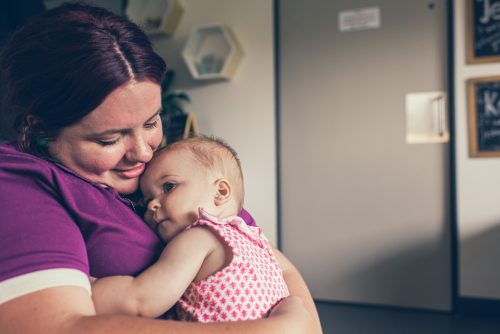
5 rules for drop-offs and pick-ups
If your child is suffering separation anxiety, there are several things you can do to help them get through it. Below are some tips:
- Talk to the centre or kindy. Working together with your children’s teachers and educators is essential, as they’ll have been in this situation many times before and will be able to offer advice and guidance.
- Have a goodbye ritual. “Saying goodbye, in the same way, provides familiarity and comfort for your child. Rather than a hug – because they’ll cling to you – try including a kiss on the cheek or a high-five and if they’re upset, words like, ‘I can see this is tricky for you, but I know you’re going to have a great day! I’ll see you after nap time’. Children don’t have a great sense of time so give them a point of reference as to when you’ll return.”
- Be positive when you arrive. “You want to acknowledge that it’s hard for your child but also show them that you trust them to cope with it.”
- Avoid sneaking away. “It might feel like a victory at the time but what it does is create mistrust and really increases that anxiety and clinginess.”
- Try not to linger when leaving. “Keep your farewell simple, straightforward and upbeat. I know that’s so hard if your child is upset, however, show them you’re feeling calm and confident about this environment and about leaving them. Show them your smile as you walk out the door.”
At pick up time, be happy “When you walk in the door at the end of the day, smile at your child and spend extra time together while you encourage him or her to talk about their experiences.”
Looking to enrol your child in a caring and nurturing environment?
Goodstart Early Learning partners with families and children transitioning into our centres who are suffering from separation anxiety.
Talk to us about how we can help make this process easier for you and your child.
To find a centre and book a tour, contact Goodstart Early Learning.: www.goodstart.org.au/enrol or find us on Instagram or Facebook.
You may also like to read:
Choosing childcare for your child
Ways to Help out the Grandparents who Help with Regular Childcare
An explanation of the Additional Childcare Subsidy for when the Childcare Subsidy isn’t sufficient?
]]>So why does separation anxiety occur?
Anxiety separation can seem to come out of nowhere and there can be very little warning that your child is going through this developmental change until the first tantrum or tears begin. Generally, separation anxiety occurs when children become more mobile (crawling and walking) and they come to realise that they are a very small person in a great big world. Separation anxiety occurs because our children become cautious or worried about leaving the safety of their parent’s arms (literally and figuratively). There is a lot happening for our kids around this age, in addition to separation anxiety they are developing something called object permanence. This refers to their understanding that when something disappears it continues to exist, despite them being unable to see or hear it. This is why kids love peekaboo –first you are there in front of them and then you disappear, only to reappear again as if by magic.
Anxiety and worries are a normal part of childhood; however, separation anxiety can seem to appear out of the blue and without warning. Children become more mobile around 8 months old and they suddenly realise that the world is a very big place, and they are very little people. Separation anxiety is an essential fear because it ensures our children are cautious about leaving the safety of our side. There is also a stage of development when children discover object permanence which refers to the understanding that objects continue to exist despite not being able to see, hear otherwise sense them. This is why peekaboo is such a fun game for our little ones, they are truly overjoyed at the trick mum and dad can do, hiding behind their hands and completely disappearing…magic! However, until children learn object permanence (that things exist despite them not being visible) they can be truly terrified that when you leave them you may cease to exist, and they also don’t fully understand when or if you will return. When your child learns about object permanence their separation anxiety will start to reduce as they will realise that you haven’t disappeared for good, you are just somewhere else.
So how can you support your child with separating without distress?
- Transition items help – does your child have a safety item or a lovey? Bringing this along to a new place, or when around new people to give them something consistent and safe. It will help them feel calm and settled despite the newness.
- Start slow – if you know the will be starting day care or are being babysat for the first time see if you can slowly transition them into it. Do a drive by, show them pictures, have a quick meet and greet before the first day you leave them. Sometimes this is not possible (so don’t judge yourself or worry), but if you can do this it can definitely help as the new place and people won’t be entirely new.
- Practice leaving them – set them up somewhere safe, and then do things like shutting the door behind you when you need the toiler, letting them know that you need to leave the room for a minute or two. These are really low-key practice attempts at getting them used to the idea of separation.
- Do not sneak away. This just increases your child’s insecurity and fear that you might leave and never come back. Although it might feel easier to dart away while they aren’t looking to avoid the tears and emotions, but in the long term this will just make their anxiety worse.
- Self-efficacy and self-esteem are important even in very young children. Kids who have high self-esteem and believe in themselves (self-efficacy is the perception and belief that they will be able to meet goals/achievements) are more resilience and better able to cope with independence. You can help them increase their self-belief by allowing them to make choices (age and developmentally appropriate of course) – things like; picking their clothes for the day, deciding between two options for dinner or lunch. And encourage them to start taking responsibility for some of their independent living skills, including; trying to brush their teeth (always finish the job for them, and don’t let them walk about with a toothbrush in their mouth), put on their own jumper, feed themselves etc.
- Even with very small children it’s important to build their self-esteem and self-efficacy (belief that they can achieve something) so they have the confidence to cope with increased independence. You can set them tasks or objectives (asking them for help with something you are doing, or independent self-care activities) which are developmentally age appropriate so that they feel a sense of achievement and capability. Or you could support them to make age-appropriate choices, i.e., what dish (give two options) do the want you to cook for dinner? What pair of pants do they want to choose between?
It’s natural to want to want to protect your child, so supporting them to become independent and manage adversity is important. However, this can be a tough developmental stage for parents, so ensure you take care of yourself, be compassionate and remember that it’s not a weakness to seek support if you need help or guidance.
Ehrenreich, J. T; Santucci, L. C.; Weinrer, C. L. (2008). “Separation anxiety disorder in youth: Phenomenology, assessment, and treatment”. Psicologia Conductual. 16 (3): 389–412.
Sophian, C.; Yengo, L. (1985). “Infants’ understanding of visible displacements”. Developmental Psychology. 21 (6): 932–941.
]]>Even though separation anxiety is a normal stage of development it is very difficult to cope with.
Being empathic to the child in supporting them through the anxiety and help them build resilience.
On arrival at daycare or school spend some time to encourage your child to get involved with the other children and activities, get your child doing an enjoyable activity before you leave, although it can be easier said than done.
A goodbye routine is a starting point but try to keep it short and sweet. Rituals and routines are reassuring and can be as simple as a short hug and special wave and a goodbye kiss. Talk to your teacher and get them to help with the disentangling.
Keep it short and sweet.
Leave quickly and don’t stall but again this is easier said than done.
Even when your patience is airing thin try to keep a relaxed and happy look on your face when leaving. If you seem worried or sad, your child will get more upset and worry about you. No matter how frustrated you feel, avoid getting angry and criticising or being negative towards your child.
When you are stressed and frustrated you highly sensitive will pick up on your energy. So try to stay calm and take some deep breaths.
Let your child take something they love from home, like a teddy bear, or a photo of mummy or a special bracket or necklace. These objects will help your child feel safer. Send notes and drawing for your child to read at lunchtime. You can place a note or drawing depending on age for your child their lunch box. “I love you and miss you can or a drawing will reassure your child.
When to get help
If crying, tantrums, and clinginess continued for weeks and months it is a good idea to seek help. It is also beneficial for me just to talk about it because it can cause much stress to the parents.
Separation anxiety occurs because a child feels unsafe in some way.
How to help your child with separation anxiety can be as simple as listening to your child and respecting their feelings as being listened to can have a powerful healing effect.
Give your child the time to talk about their feelings.
Give recognition by praising your child’s efforts at being independent.
Focus on positive reinforcement.
Reward your child’s efforts even small steps in the right direction should be praised.
Learn as much as you can to educate yourself about separation anxiety. The better you understand how your child is feeling the better you will be at supporting their struggles rather than letting your frustrations out on them.
Eugenie Pepper
Clinical Hypnotherapy, Counselling, Applied Psychotherapy
]]>