
Kiddipedia
Keeping your child’s room organised can sometimes feel like an endless battle. Between the steady stream of new toys, school supplies, clothes, and craft materials, clutter can pile up quickly. A messy room can make it harder for kids to focus, enjoy playtime, or even get a good night’s sleep. But with the right approach, you can transform their space into a tidy, functional, and fun environment that encourages responsibility, comfort, and creativity.
Here are practical tips to help you manage the chaos, store old toys thoughtfully, and create a room your child loves.
1. Declutter with Play and Purpose
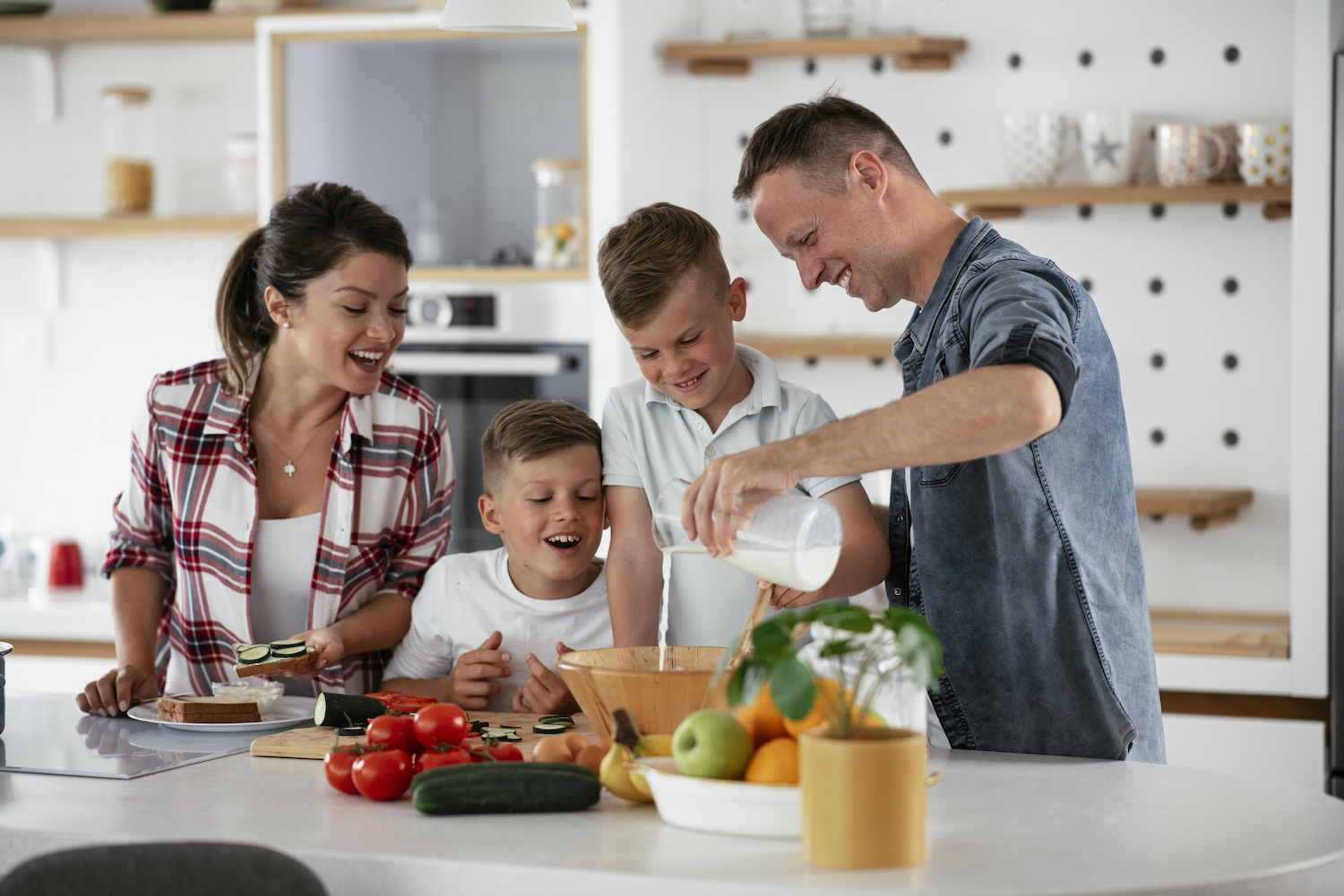
Before diving into organisation, start with a decluttering session, and make it fun! Sit down with your child and sort through their belongings together. This not only helps clear the space but teaches decision-making and responsibility.
Try setting a timer, playing upbeat music, and rewarding each “done” pile with stickers or high-fives. Use simple categories like Keep, Donate, or Discard to make choices easier. Old toys that haven’t been touched in months might be perfect candidates for donation or storage.
Professional organiser Julia Williamson reminds us that children tend to have less emotional attachment to items than adults, so forming early habits like “one-in, one-out” can help keep clutter in check. She suggests making decluttering a regular routine to build lasting habits.[1]
2. Why a Tidy Environment Matters for Young Minds
Did you know that clutter doesn’t just make rooms look messy, it actually affects your child’s ability to focus? Neuroscience research shows that visual clutter overloads working memory and drains concentration. A study from Princeton University found that cluttered environments reduce attention performance even in adults.
As neuroscientist Sabine Kastner explains:
“Visual clutter competes with our brain’s ability to pay attention and tires out our cognitive functions over time.”
Creating a neat, organised space helps kids process information more quietly and efficiently, boosting their learning and calmness.[2]
3. Create Dedicated Zones for Different Activities
Breaking the room into clear zones makes organisation easier and encourages healthy routines. Here are some zones to try:
-
Reading Corner: A cosy chair with a small bookshelf at eye level and soft lighting invites quiet time and fosters a love of books.
-
Craft Zone: Store supplies like markers, paper, and scissors neatly in labelled drawers or jars with a cleanable surface for mess.
-
Play Area: Use open bins or a toy chest on a soft rug to keep toys accessible but contained.
Visual boundaries like rugs, bean bags, or lighting help children understand where each activity belongs, making tidying up a natural next step when playtime ends.
4. Choose Storage That Grows & Adapts
Invest in storage solutions that change with your child’s needs. Modular shelves, adjustable closet organisers, stackable bins, and under-bed drawers are versatile choices.
Clear or picture-labelled containers help younger children know exactly where things belong, encouraging independence and confidence in tidying up. This way, kids feel empowered to manage their space.[3]
5. Store Old Toys with Purpose
Old toys often hold sentimental value or might be saved for younger siblings. To keep your home clutter-free while preserving these treasures, use labelled bins, clear containers, and keep an inventory list.
For families with limited space, off-site storage options like All in Self Storage offer a practical way to store keepsakes, especially items saved for young children, neatly and accessibly until needed again.
6. Respect Sentimentality with Smart Storage
While it’s important to honour your child’s keepsakes and seasonal items, it’s equally important they don’t take over the room. Transparent boxes and inventory sheets help you keep track without clutter.
This way, special items remain safe and easy to find, without overwhelming everyday spaces.
7. Age-Tailored Organisation Tips
Every age group benefits from different organisational approaches. Here’s a handy guide:
| Age Group | What Works Best |
|---|---|
| Toddlers (1–3) | Colourful, low bins; picture-word labels; sorting as a playful activity. |
| Preschool (3–5) | Simple “keep or donate” decisions; turn tidying into a fun game routine. |
| Early School (6–9) | Rotate toys weekly; give shared responsibility for one storage area. |
| Tweens (10–12) | Personalise storage spaces; be involved in decisions about keeping or donating. |
Gradually building independence one small step at a time.
8. Add Personality and Calm with DIY & Decor
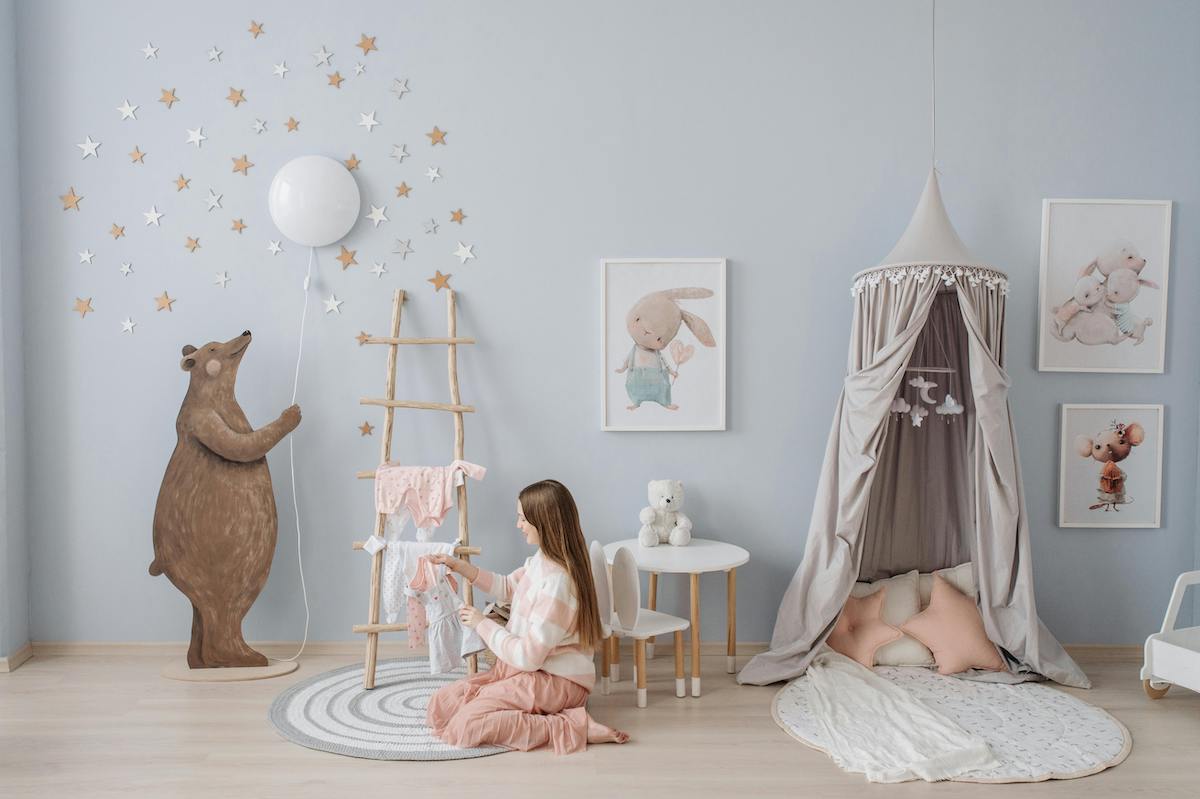
Encourage kids to decorate their own storage boxes with stickers, paint, or washi tape for a sense of pride and ownership. Adding natural touches like a green plant or a nature-themed poster to the reading corner can calm and improve focus — research shows natural elements help restore attention.[4]
9. Real Talk: Celebrate the Messy Moments
Organising your child’s room isn’t about perfection—it’s about progress, patience, and plenty of laughs along the way. When the floor ends up buried in toys again, don’t see it as a setback—it’s just part of the journey! Every “toy avalanche” or surprise pile of Lego bricks is a chance to teach your little one about responsibility, teamwork, and resilience.
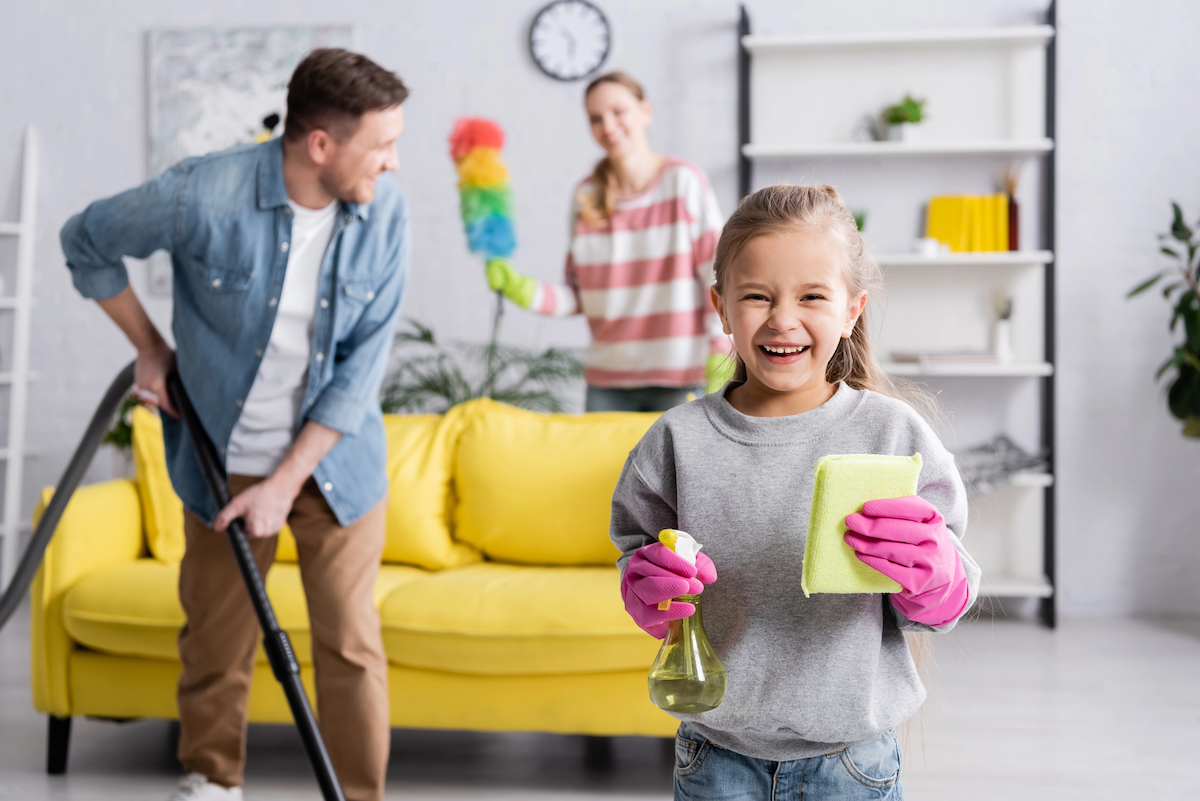
Keep things light by using fun, imaginative language during clean-up time. Challenge your child to beat the “tidy-up timer,” or turn picking up toys into a playful mission like “rescuing the lost plushies” or “battling the clutter monsters.” Laugh together, celebrate small wins, and remember: these everyday messes are the moments that make your family story unique and unforgettable.
Parenting expert Dr. Laura Markham reminds us:
“Kids learn best through play, even when it’s about cleaning up. When you make tidying a game filled with joy and encouragement, children develop lifelong skills around responsibility without resistance.”
— Dr. Laura Markham, Aha! Parenting
So, embrace the mess, make it fun, and enjoy the journey of building habits that really stick!
10. Tiny Actionables That Make a Big Impact
-
Start small: tackle one drawer, one shelf, or one bin at a time.
-
Make tidying a short daily routine to build momentum.
-
Downloadable freebies like a Five-Minute Declutter Checklist, Toy Inventory Template, or Keep-Store-Donate Flowchart can turn advice into action.
Remember, organising your child’s room is about progress, not perfection. Every small step you take together builds lifelong habits of responsibility, independence, and care. Celebrate the little wins, keep the process playful, and know that a calm, clutter-free space brings more focus, creativity, and joy—for both you and your child. So grab that timer, turn up the tunes, and make tidying time a fun family moment to cherish!
References
-
Williamson, J. Organising a Kid’s Room. Homes & Gardens. Available at: https://www.homesandgardens.com/solved/organizing-a-kids-room
-
Kastner, S. The Cognitive Cost of Clutter: Does a Messy Room Muffle Mental Clarity? Brain Health University. Available at: https://brainhealthuniversity.com/brain-health-insights/the-cognitive-cost-of-clutter-does-a-messy-room-muffle-mental-clarity
-
Organising Your Child’s Room: Expert Tips. MeterCube. Available at: https://metercube.com/blog/organising-childs-room-expert-tips
-
Heavily Decorated Classrooms Disrupt Attention and Learning in Young Children. Psychological Science. Available at: https://www.psychologicalscience.org/news/releases/heavily-decorated-classrooms-disrupt-attention-and-learning-in-young-children.html
-
Markham, L. Teaching Responsibility Through Play. Aha! Parenting. Available at: https://www.ahaparenting.com/parenting-tools/positive-discipline/teaching-responsibility