
Baby development at 9-10 months: what’s happening
Babbling, babbling, babbling – you’ll hear lots of this from your baby as he gets closer to saying his first meaningful words. He might even say ‘dada’ or ‘mama’ and know what these words mean. If he’s an early talker, he might be using 1-2 words already.
But if your baby isn’t talking yet, don’t worry – she’ll still use body language to communicate with you, make noises to get your attention, and let you know what she wants.
Your baby will also understand when you say ‘no’, wave goodbye and point. And he’ll turn when he hears his name or another sound, like a doorbell.
Over the past few months your baby has learned to show emotions like caution and fear. You might see these emotions if she’s worried about strangers or about being apart from you.
Your baby still enjoys playing peekaboo and banging things together, looking at pictures in a book and finding hidden toys.
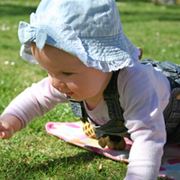
Around this age, your baby can crawl and stand up with support – for example, by holding your hand or the furniture. He might walk by holding on to your hands or some furniture, and might even be walking on his own.
At this age your baby might also:
- follow a very simple instruction without you showing her what you want – for example, ‘Give me the block’
- poke things using her pointer finger
- pick up things using her thumb and pointer finger together
- hold a bottle or drink from a cup you hold for her
- try to hold a spoon when she’s eating by herself.
Source: http://raisingchildren.net.au/articles/baby_development_10_months.html
