

Kiddipedia
Every day in Australia, we lose seven men to suicide and they represent 75% of suicide deaths. That’s someone’s son, brother, father, husband, partner, uncle, grandfather, friend or work colleague. When it happens, those left behind often enter a state of bewilderment: what signs did they miss, why didn’t the man reach out, what was troubling him, why didn’t he ask for help, if only …
Sadly, the soul-searching that follows often yields very little solace, as the ripples of the tragedy impact family and friends, sometimes for decades, and even across generations. I have been one of these people, left wondering what I could have done differently. “If only I’d known” is a common thought.
Fundamentally, we need to continue to encourage men to speak about what’s really troubling them. It may sound trite, but the majority of men simply don’t share what’s going on ‘under the hood’, because of years of exposure to social stereotyping.
As a father to two sons, I’ve discovered that our language is often more insidious than we realise. For example, a boy hurts himself, and we ask, “What’s wrong?” indicating that there must be something ‘wrong’ because emotion was expressed, like tears or sadness. We could instead have asked, “What’s happening for you right now?” to provide an opportunity for insight.
To get a man to speak from his vulnerable core requires one thing: emotional safety, which can be difficult to find, so many men learn to suffer, in silence, until the upheaval happening in their inner realm builds to such a pressure, that it eventually finds an outlet – in anger, violence, substance abuse, withdrawal or self-inflicted pain. There is no silver-bullet solution, however, for both men and women who are willing to understand, we can approach such situations with awareness.
Here are 3 ways to dig a little deeper and get behind the stoic mask:
-
1: Initiate what are known as level 1, 2 & 3 conversations
Level 1 is the usual, casual, “How are you?” often met with “I’m good”, or “fine”, or “ok.”
Level 2 might be, “Well, you don’t look ok. Seems like something is troubling you?” This might lead to “Yeah, there’s been some retrenchments at work and I’m not sure about my future.”
Level 3 would then lean into empathy, “Oh, wow, yeah, I had that in my last job, and I found it really unsettling. It was such a tough time for me. Is there anything I can help with, like how I got through it?”
-
2: Use open-ended questions, which are especially good with teenage boys coming home from school!
Rather than, “How was your day?”, “Good” and that’s it, try “Hey, you had a test today and you were worried about some content. What topics were covered?”
-
3: Try emotional vs logical conversations.
For example, if a man plays golf, asking questions about the course, score, weather, are all logical. Asking questions about who won, how did it feel to be out in nature, what was the best part of the experience, how was the banter with mates, all provide opportunities for emotional responses.
A man doesn’t go from not wanting to talk, to being open to talking overnight. But he will respond if he feels the person he’s talking with is listening to understand, and not there to pontificate or play the one-upmanship game. Men need time and space for these conversations to emerge, so if you do ask a question and you’re genuinely interested, let the man ‘be’ and give him time to find his voice. It might take days, but rest assured, if it’s a genuine, caring question, he’s mulling it over, sifting through his inner sanctum and doing his own ‘risk assessment’!
You can check in and let him know you’re still interested and haven’t forgotten, “Hey, just to let you know, I’m still keen to hear from you about …”
Author Alison Armstrong noted, “Men only talk about what really matters to them, to someone who is “safe”, meaning non-judgmental, interested, and not competing for talk time.”
Wise words that can help us navigate these much-needed conversations and break the silence.
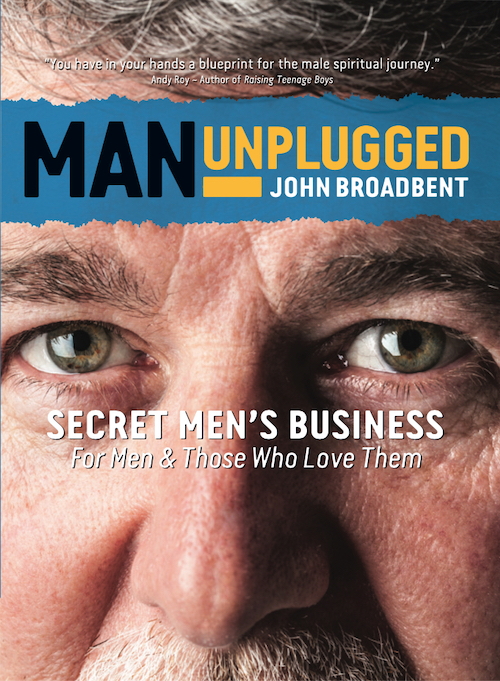
 John Broadbent, author of Man Unplugged, is a specialist coach, mentor, retreat creator, and facilitator with nearly 30 years of experience in men’s personal development. He has witnessed first-hand the profound impact societal stereotypes have on boys and men, including his own sons, and leads rite-of-passage programs for men navigating significant life transitions. Find out more at https://manunplugged.com.au/