


kiddi
Creating a home that truly feels safe, welcoming, and functional for both your children and your pets is a complex but rewarding challenge. Between busy schedules, limited space, and the inevitable messes, many families struggle to balance the needs of their little ones and furry companions.
As experts in child safety, pet welfare, and family design emphasise, thoughtful planning combined with practical strategies can help you build a home where every family member, whether they walk on two legs or four, feels secure, comfortable, and connected.
1. Start With Safety: The Foundation of a Family Home
Safety is the cornerstone of any family-friendly home. It extends far beyond installing cupboard locks or baby gates; it’s about fostering an environment where children and pets can explore confidently and safely. This reduces stress for parents and promotes healthy development and well-being for all.
Expert Insights:
According to Kidsafe Australia, over 150 Australian children aged 0–14 tragically die and more than 68,000 are hospitalised annually due to preventable injuries, mostly from falls, burns, and poisoning ([2]). The vast majority of serious burns occur at home, often from hot liquids, underscoring the need for vigilance in everyday spaces ([6]). Meanwhile, the RSPCA highlights the risks posed to pets by common household items such as medications, cleaning agents, certain human foods, pesticides, and fertilisers ([9], [10]).
How to Build a Safer Shared Space:
-
Install baby gates or playpens to safely separate pets and children when necessary.
-
Opt for furniture with rounded edges to minimise injury risks.
-
Store medicines, detergents, and pet food securely out of reach.
-
Use non-slip mats and firmly secure rugs to prevent trips and falls.
-
Anchor tall or heavy furniture to walls to avoid tipping accidents.
Pro Tip for Parents: Spend time on the floor at your child’s or pet’s eye level. This perspective often reveals hazards that adults overlook, helping you proactively create a safer environment.
2. Designing Spaces That Work for Everyone
Homes should offer a balance of energetic, interactive areas and quiet retreats. Both children and pets thrive when they have opportunities for play and socialising, as well as calm spaces to relax and recharge.
Why it Matters: Research in child development shows that shared play areas foster social skills and family bonding, while having a personal, peaceful nook helps children manage emotions and self-regulate. Pets similarly benefit from dedicated safe zones to reduce stress and avoid overstimulation ([5]).
Design Ideas for Multi-Purpose Spaces:
-
In your living room, keep baskets of children’s toys alongside bins of pet-safe chew toys so both have accessible play options.
-
Create outdoor retreats with shaded turf areas for pets paired with a sandpit or water play table for kids.
-
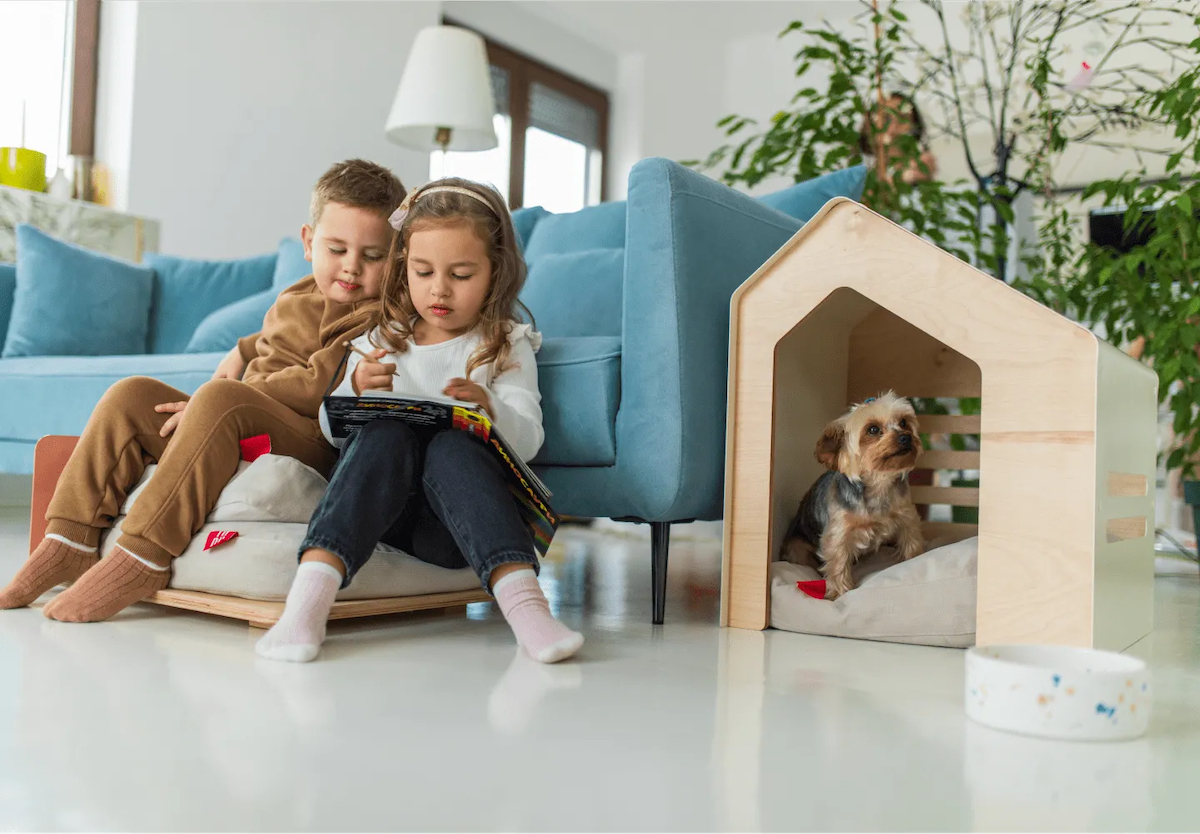
Set up cozy indoor nooks with a comfortable chair for reading and a nearby pet bed or “pet teepee” for your furry family member.
3. Furniture That’s Tough, Safe, and Stylish
The reality of family life is that furniture must withstand spills, scratches, and daily wear—but it can still look great.
What the Experts Recommend: Interior designers specialising in family homes advise choosing performance fabrics that resist stains and are easy to clean, while standing up to pet claws and child activity. Low-profile furniture also reduces injury risk and prevents toys from getting lost underneath ([7]).
Smart Furniture Solutions:
-
Upholstery made with durable, performance fabrics.
-
Ottomans and coffee tables featuring hidden storage to keep clutter at bay.
-
Low-slung couches and tables to reduce tipping and improve safety.
-
Washable slipcovers that simplify deep cleaning and extend furniture life.
4. Creating Pet-Safe Zones
Pets, like children, need their own designated spaces where they feel safe and can retreat from the household buzz.
Vet-Recommended Practices from the RSPCA:
-
Ensure pets have a quiet, comfortable retreat away from noise and activity.
-
Position feeding areas away from high-traffic children’s zones to prevent stress or food guarding.
-
Use gates or pens to separate pets during energetic family moments or visits from guests ([9], [10]).
Engage Your Child: Involve your child in crafting a “Pet Resting Zone” sign to foster respect for your pet’s personal space and encourage empathy through shared responsibility.
5. Smart Home Technology That Helps (Not Hinders)
Technology can be a powerful ally when integrated thoughtfully, helping parents monitor safety and maintain order without overwhelming the household.
Useful Smart Tech Ideas:
-
Smart cameras enable remote monitoring of sleeping children or pets without disturbance.
-
Automated locks provide peace of mind by preventing toddlers or curious pets from wandering outside.
-
Digital signage in family hubs can display schedules, meal plans, reminders, or rotating family photos—enhancing communication and organisation.
6. Preventing Burns: A Silent Hazard in Family Homes
Burns remain one of the most common and serious injuries for young children at home, but they are largely preventable with awareness and simple safety measures.
What the Experts Say:
The Fiona Wood Foundation highlights that many severe burns in children result from hot liquids, surfaces, or flames encountered in everyday home environments. Their education resources stress that vigilance in kitchens, bathrooms, and around heating appliances is essential to protecting little ones ([6]). Additionally, trusted parenting sources like Raising Children Network recommend supervision and practical safety strategies to reduce burn risks significantly.
Your Burns Prevention Checklist:
-
Supervise children closely in the kitchen; use back burners and turn pot handles inward.
-
Keep hot drinks and foods out of reach, install stove guards, and secure appliance cords.
-
Set your hot water system thermostat to a safe maximum of 50°C and always check bath water temperature. Never leave children unattended near water.
-
Store matches, lighters, and flammable liquids safely; use fire guards on heaters and fireplaces.
-
Outdoors, keep children supervised and away from hot barbecues, fire pits, and campfires.
-
Install and regularly test smoke alarms throughout the home.
Parent Tip: Make burn safety checks a regular part of your routine. Small changes can have a big impact on preventing painful accidents.
7. Balancing Screen Time and Active Play
While screens are a part of modern life, physical activity remains essential for healthy development—for children and pets alike.
Guidelines to Consider: The Australian Department of Health recommends children aged 2–5 limit recreational screen time to less than one hour daily, balanced by at least three hours of physical activity. Regular exercise is equally crucial for pets’ physical health and mental stimulation ([8]).
Ideas to Encourage Active Play:
-
Set up indoor obstacle courses using cushions, tunnels, and chairs.
-
Organise backyard scavenger hunts or interactive ball games that include the whole family.
-
Establish weekly “family movement nights” featuring dance, yoga, or playful exercise.
8. Comfortable and Durable Shared Spaces
Your living room is the heart of your home, where family members gather, play, and unwind.
Design Recommendations:
-
Layer soft throws, cushions, and rugs to create inviting warmth.
-
Choose easy-care, durable fabrics in high-traffic areas for stress-free maintenance.
-
Use modular furniture that adapts easily to changing family routines, guests, or quiet evenings.
If you’re looking to furnish your home with pieces that balance style and family-friendly durability, exploring options such as Recliner lounge suites in Brisbane could be a great choice. They offer comfort, easy maintenance, and robust construction ideal for busy households.
9. Family Travel With Kids and Pets
Traveling with children and pets can be one of the most enriching family experiences—when prepared properly.
Travel Preparation Checklist:
-
Select pet-friendly accommodation or ensure your motorhome has ample space for everyone.
-
Plan regular stops for stretching, bathroom breaks, and fresh air.
-
Pack familiar toys, blankets, and snacks to provide comfort and reduce travel stress.
If you’re considering a mobile family adventure, Open Road Motor Homes offer spacious and well-equipped options to travel comfortably with your loved ones and pets.
Why Travel Matters: Studies indicate shared travel builds resilience, strengthens family bonds, and offers valuable learning experiences for children ([4]).
Final Word
Building a home that meets the diverse needs of both children and pets takes time, care, and intention. Supported by expert research and practical strategies, you can take meaningful steps to enhance safety, comfort, and connection throughout your home.
Whether you start by baby-proofing a kitchen drawer, carving out a quiet pet nook, or investing in smart, durable furniture, every thoughtful change moves your family closer to a harmonious, joyful home. Consider how technology like digital signage can further support communication and organisation in busy family hubs, making life just that little bit easier.
And of course, don’t forget the importance of feeding your pets well, providing cat healthy food ensures your feline friends thrive alongside your growing family.
References
[1] Kidsafe Australia – Preventing Injuries in Children
[2] Australian Institute of Health and Welfare (AIHW) – Child Injury Hospitalisations in Australia
https://www.aihw.gov.au/reports/injury/child-injury-hospitalisations-in-australia/contents/summary
[3] RSPCA Australia – Pet Safety and Toxic Substances
https://www.rspca.org.au/taking-care-of-pets/pet-health/poisonous-substances
[4] University of Queensland – Benefits of Family Travel for Children’s Development
https://www.uq.edu.au/news/article/2020/03/family-travel-boosts-childrens-resilience
[5] Child Development Institute – The Importance of Play and Quiet Spaces for Children
https://childdevelopmentinfo.com/development/social-emotional-development/
[6] Fiona Wood Foundation – Burn Prevention Education & Resources
fionawoodfoundation.org.au
[7] Interior Design Magazine – Designing Homes for Families with Kids and Pets
https://www.interiordesign.net/articles/17121-designing-for-families-with-kids-and-pets/
[8] Australian Department of Health – Physical Activity and Screen Time Guidelines for Children
https://www.health.gov.au/health-topics/physical-activity-and-exercise/physical-activity-and-exercise-guidelines-for-children
[9] RSPCA Australia – Tips for Creating Pet-Friendly Homes
https://www.rspca.org.au/taking-care-of-pets/pet-safety
[10] RSPCA Australia – Safe Environments for Pets
https://www.rspca.org.au/taking-care-of-pets/environmental-safety


