
Valentine’s Day isn’t just about romance—it’s a chance to show kids what love really looks like. From small acts of kindness to the way we treat our partners, friends, and family, children learn about love by watching us. This day is the perfect opportunity to model what it means to care for others, build strong relationships, and express appreciation in meaningful ways.
In this collection of expert-backed articles, we explore how parents can turn Valentine’s Day into a powerful teaching moment. From fun, kid-friendly activities to everyday ways to model healthy relationships, these insights will help you create special moments that leave a lasting impact.
Because the best lesson we can teach our children is that love isn’t just a feeling—it’s something we show through our actions every day.

Valentine’s Day is a Chance To Role Model a Loving Relationship To Your Children
Demonstrating a loving, healthy relationship to your children is one of the best gifts you can give them. What you both role model now is what they will see as normal and how a loving relationship should work, so it is worth providing positive opportunities to show them.
Valentine’s Day is a great chance to spend some special time with your partner and to remind them how much you love them. It is also an opportunity to show your children how you express love with your partner in a positive way.
Make it fun, special days break up the monotonous nature of normal weeks with running a household, sharing the parenting load, juggling children around work commitments and daycare and school activities.
It’s a day dedicated to love, and you can show your love to your children as well. This can be as simple as saying “I love you” and “Happy Valentine’s Day” or all getting up a little earlier and cooking heart-shaped pancakes for each other to enjoy.
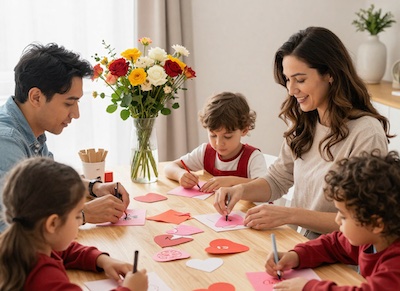
Kid-Friendly Ideas for Valentine’s Day
 Get ready for a Valentine’s Day bursting with love, laughter, and a little bit of glitter!
 From heart-shaped treats to adorable DIY crafts, we’ve got everything you need to turn this day into a magical family celebration.


 Whether it’s making the cutest homemade cards, whipping up love-filled snacks, or creating fun new traditions, these ideas will bring smiles to little faces (and yours too!).
 So grab the glue, sprinkle the love, and make some unforgettable memories!


 Love They Can See: Teaching Kids What a Healthy Relationship Looks Like
 Your kids are always watching… even when you think they’re not.

This Valentine’s Day, discover how simple, everyday actions can show them what love, respect, and healthy relationships really look like. 
Small gestures today shape the relationships they’ll have tomorrow. 

 How to Positively Demonstrate Your Relationship To Your Children
Ever wonder how your relationship shapes your kids’ future?
Your children are always watching—and they’re learning from the way you and your partner interact. From affection to conflict resolution, you’re teaching them the blueprint for healthy relationships.
It’s never too late to model the love, respect, and teamwork that will guide them in their own relationships later in life. Ready to make a lasting impact?
 Why Valentine’s Day is Often a Missed Opportunity for Dads
Valentine’s day is celebrated as a day of romance and to express our deepest love to the people we care about. Often that’s our wives, our partners or our girlfriends. As a dad though, there is another opportunity for you.
Why not use Valentine’s day as a trigger to express your love to your kids? Now, if you’re like most men, the very notion of expressing love, even to your kids, is probably going to make you want to vomit. Alternatively, you might want to dismiss this with thoughts of, “That’s dumb! Of course, my kids know I love them” or “I already show my kids I love them.”
 Children Learn How to have Adult Relationships from observing their Parents
For many couples, Valentine’s Day may just be another Hallmark Day, yet to others, it is a day that they can choose to make their partner feel particularly special and model to the children the attitudes and behaviours that they can adopt in their own adulthood. All special occasions (like Valentine’s Day, Mother’s Day, Father’s Day, Easter, Christmas and birthdays) put your relationship under the microscope, and your children use these occasions, in particular, as learning opportunities to see you and your partner interact.
Children have the eyes of a hawk. They seem to see and hear everything. They also sense any vibrational changes that you may have. As a divorced parent, your children will have sensed many of your emotional changes along your separation journey.

 Depositing Into The Emotional Bank Account Of Your Child
Parenting is more than just teaching—it’s about building trust and connection! Did you know your everyday actions with your child are like deposits in an emotional bank account?

 Want to know how small gestures can create lasting bonds and help your child thrive emotionally?
 Dive into our latest article to learn simple, powerful ways to invest in your child’s emotional well-being.


8 Ways to Model a Healthy Relationship To Your Children
With Valentine’s Day approaching, it’s the perfect time to reflect on the love we show – not just in gifts  , but in how we live and love every day. Our children


 are watching, learning, and absorbing everything we do.
As parents, we have the power to shape the future!  What we do and how we act in front of our kids will influence the values they carry into adulthood. Are we modeling the healthy, respectful, and loving relationships
 they deserve to see?
This #ValentinesDay  , let’s focus on how we can teach our children about love, respect, and the power of healthy relationships. It all starts with us—our actions speak louder than words.

 Parenting and Valentine’s Day – Role Modelling Respectful Relationships
This Valentine’s Day, let’s give our kids the gift of respect! As parents, we have the power to teach them what love really looks like by modelling respectful relationships. When we lead with kindness and understanding, we’re laying the foundation for healthier, happier futures. 
Want to know how small everyday actions can create BIG change for your family? Check out our latest article on role modelling respect in relationships and building a safe, supportive environment for your kids.
 Tap the link to read more and discover simple ways to show love this Valentine’s Day and beyond!
 The Devoted Year
Valentine’s Day is a day when many show their love for their loved one… or if you have a crush  , it’s the perfect time to let them know how you feel!
As parents, it’s vital to show kids that you value each other and your relationship. Spending time  with your partner and showing your love
 in front of your children is good for everyone.
Children who see their parents kiss  , cuddle , and make time for each other
 are learning what a healthy, loving relationship looks like. This helps them understand how to build and maintain strong relationships in the future!


Why Summer is Perfect for Music Exploration
With school out and schedules more flexible, summer offers the perfect opportunity for children to dive into learning music. Whether it’s picking up an instrument, taking singing lessons, or exploring music production, these activities provide countless benefits that go beyond the immediate joy of creating tunes. Music engages the brain, sparks creativity, and fosters emotional expression, making it an enriching activity for kids of all ages.
The Cognitive Benefits of Learning Music
Did you know that learning music enhances brain development? Studies show that playing an instrument improves memory, concentration, and problem-solving skills. These are skills children can carry into the new school year, giving them an academic edge. Additionally, reading sheet music, understanding rhythm, and coordinating movements all help develop critical thinking and fine motor skills.
Emotional Growth and Expression
Music offers children a healthy outlet for their emotions. Whether they’re feeling excited, nervous, or anything in between, creating or playing music helps them process and express their feelings. This emotional release can boost mood, reduce stress, and build resilience, especially during a season filled with new adventures and experiences.
Building Confidence Through Performance
Imagine the pride your child feels after mastering a challenging piece or performing for family and friends. Music builds confidence as children see their progress and receive encouragement from those around them. Over time, this self-assurance extends into other areas of life, helping them tackle challenges with a positive mindset.
Strengthening Family Bonds
Music isn’t just an individual activity; it’s a fantastic way to bring the whole family together. Picture a summer afternoon spent singing favorite songs, dancing in the living room, or even hosting a backyard concert. These shared moments create memories that last a lifetime and strengthen family connections.
Keeping Kids Engaged and Productive
Summer can feel endless for kids without structured activities, leading to boredom. Music lessons or projects, like creating their own songs or learning an instrument, provide a productive and enjoyable way to spend time. Plus, kids stay mentally active and focused, preventing the summer learning slide.
Music as a Lifelong Gift
Gifting a child music lessons this summer is more than just a seasonal activity—it’s an investment in a lifelong skill. Whether they discover a hidden talent, develop an appreciation for music, or simply have fun, the lessons they learn will stay with them for years to come.
Ideas to Get Started
Not sure where to begin? Here are some simple ways to introduce music into your child’s summer:
- Sign Up for Music Lessons: Look for local or online classes tailored to your child’s age and interests.
- Create a Family Playlist: Pick songs together for road trips, poolside hangs, or dance-offs in the living room.
- Explore Instruments: Let your child experiment with a keyboard, guitar, ukulele, or percussion instruments to discover what they enjoy most.
- DIY Music Projects: Encourage kids to write their own lyrics or create beats using apps and simple software.
- Attend Local Events: Check out summer concerts or music festivals for inspiration and fun.
Making Music Memories This Summer
As you soak up the sun and enjoy the season, let music become a central part of your summer’s soundtrack. Whether your child learns to play their first song, belts out a favorite tune, or dances with the family, the benefits of music will ripple through their lives. From cognitive growth to emotional expression and family bonding, music offers a treasure trove of experiences that make summer truly special.
Turn up the volume, embrace the rhythm, and watch as your child thrives in the harmony of summer. 

You may also like to read:
]]>Then the mum got annoyed and frustrated and said something to her child. She called her child a stupid idiot for not listening to her.
That broke my heart. I couldn’t help but wonder how the child felt and how often they hear those words. From the person who they look up to, admire, and who they learn so much from. Both the good and the bad.
Say what you see
Nobody is stupid, and nobody is an idiot. But their behaviour might be idiotic. We all have moments where our behaviour has been idiotic. But we’re not idiots. They’ve been mistakes we’ve done, wrong choices we’ve made, things we’ve done that we have learnt from – in hindsight.
It’s easy to point out mistakes, of our own or of others. How come? Is it because we humans accept criticism more easily than compliments? Start taking note of how many times you criticise someone, including yourself, and whether it’s spoken or just in your head, be aware of it.
After all, according to the law of attraction, what you put out is what comes back to you. Therefore we, both you & I, need to change that. Begin by purposefully looking at the positives in someone include yourself. And give compliments freely – but only if you are honest and sincere.
Missed opportunities
Recently I was having a phone conversation with Olivia Sinco, a lady who writes a blog called The Blue Word which helps parents with highly sensitive children as she has three of her own.
I’d recently seen a video Olivia had done and was talking to her about that. The topic was food and Olivia mentioned how one of the things she puts in her son’s lunch box was English spinach which they had agreed on for nutritional reasons.
What was interesting about our conversation was that Olivia trusted her son to keep his word and eat the spinach as part of his packed lunch. I was asking Olivia about this as I suspect some kids would just toss it and say they’d eaten it.
Apparently, at dinner time this is the way she sees him eat his spinach, so it’s not unusual for him to digest spinach in that way.
Coming from you
I mentioned how it was great that she trusted her son to keep their agreement and that she felt he was trustworthy in doing so. Olivia responded with something like she’ll tell her son I thought he was trustworthy.
Her son doesn’t know me from a bar of soap. Me thinking he was trustworthy wouldn’t mean a thing to him. But coming from her could mean the world. I pointed out that it wasn’t relevant that her son is aware that some stranger sees him a trustworthy.
It’s important that Olivia tell him that she sees as trustworthy. This could be mentioned as he takes his lunchbox out of his bag and places it on the kitchen sink. It could be brought up in conversation at the dinner table. Or when they are cuddling on the lounge watching a movie together.
Don’t miss the opportunity to say what you see and compliment your children on their positive characteristics. This builds their confidence and reinforces positive behaviour. Her son becomes self-aware and chooses to be trustworthy in other situations that arise. All because his mum pointed it out in the first place.
If you’d like to ‘Join My Tribe’ and focus on a characteristic each week with your child so you can build your child’s awareness and confidence click here.
]]>
What is Intentional Parenting?
Intentional parenting is about being mindful of the values and behaviours we model for our children. It involves creating an environment that nurtures their innate strengths and provides opportunities for growth. By being deliberate in our actions and interactions, we can guide our children to develop into confident, resilient, and authentic individuals.
Modelling Values and Behaviours
Children learn by observing the adults in their lives. As parents, our actions speak louder than words. To foster resilience, authenticity, and an entrepreneurial spirit, we must model these values in our daily lives. Demonstrate resilience by handling stress and setbacks with grace. Show authenticity by being true to your feelings and values. Encourage an entrepreneurial spirit by embracing creativity, taking calculated risks, and learning from failures.

Creating a Nurturing Environment
A nurturing environment is one where children feel safe, supported, and encouraged to explore their interests and passions. Here are some ways to create such an environment:
-
Encourage Open Communication:
Foster a culture of open and honest communication. Encourage your child to express their thoughts and feelings without fear of judgment. Listen actively and validate their emotions, helping them to understand and navigate their experiences.
-
Celebrate Effort and Growth:
Focus on the process rather than the outcome. Celebrate your child’s efforts and growth, recognising their hard work and perseverance. This approach helps build resilience by teaching them that effort and determination are key to overcoming challenges.
-
Provide Opportunities for Exploration:
Offer a variety of activities and experiences that allow your child to explore their interests and passions. Whether it’s through sports, arts, science, or other interests, providing diverse opportunities helps children discover their strengths and develop new skills.
By incorporating these intentional practices into your daily parenting, you can provide a strong foundation for your child’s growth and development.
Intentional parenting is a powerful approach to raising resilient, authentic, and entrepreneurial children. By being mindful of the values and behaviours we are modelling, and creating a nurturing environment, we can equip our children with the tools they need to thrive in an ever-changing world. With deliberate and thoughtful parenting, we can help our children reach their full potential and lead fulfilling, successful lives.
]]>School bags
Making sure your child has a well-fitting and supportive backpack can help to prevent them from experiencing pain or strain during the school year from carrying around their schoolbooks or sports equipment.
To optimize your child’s school bag fitting and usage, follow these tips:
- Choose a backpack with two padded shoulder straps over a bag that is slung over one shoulder. Backpacks are far better to help your child to keep an upright posture. Wearing a bag over one shoulder can contribute to neck, shoulder and back pain.
- Make sure the bag isn’t too big for your child and position the backpack close to and in line with your child’s spine. This will prevent them from leaning forwards of backwards, or rolling their shoulders forwards.
- If possible, choose a backpack that has waist and chest straps. The waist strap takes some of the load off your child’s shoulders and re-distributes it to the hips and pelvis, and the chest straps prevents the shoulder straps from sliding back which can cause your child to lean forwards and round their shoulders.
- Pack heaviest items closest to your child’s back. This keeps the load close to your child and prevents them from leaning forwards and straining their back and neck.
- Try and decease the load in the backpack as much as possible. Use separate folders and books for different subjects so your child only has to take to school what they need, see if they can leave heavy textbooks at school or share the load of textbooks amongst a group of friends (ie: one friend brings the science text book, another brings the math text book) – or even better, see if the materials your child needs are online.
School and homework desks
Your child can spend a lot of time sitting for school, both in the classroom and also at home when doing homework, studying, or completing assignments. Any prolonged posture your child uses can contribute to musculoskeletal pain and strain, especially if their body parts are not ideally positioned.
To optimize your child’s sitting posture you should aim to follow the ’90-90-90 rule’ – aim for your child to sit with a 90 degree angle at their ankles, knees and hips. What this will look like is:
- your child’s feet will be flat on the floor (not hanging, on tippy toes, or not bent under the chair),
- your child’s legs will be supported by the chair seat with their knees above their feet, and
- their trunk should be in a reasonably upright position.
If your child’s feet, legs and trunk are not well supported, your child is more likely to find it difficult to maintain the sitting position and so will fidget or get restless quicker. They are also more likely to find concentrating and completing their work more difficult.
In addition, your child’s desk height should be approximately in line with their elbow height. A table that is too high will cause your child to ‘scrunch’ their shoulders or put their elbows out wide causing tension in their shoulders and neck. A table that is too low will cause your child to lean forwards and lean on the table too much making the fine movements of their hands for writing or typing more difficult.
Some simple tips to help you to achieve the 90-90-90 position at home:
- Use a large phone book or a small step for your child to put their feet on if their feet are not able to sit flat on the floor
- Choose a child sized desk, rather than an adult sized desk, as these are more likely to be a better height for your child
- If your child does their homework at the dining table, use a booster seat on the dining chair (and a step under their feet) to bring them up to the right height at the table. Alternatively you could also purchase an adjustable height chair like a Mocka original or soho highchair (https://www.mocka.com.au/baby/highchairs.html) or a Stokke TrippTrapp chair (https://www.stokke.com/en-au/highchairs/tripp-trapp/TT03.html), so that you can adjust the chair and position your child at the correct height for the table.
Movement breaks!
Regardless of how well you support your child’s posture using a well-fitting backpack or a fantastically adjusted chair for school and homework – any sustained posture, whether it is optimal or not can contribute to musculoskeletal pain or strain simply because it is sustained! As a result, giving your child plenty of opportunities for movement breaks is just as important as ensuring their postures are optimal.
Our bodies are designed to move. Movement helps to keep our joints loose, keep our muscles long and strong, as well as all other parts of our body healthy. In addition, movement can help to keep our brains alert, which is important for learning and retaining information.
Give your child opportunities for movement and movement breaks by:
- Breaking up long activities into smaller parts, and making sure your child gets a movement break between each smaller part
- Doing some of the homework standing up – try a standing desk, or you could do some of the homework or school work on a whiteboard or easel.
- Use movement to learn – get your child to create shapes with their body, problem solve using real life objects, recite timetables with movement, create songs and actions to remember concepts
- Simply having a movement break if you notice your child is tired or frustrated with their work – having a movement break will help them to reenergize and get their endorphins flowing, ready to have another go at the activity.