Guardian Childcare and Education Rouse Hill Chef Kate Stephens has developed a range of clever tips for keeping children hydrated during the hot summer months. And, as Guardian Childcare and Education centres focus on their Summer Learning Programs, which involves many outdoor activities, in-house chefs like Kate are pulling out all the stops to ensure the children attending the program continue to drink up as they play and learn.
“My ideas always come from my experiences as a mother at home,” says Kate. “I feel like if something is important to me as a parent, then it’ll most likely be important to families at our centre, too.”
Drawing from her experiences as a mother and a chef in childcare, Kate’s shared 10 creative tips to increase your child’s water intake.
- Make funky ice cubes. Either stick to one colour, or experiment with a variety of food colourings to make something completely new. There are also so many fun ice-cube trays available now, including animals, objects and patterns.
- Add flavour. Use fruit slices or herbs from the garden to flavour ice cubes and add some excitement to a regular cup of water. We have herb and veggie patches at many of our Guardian centres, so we often do this. Alternatively, just flavour your water: purchase a clear dispenser then add fruit, herbs or even vegetables to the water each morning. This gives children the opportunity to learn how to use taps, too.
- Use frozen fruit chunks as ice cubes. Frozen grapes and watermelon balls are a favourite of mine. The children can scoop out the watermelon using a melon baller, which is an entertaining activity in itself.
- Make a batch of ice blocks. A summer staple! You can get creative with these, using fruit, a little fresh juice and water to create a delicious snack.
- Try soda water. Bubbles are fun, especially if you make your own soda water.
- Bottle it. Allow your child to pick out their own special drink bottle, just for water.You’ll want to find one that your child can use confidently, and, ideally, fill up themselves.
- Update your cups. Change it up and buy some new cups. You could even source a retro punch bowl, and set it up in the kitchen with water and ice cubes, allowing the children to scoop water into their cup whenever they’re thirsty.
- Play tea parties. Fill teapots with water and have your child practise pouring the‘tea’ and drinking it.
- Track your intake. There is an abundance of water tracker printouts available online, or you can make your own. Children will love ticking off their chart – make it fun with coloured textas or stickers. Make sure you set up one for yourself too – not only will you be role modelling, but it will do your body good, too.
- Start a conversation. Children love to chat, and bringing up the subject of water over mealtimes is always a good conversation starter. Ask your child questions like, “Did you know that our brains need water?”; “Do you have a favourite drink bottle? Why is it your favourite?”; and “Sometimes when I feel cranky a cold glass of water helps me feel better. What about you?”
The Summer Learning Programs are unique to each Guardian Centre and are tailored to the interests of the children, with many outdoor activities. These programs ensure that children have the opportunity to have a fun, engaging and social time during the holiday period, while continuing their learning journey. The programs also support Guardian families, as the summer period is often a busy time for parents who are juggling work and personal commitments.
If you would like to experience the Guardian difference, book a tour today!
To view on YouTube:
Salt: as a natural resource it’s found everywhere from our tears, perspiration to the ocean
Would you believe the earliest evidence of humans producing salt dates back to 6000 BC in northern China? So, it’s been part of our lives for thousands of years.
Much like sugar, however, salt is also hidden in so many of our everyday foods. Without knowing it, three-quarters of the salt we eat is already in everyday foods such as bread, breakfast cereal, and ready meals, so for this reason, it’s very easy for us to exceed our daily intake without knowing it
For better health, we all need to limit our daily salt intake to the recommended amount, because as we know, the side effects of too much salt are detrimental to adults, but we also need to take into consideration the impacts it has on children and babies
To help talk to us about some tasty and healthy salt alternatives we welcome back our special guest Siobhan Boyle, CEO of Jamie The Good Foundation
We ask Siobhan questions including:
- How important is it for parents to reduce salt content in their household diets and home-cooked meals to the recommended amount?
- How much salt is the right amount?
- Is it true that some foods with a high salt content won‘t taste very salty at all?
- Why is too much salt bad for both an adult and a child’s diet?
- What are some easy alternatives to ensure meals still taste delicious?
- What are your go-to herbs that every parent should have in their kitchen to flavour up meals?
For Siobhan’s full article, please go to: https://kiddipedia.com.au/salt-alternatives/
For further information, please go to: https://www.jamiesministryoffood.com.au/
You can visit the Heart Foundation and VicHealth’s website
Unpack The Salt
]]>
If you are getting bored with your usual meat and vegetables this Winter, a simple way to add some extra flavour is by changing the cooking method. These Hickory Smoked Wings were prepared using a smoker from Bunnings, which creates a tender result with a beautiful brown colouring and warm smoky flavour. Smokers are as simple to use as a BBQ but they pack an extra punch when it comes to flavour – try smoking corn on the cob as a side dish served with a pinch of salt and butter.
Ingredients
1kg free range boomerang chicken wings
4 tbsp brown sugar
3 tbsp smoked paprika
1 tbsp black pepper
1 tbsp salt
1 tbsp garlic powder
1 tbsp onion powder
1 tsp mustard powder
1/2 tsp cayenne pepper
200ml Sweet Baby Ray’s Hickory & Brown Sugar BBQ Sauce
Method
- Fill the Fornetto Charcoal Starter Chimney and ignite the charcoal and let burn until they are all glowing and showing an ash outer.
- While fuel is burning, layer more fuel around the charcoal basket using the minion method.
- Add hickory chips around the top of the fuel and pour the hot fuel into the centre.
- Add boiling water to pan (optional) if you want chicken wings to be slow cooked for longer.
- Assemble the smoker with lid on open on all upper and lower vents. Pre heat until the smoker gets up to 120 degrees C.
- While smoker is heating up, combine the dry ingredients into a large shallow bowl and coat the chicken wings with the dry rub.
- Place chicken wings in smoker and cook for approximately 2 hours. To get the temperature up higher you can open the bottom door.
- Using a pastry brush, brush the wings with the Hickory and Brown Sugar Sauce and cook for another 5 minutes until cooked through.
- Serve immediately.
You may also like to read:
Keep the family snug during Winter with these heart-warming soup recipes
]]>The flavour of rhubarb is so yummy and conjures up warm winters and nights by the fire with a rhubarb pie or crumble after dinner.
Rhubarb is super versatile, it can be baked, used in sweets and puddings, as a marinade, jam/chutney, added to ice creams/sorbets and so much more!
This amazing vegetable is now in season, so grab some at your local fruit and veg shop and get cooking.
Did you know?
- The leaves of Rhubarb are poisonous and should never be eaten or given to animals.
- Rhubarb is high in iron and vitamins C and A.
- Rhubarb is a vegetable and not a fruit. Although Americans “in the 1940s, took rhubarb to court and changed its classification to fruit for the purpose of regulations, thus changing the taxes and tariffs associated with it.” (SBS.com.au)
- Rhubarb was only used in 1800’s in the UK and America for cooking. Previously it was used medicinally for digestive issues and as a treatment for cold sores.
- The words, “Rhubarb Rhubarb Rhubarb” is used in acting to pretend you are talking about something but not actually saying anything. Some people use this phrase to also convey silliness and nonsense when they need to. Maybe when all the kids are going silly yell, “Rhubarb Rhubarb Rhubarb!” And see what happens.
Since rhubarb is available now, I wanted to make a few dishes. I was keen, as I have never cooked with Rhubarb before.
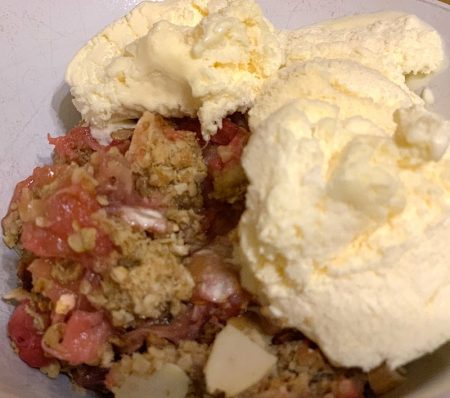
I started my Rhubarb experience with a classic, Apple and Rhubarb Crumble.

Apple and Rhubarb Crumble
Preheat oven to 180°C and 160°C if fan forced oven.
I used the Taste.com.au recipe
Ingredients
- 5 Apples cored and chopped up – I used Pink Lady apples. The recipe initially asked for granny smith apples.
- 6 rhubarb stems washed & trimmed. Cut into 3cm pieces
- 1/3 cup caster sugar
- 1/2 teaspoon Ground Cinnamon
- 1 teaspoon finely grated lemon rind
- 2 teaspoons plain flour
- 1 cup rolled oats
- 1/2 cup plain flour, extra
- 1/2 cup firmly packed brown sugar
- 80g butter – I zapped it in the microwave as it was too hard
- 1/4 cup flaked almonds
Equipment
- Large capacity baking dish
Method
Step 1: Place apple, caster sugar, cinnamon, lemon rind and 2 tablespoons of water in a large saucepan over medium heat. Ideal if covered but I didn’t.
Cook for 5 minutes or until apple starts to soften. Now add the rhubarb and flour. Cook for a further 3 minutes until the rhubarb softens.
Step 2: Transfer apple and rhubarb to the baking dish.
Step 3: Combine oats, extra flour and brown sugar in a bowl. Using your fingertips rub the butter into mixture until it looks like breadcrumbs. Add the almonds.
Add the crumble mixture to the top of the rhubarb mixture.
Bake for 35 minutes or until golden. Cool for 5 minutes, it will be super-hot so be careful. Now eat your yummy dessert.
Rhubarb Compote
Ingredients
- 500 grams of rhubarb
- 100 grams of sugar
- 50 grams of water
- 1 orange juiced and zested

Method
Step 1: Cut up the rhubarb stems into 3 cm pieces
Step 2: Juice 1 orange and get as much zest as you can
Step 3: Add the orange juice, orange zest, water, sugar and rhubarb to a saucepan.
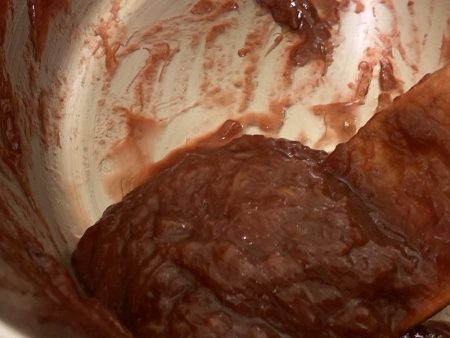
Step 4: Cook for about 10-15mins or until the rhubarb is super soft and the water and juice have reduced. It should look like a sauce.
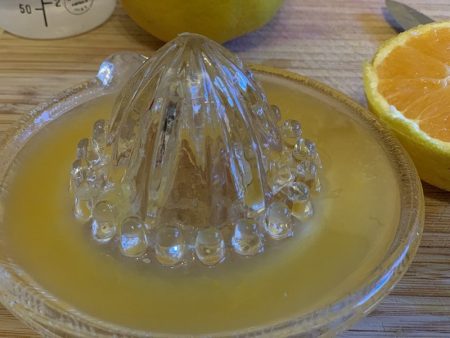
Once cooked take off the heat and allow to cool. You can then add it to an airtight container or use it for a meal straight away.
Rhubarb Marinade – Same as the compote
Use the rhubarb compote to marinade meat. I marinated beef steak, but you could use chicken, pork or fish.
Method
Step 1: Put your chosen meat into a container
Step 2: Smoother the meat with the rhubarb compote
Step 3: Cover the container and put in the fridge and leave for a few hours
Step 4: Cook the meat, be aware that the rhubarb marinade will come off but make sure to add it to the meal, it is so tasty and adds so much flavour.
Rhubarb works well with ginger, honey, chilli, cinnamon, cardamom, coconut, tomatoes, strawberries, apples, pears, blackberries, blueberries, dates, lavender, maple syrup, and custard.

The steak was chopped up and served with broccoli, mushrooms & beans in a chilli and honey sauce with sesame seeds. I used 90-second rice so that made it even easier to make.
It was so yummy and easy to make.
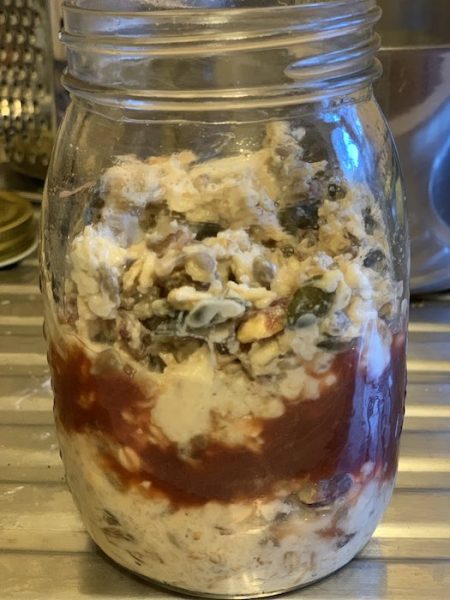
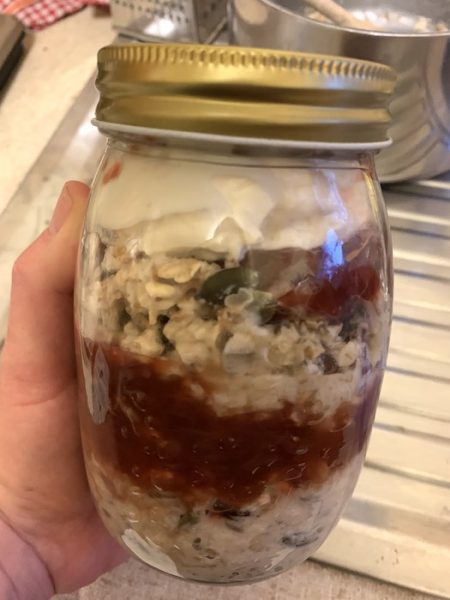
Rhubarb Breakfast Jar
Method
Step 1: Get a mason jar, make sure it is washed and clean
Step 2: Use some oats that you have soaked or oatmeal. Add nuts and anything else you would like with the oats/oatmeal
Step 3: Layer the jar with Oats, Rhubarb Compote (that you made earlier), other fruit and yoghurt.
Step 4: Once the jar is complete put the lid on and put it in the fridge for tomorrows breakfast.
This is a simple and easy way to get breakfast quick and eat it on the go.
You can also create a different compote of Rhubarb and Strawberries or other berries as well. Why not add blueberries to the different layers and some flaked almonds to add a different texture.
I hope you enjoy these recipes and ideas to add rhubarb to your meals.
Which Rhubarb recipe would you like to try?
Let us know what you create by sending in pictures to our Facebook page.
You may also like to read:
10 Tips for getting kids to eat more fruit and vegetables
]]>