Children’s brains do not develop the ability feel malice or ill feelings until the age of 8 years of age. That said, they are naturally loving and compassionate, we just need to ensure we stay committed to helping them develop compassion in this busy fast paced digital age.
In our technology driven world our children’s attention is largely focused on their devices than it is on the world around them and the people within it.
When we were children, we may have naturally been more compassionate as a result of this. As our eyes and ears may have been more freely available to have noticed situations to display compassion, like hugging our mother if she was crying and or hug our sibling if they fell off the see-saw or scratched their knee.
It’s not our children’s fault that a lot of their “connection” to others is now virtual and most likely sent via an emoji.
Evolution is defined as: the process where living organisms develop from earlier forms. Digital communication is not going away, it’s just that we need to make a conscious effort to ensure we’re ‘evolving’ into a superior race, and a more loving and compassionate one at that.
Raising children to be compassionate is one way to help them go through life passionately. They will be able to reach out to other people with their kindness, expression of sympathy, empathy and care.
“Empathy is probably the greatest single gift of our species,” Bruce D. Perry, M.D (senior fellow at the Child Trauma Academy and the co-author of Born for Love: Why Empathy Is Essential — and Endangered.) He has also said that, “We wouldn’t have been able to survive without creating relationships and groups that could function together.”
By showing empathy i.e. writing genuine thank-you notes, being consistent, boosting feelings vocabulary, praising each other daily, recognising kindness, addressing their needs and promoting emotional literacy you will enable a child to become more compassionate.
If you show your child how to empathise or become more understanding, you will help them in perceiving what is around them and perhaps gain more appreciation of what is in their community or help you solve problems that you may have.

Here are 15 ways to help raise compassionate children:
1: Writing your children genuine thank you notes will help them realise how their efforts are much appreciated.
2: Boosting their feelings vocabulary will help them identify their emotions and they would be able to know what these emotions are; and perhaps know why they happen.
3: Praise each other daily to make each other feel good.
4: Help them recognise kindness and make them realise that this is important in relationships ie recognising how you address their needs, like food, shelter and clothing to help them grow well. This takes a lot of effort but they need it to grow into happy beings.
5: Promoting emotional literacy will help your child know what are the emotions they are feeling and identify them well.
6: Rule out unacceptable behaviour (even if it’s their birthday.) These behaviours should not be reinforced.
7: Teach them how to help others. Knowing how to help is a way of them showing their compassion.
8: Develop good manners should be encouraged to be part of their daily routine. This include saying thank you; or being thankful for what others have done for them.
9: Teach respect: help them realise that others have feelings, like them, and that others deserve for those feelings to be acknowledged.
10: Guide them to having meaningful friendships and try to outlaw name calling.
11: Show or let them know how to express their appreciation for kindness.
12: Try focus on becoming even more considerate yourself to help them know what being compassionate is about and do not speak ill will of others so that they do not emulate it.
13: Encourage your children to help. This characteristic of being compassionate is necessary to teach them kindness towards others.
14: Help them understand others’ feelings as well. Let them explore their feelings but monitor what they are seeing on media and expect more when it comes to your child’s responsibility to be more caring and compassionate.
15: Set high standards but try to find out if they are being bullied or teased because this might cause a burn out of compassion on their part. They might feel that they are not making a difference in this complicated and troubled world. Try to reinforce their efforts with love and care from your end.
 Dr. Holly Ruhl, a Developmental Psychologist says, “Positive responses to children’s help seem to promote more helping behaviors when our little ones are first learning these skills. But as our toddlers become more proficient at helping, reinforcement may not be needed as much and may undermine intrinsic desires to help.”
You might also like to read:
]]>They become more and more capable of having their tears and thoughts on the inside and using their words to express how they feel and what they need. They no longer have to physically act out, or cry in response to every frustration in order to move through it.
An angry child is often just scared, they don’t feel safe or calm enough to find the words to tell you how they feel.
To reduce the fear you must calm the brain.
Every child can benefit from emotional regulation practice, taught by a calm, loving adult.
It starts with how we handle our own emotions in the face of theirs.
Whilst it is natural and understandable that our own level of frustration rises as we witness our children’s struggle, it’s up to us to keep ourselves in check.
It’s not always easy to remain calm, but in our parent-child relationships, it is essential that we dig deep and then rise to the occasion when our children need us most.
Mirror neurons are cells in a child’s brain that react when a particular action is performed and observed.
So, all you have to do is be the behaviour you are wanting to see, in this case; cool, calm and collected.
This looks like empathy and validation. Saying what you see such as;
“That didn’t go as you planned”
“I’m right here with you”
When there is no threat of punishment or disapproval (even though aggression is not what we want to see) the child’s brain can calm down and do its thing – learn!
Now, most parents at this point feel like there should be some form of discipline to let the child know this behaviour is not okay!?
It won’t help.
Let go of the fear that your child is ‘getting away with it and that if he is not reprimanded this behaviour will repeat.
This behaviour will only repeat until he has learnt a new way to respond differently; a new skill.
If you are seeing anger and aggression your child has been triggered into fight or flight mode.
His nervous system is overwhelmed.
In this state, the logical part of his brain has shut down.
He is reacting involuntarily.
(It looks like he knows what he is doing but there is too much emotion present for him to have self-control)
It is ineffective to teach, reason or punish at this point.
He will only change his behaviour when he has something else to do or say.
To teach him, he needs to be regulated and calm, not in fight or flight mode.
Validating his feelings (and his wants) will de-escalate the situation. Such as;
“You’re frustrated?”
“You wanted that toy, and your brother has it?”
Give him a moment to calm and suggest some words he can use such as:
“I was busy with that”
“Can I have a turn when you are finished?”
If he is unable to mimic your words, you can speak to the other person on his behalf, such as;
“Hey, looks like your brother would like a turn, will you let him know when you are finished?”
NOTE: If it is a behaviour you know they have the skill for, you still wait to address it. Choose a time later in the day, in private.
“Hey today I noticed you struggled to use kind words towards your brother?”
“Do you remember what to say if you want something?”
(Remind him, role play a little, have fun with it)
Then, let him know the consequence if he does it again next time.
Calm brains learn new things and behaviour changes.
]]>In a world dominated by screens, fostering creativity through drawing and painting has never been more important. These traditional forms of expression provide a break from digital devices and encourage children to engage with the physical world around them. Through painting and drawing, children develop essential skills such as hand-eye coordination, spatial awareness, attention to detail, and learning to observe and interpret the world while translating their observations into creative works of art.
As much as we love seeing our little ones incorporating these activities into their daily lives, as parents and educators, we all know the mess they can make. Well, we have the perfect solution for you!
Introducing Little Brian Paint Sticks.– the innovative, mess-free solution that’s winning hearts and awards worldwide. These award-winning products are designed to make creativity accessible, enjoyable, and mess-free. Parents love them because they’re easy to use, quick to clean up, and can be applied on various surfaces. Whether drawing on the kitchen bench, windows, paper, card, wood, leaves, or even pebbles and stones, they picked up during your walk; Little Brian Paint Sticks make painting fun and stress-free.

Let’s take a closer look at how you can integrate more creativity into your little one’s days with less mess and more fun. Here’s a list of the top 10 benefits of painting and drawing for children, highlighting how Little Brian Paint Sticks support and enable these benefits for both you and your children:
- Enhanced Creativity and Imagination: Little Brian Paint Sticks provide a wide range of vibrant colours and a mess-free application method, allowing children to explore different techniques and effortlessly create imaginative artwork. Painting and drawing foster brain development and emotional expression while boosting confidence and nurturing individual perspectives.
- Improved Fine Motor Skills: Engaging in art activities like painting and drawing helps children develop fine motor skills and hand-eye coordination. Little Brian Paint Sticks are designed to be easy to hold and use, promoting the refinement of grip and control while enjoying the smooth colour application. This development is crucial for tasks like writing, tying shoelaces, and other daily activities requiring dexterity.
- Stimulated Cognitive Development: Art stimulates cognitive development by encouraging problem-solving and critical thinking. Children can experiment with colour combinations, plan compositions, and make creative decisions, fostering their cognitive abilities. Little Brian Paint Sticks facilitate this by offering various colours and easy application methods. These activities also enhance memory retention and spatial awareness.

- Effective Emotional Expression: Painting and drawing provide a safe outlet for children to express their emotions visually. Little Brian Paint Sticks support this by offering vibrant colours that allow children to convey their feelings through art, promoting emotional awareness and well-being. This emotional release can be especially beneficial during times of stress or uncertainty, providing a sense of control and empowerment.
- Boosted Confidence and Self-Esteem: Creating art with Little Brian Paint Sticks boosts children’s confidence as they see their ideas come to life. Paint Sticks’s quick-drying feature enables children to proudly showcase their artwork, building a sense of accomplishment and self-worth. This confidence carries over into other areas of their lives, encouraging them to take on new challenges and explore their talents.
- Enhanced Communication Skills: Art becomes a tool for effective communication as children describe their artwork, share stories, and express ideas visually. Little Brian Paint Sticks encourage children to communicate through art, promoting language development and self-expression. This improved communication extends to non-verbal cues and emotional intelligence, essential skills for building relationships and understanding others.
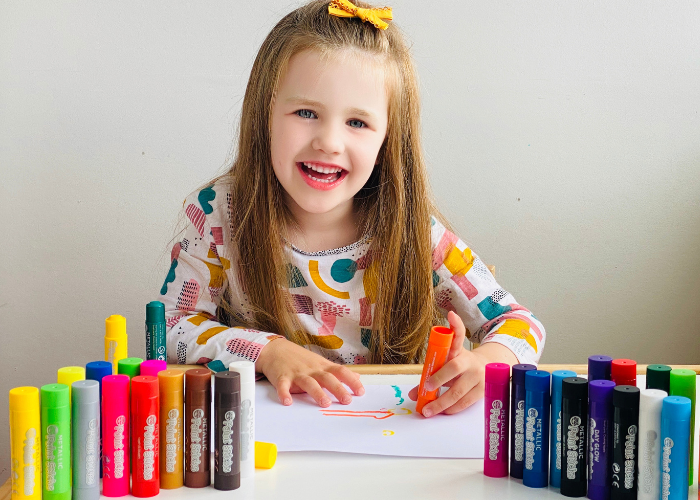
- Improved Attention and Focus: Painting and drawing keep children focused and attentive as they immerse themselves in the creative process. Little Brian Paint Sticks’ simplicity and convenience keep children engaged longer, promoting sustained attention and concentration. This enhanced focus transfers to academic tasks and everyday activities, improving learning outcomes and productivity.
- Encouraged Problem-Solving and Decision-Making: Painting and drawing with Little Brian Paint Sticks encourage problem-solving and decision-making skills. Children learn to make creative choices, adapt strategies, and overcome challenges, fostering resilience and problem-solving abilities. This skill set is invaluable for navigating real-world situations and developing a growth mindset.
- Therapeutic Benefits: Art can be therapeutic, allowing children to relax and de-stress. Little Brian Paint Sticks offers a mess-free and enjoyable painting experience, allowing children to unwind and express themselves creatively. This therapeutic outlet promotes emotional regulation, reduces anxiety, and enhances overall well-being.
- Parental Convenience: Little Brian Paint Sticks are mess-free and easy to clean up, making them convenient for parents. They can enjoy watching their children create art without worrying about spills or stains, making art activities more enjoyable for both children and parents. This convenience encourages parents to incorporate more creative activities into their children’s routines, fostering a positive and engaging environment at home.

How Little Brian Paint Sticks Redefine Artistic Freedom and Convenience:
Mess-Free Painting
One of the standout features of Little Brian Paint Sticks is their mess-free nature. Traditional painting often involves water spills, dirty brushes, and stained clothes, but not with Paint Sticks. These vibrant, water-soluble paints are solidified and twist up like a glue stick, requiring no water or brushes. Parents can say goodbye to the usual painting mess and hello to effortless creativity.
Versatile and Fun
Little Brian Paint Sticks offer endless possibilities for creative expression. Children can paint on almost any surface, from windows and kitchen tables to outdoor finds like rocks and leaves. These Paint Sticks cover surfaces quickly and dry almost immediately, making them perfect for DIY activity projects. The quick-drying feature means less waiting and more creating, keeping young artists engaged and excited.
Safe and Engaging
In a world where creativity is more important than ever, Little Brian Paint Sticks provide a fun, clean, and convenient way for children to explore their artistic talents. These innovative paints are perfect for young artists of all ages, offering endless possibilities for creative expression. With their vibrant colours, quick-drying formula, and versatility, Little Brian Paint Sticks transform how children paint, making art accessible and enjoyable for everyone.
Little Brian Paint Sticks are your solution for mess-free creativity. They enable your children to foster creativity and engage with the physical world through art.

Brain Development Through Art
Through colours and brushstrokes, kids can convey emotions they might not yet have the words for, helping parents understand their child’s inner world. By interpreting their artwork, parents gain insights into their child’s thoughts and feelings, providing a unique window into their world. Art activities stimulate areas of the brain responsible for fine motor skills, problem-solving, and critical thinking, making them essential for a child’s growth and development.
Innovative and Environmentally Friendly
Innovation is at the heart of Little Brian Paint Sticks. These high-quality art supplies are safe for children and the planet, ensuring that creativity doesn’t come at an environmental cost. The Paint Sticks are non-toxic, water-soluble, and easy to clean up, providing a safe and convenient painting experience for kids and parents alike. With multiple awards, Little Brian Paint Sticks have become synonymous with creativity, innovation, and joy in children’s art.
A Must-Have for Art Enthusiasts
Little Brian Paint Sticks are a must-have for any art or craft enthusiast. Their vibrant colours, ease of use, and mess-free nature make them a perfect addition to any craft cupboard. They are also excellent gifts for birthdays, holidays, or special occasions. Whether you’re an art enthusiast, a parent looking for engaging activities, or a gift giver, Little Brian Paint Sticks are the ideal choice.
Future of Creativity
The future is bright at Little Brian HQ. With ongoing plans to introduce new and exciting Paint Sticks, the brand is committed to keeping the spark of creativity alive in every child. Their four-step guide – pick your colours, lift and twist, unleash your imagination, and pack away without stress – proves just how easy and enjoyable painting can be with Paint Sticks.
Bring Little Brian Paint Sticks home today and watch your child’s creativity soar. With Little Brian, every child can become an artist, one vibrant stroke at a time.
Little Brian Paint Sticks are available at Leading Department Stores and Top Toy Retailers.
Media kindly brought to you by Modern Brands
]]>
What is emotional literacy?
Also known as emotional IQ, emotional literacy is the ability to understand emotions, develop healthy processing strategies, and learn to live with the emotional ups and downs of life without being overwhelmed or shutting down. Many teens struggle with finding a path through the emotional jungle of adolescence, but those that do emerge on the other side with greater empathy and coping skills.
Seeing it from their side
While we might see the stereotypical teenage tantrum or moodiness, we tend to forget that the interactions we have with them make up only a small part of their overall experience. Teens are under pressure from many different angles, such as bullies at school, friendships that come and go, teachers who may not understand them, family drama or conflict, school workload, and other endless causes of stress. All of these things coupled with the hormonal and bodily changes brought about by adolescence can add up to create an intense emotional cocktail that produces big emotions.
The important thing for parents and carers to do is to be curious rather than critical. This means that we need to find out what’s going on and why rather than simply reacting to the behaviour of the moment. The other thing that teens need from us is validation.
Why is validation important?
Being understood and loved anyway is a basic human need. Validation tells a teen, “I understand what you’re going through. I may not love your behaviour, but I love you. Let’s get through this together.”
Aside from helping teens to feel valued, validation can also help to de-escalate an intense emotional moment, and when a trusted adult models validation, it teaches teens how to self-validate. This is an important coping skill when they face emotional situations that may be overwhelming.
Validation begins by meeting teens where they’re at and finding the middle ground between extremes.
Meeting in the middle
Because many teens lack the skills they need to cope with big emotions, they often find themselves at extremes. On one hand, there is the teen who allows their emotions to control their life. This person may be unable to function in daily life because they are at the mercy of the emotional ups and downs that turn them into a mess.
On the other hand are the teens who “stuff” their emotions inside to function in daily life. This might work temporarily, but over time, those big emotions usually overflow because they have not been processed and dealt with. This can result in harmful or destructive behaviour such as substance abuse or self-injury.
In the middle is a healthy balance, where teens can learn to acknowledge their emotions, process them in healthy ways, and still cope with everyday life.
So, what can parents and carers do to help teens find a healthy middle ground?
Strategies to help teens process big emotions
Try these tips to help your teen deal with their emotions.
-
Talk it out
Teach teens emotional literacy by asking leading questions, talking about real or hypothetical scenarios that involve emotions, or encouraging self-expression through journaling. Talk about how to identify emotions, what they mean, and how to describe them.
-
Validate their feelings
Validate teens’ feelings by saying something such as: “That must be tough. I’m here for you.” Or, “I can see that you’re going through a hard time. You’re feeling sad/angry/hurt right now, and that must be tough.”
It’s important to remember that validation is not agreeing; it is an affirmation of your teen’s experience and their ongoing value in your eyes. It’s also important not to attempt to fix problems, talk them out of their emotions, or avoid dealing with the emotional issues at hand.
-
Teach mindfulness
Mindfulness encourages teens to be in the moment, experience the emotions of the situation, and helps them to identify their feelings. It’s a useful tool for anyone who tends to overreact; taking time to be present can be calming and help them process the emotions of the moment.
It’s important to remind teens that emotions are temporary; they will change, and nothing lasts forever. They will not always feel this way, and being mindful can help with processing and moving on to calmer waters.
-
Pay attention
Giving teens our undivided attention is an important part of the validation process. Put down your phone or stop what you’re doing, make eye contact, and actively listen to what your teen has to say. This communicates that they are important to you and you really care about their experience or what they have to say.
-
Repeat what you’ve heard
Repeat back to your teen what you’ve heard them say. This does two things. It tells your teen that you’re really interested in what they’ve just said (even if they object or give you a hard time!), and it helps you to be sure that you’ve understood their meaning. Good communication always seeks to make certain of the other person’s point of view. If your teen grumbles, just tell them that you’re seeking clarification to be absolutely sure that you understand where they’re coming from. Again, an important piece of the validation puzzle.
-
Encourage expression
Many teens benefit from expression through art, music, writing, or movement. Some of the greatest artists and writers of the world got their start by expressing their emotions through these creative outlets.
Encourage your teen to express themselves creatively, and provide opportunities for them to try new forms of expression.
-
Normalise but don’t minimise
Sometimes, it’s helpful to know that other people have gone through the same experiences. You could say something like, “I understand because I went through something like that, too.”
What is not helpful is minimising a teen’s experience by dismissing it as something that everyone goes through, and therefore it’s not that important. It’s important to the young person even if it is a common experience, so we must be careful not to damage their trust in us by trivialising something that’s a big deal to them.
You can do it!
Parenting a teen is a tough gig, but with the right tools, you can come out the other side intact. More importantly, you can help your teen navigate the stormy waters of adolescence and grow into their full potential. You can do this!
For more hints and tips and handy resources, check out my website, www.lifeskills4kids.com.au.
]]>Some people will cringe at the thought of art with children, whilst others enjoy practising their own creativity daily. As an early childhood teacher I’ve seen a few of the mistakes that well-meaning parents and educators can make when doing art, I think it’s important to highlight them.
- Placing too much emphasis on the product
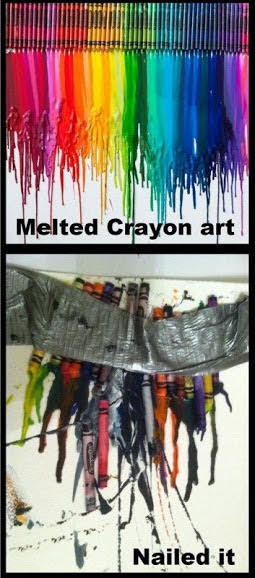
Most parents search Pinterest for their art and craft ideas and select an activity based on the carefully crafted Pinterest end result photo. We then get upset if our children derail from our plan and their artwork begins to resemble a scribbled mess instead.
FACT: The learning of skills in art occurs in the creation/process stage, therefore the end result doesn’t really matter.
- Buying expensive resources: Art doesn’t need to be expensive
In fact, most age-appropriate crafts can be done using recycled household items (old boxes, newspaper, toilet rolls). Discount stores also have lots of cheap resources. Paints can be made using our non-toxic homemade paint recipes.
- Expect too much: make sure your expectations are age appropriate
Children begin drawing and forming representational figures and attempting to write letters from around 4 years old, so don’t be disheartened when your 2-year-old can’t write her name or use scissors adequately. Don’t force it either, instead, we suggest lots of fine motor play including play dough, beading or sensory play. Parents often get disheartened when they have spent time setting up an activity and then their children play for approximately 30 seconds. It’s important to understand that a child’s focus and attention span can vary depending on their mood and interests. We suggest expecting one minute per year old your child is up to the age of 5years. Example 3 year old can only sit still and focus for 3 minutes.
- Intervene with the process: this one is something I see often.
If your child puts their sticker upside down or glues their googley eye the wrong way DONT FIX IT (unless they ask)! Fixing our children’s artwork sends them the message that their efforts weren’t good enough. Imagine if you had someone watching over your shoulder and automatically fixing anything you did wrong at work. Give your child space and time to correct themselves, otherwise, how will they ever learn?
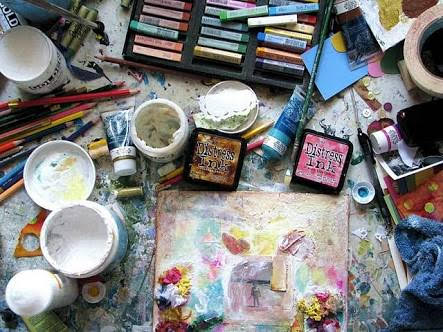
- Hate the experience: art can be messy, it can look disorganised and it can seem a little chaotic at times.
The most important thing is that you are all having fun. There’s nothing a bath and some wipes can’t fix. Incorporate art into your daily routine, take it outside to avoid the mess- you won’t regret it I promise!
You may also like to read:
5 Ways to build your kids’ confidence through Art
Transform your children’s drawing into wearable art objects.
]]>