An Australian-first national framework calling for greater protection for people and animals experiencing domestic and family violence was just launched at NSW Parliament House on 24 September.
The NSW launch follows the Roadmap’s national launch at Australian Parliament House on 19 August, and comes amid growing recognition that animals can be targeted by people using violence as a way to control, intimidate or cause distress to other family members.
Lucy’s Project CEO Monique Dam said the connection between human and animal safety had historically been overlooked.
“For too long the connection between human and animal safety has been overlooked. We know that if animals are at risk of violence, then the people who love them are at risk too,” Ms Dam said.
“When there is nowhere safe for survivors to go with their animals, many delay leaving and are forced to continue living with a partner and parent using violence.”
For most Australian families a pet isn’t just a pet, they’re another member of the family.
Pets can be part of the family, and part of the abuse
Pets are part of the everyday lives of millions of Australians, with 73 per cent of Australian households living with animals. They can provide comfort, companionship and a sense of safety during periods of fear and instability.
For children in particular, a beloved animal can be an important source of comfort and connection when home does not feel safe.
But those close bonds can also be exploited.
Threatening, harming or neglecting an animal can be used as a form of coercion and control, with research showing violence against animals can occur alongside domestic and family violence against people.
A NSW survey found 81 per cent of workers had supported victim-survivors who disclosed that a person using violence had threatened to harm or kill animals.
Survivor advocate Talie Star, whose insights helped inform the Roadmap, said animals could provide a sense of safety during experiences of violence.
“Being in a place where there was not a lot of love, my animals created that love and that safe place,” she said.
“It was like a softness in all the hardness.”
Lack of pet-friendly accommodation remains a major barrier
One of the key issues identified in the Roadmap is the shortage of emergency, crisis and transitional accommodation where people can stay safely with their animals.
For a parent trying to leave a person using violence, that can mean deciding whether to leave an animal behind, arrange temporary care or delay leaving until accommodation can be found.
Other barriers can include the cost of boarding, difficulties transporting animals and concerns around ownership where an animal is registered or microchipped in the name of the person using violence.
In some cases, women and children may live in cars with their animals because they cannot find safe accommodation where they can remain together.
While progress has been made in recent years, including the rollout of some animal-inclusive refuge models in NSW and Victoria, access remains inconsistent across Australia.
The Roadmap calls for governments to increase funding for animal-inclusive emergency, crisis and transitional accommodation, including modifications to existing refuges and the construction of new facilities.
It also recommends funding emergency boarding, foster care, veterinary treatment, food and transport for animals when families cannot initially remain together.
Calls for animals to be recognised as victim-survivors
The Roadmap also calls for animals to be recognised in legislation as victim-survivors of domestic and family violence in their own right.
Currently, animals are generally treated as property under Australian law.
Lucy’s Project argues this can create further barriers for victim-survivors, particularly where a person using violence claims ownership of an animal or is listed on its registration or microchip.
The Roadmap recommends allowing family violence protection orders to be made for animals and improving processes around ownership, registration and information sharing.
It also calls for greater education and training across the domestic and family violence, homelessness, legal, veterinary, animal welfare and law enforcement sectors.
The aim is to ensure frontline workers understand how violence against animals can be linked to violence against people and know how to recognise, record and respond to the risk.
A focus on prevention
The Roadmap also looks beyond crisis response and considers how violence can be prevented in the first place.
One recommendation is for animal welfare, empathy and compassion towards animals to be included in respectful relationships education across early childhood, schools, universities, vocational education and workplaces.
The approach reflects the Roadmap’s broader argument that the safety and wellbeing of people and animals are interconnected.
The framework was developed following a national roundtable convened by Lucy’s Project in 2025, which brought together more than 100 survivors, researchers, advocates and practitioners from 80 organisations across Australia.
The Roadmap is also supported by the Petstock Foundation through a one-year, $150,000 partnership with Lucy’s Project. The partnership reflects the Foundation’s focus on strengthening the human–animal bond and is helping Lucy’s Project drive greater awareness, collaboration and systemic change to improve safety for people and animals experiencing domestic and family violence.
Participants in the roundtable identified several persistent gaps, including a lack of animal-inclusive crisis accommodation, limited recognition of animals as victim-survivors in their own right and poor coordination between human services, animal services and law enforcement.
Lucy’s Project is now calling on all levels of government to adopt the Roadmap’s recommendations and invest in coordinated reform.
The organisation says its goal over the next five years is to ensure human and animal victim-survivors can find a safe home together, frontline workers know how to respond and services across sectors work together.
For families experiencing domestic and family violence, that could mean one less barrier standing in the way of safety.
If you or someone you know is experiencing, or at risk of experiencing, domestic, family or sexual violence, contact 1800RESPECT on 1800 737 732. In an emergency or if you are in immediate danger, call 000.
]]>We all know that Father’s Day is a day to celebrate all father figures, but what else do you know about this day? Here are some fascinating facts about Father’s Day and dads that you might not know:
1. The first Father’s Day was inspired by a single dad
Father’s Day came about thanks to the daughter of a single dad called William Jackson Smart. A Civil War veteran from Washington in the United States, William’s wife tragically died during the birth of his daughter, Sonora Smart Dodd.
William raised Sonora and her five older siblings on his own. With Mother’s Day celebrated each year, Sonora felt her Dad – and fathers everywhere – deserved a special day too. She campaigned for the first Father’s Day, which was held in her father’s birth month, June, 1910.
Interestingly, Sonora’s campaign wasn’t universally embraced at first. Some critics argued that the holiday was unnecessary or purely commercial. Yet, her persistence paid off, and Father’s Day eventually gained official recognition in the US in 1972 under President Nixon.
2. Father’s Day initially received opposition in Australia
In the 1930s, the idea of a Father’s Day started to take hold in Australia, with discussions cropping up each year after Mother’s Day in May.
Some didn’t welcome the idea, though. In 1939, a Sydney newspaper published a piece about Father’s Day, including comments from Reverend Rayward, superintendent of the Central Methodist Mission:
“There is as yet no Father’s Day. Commercial interests endeavour every year during September to initiate such a day, but it always falls flat. In view of the fact that the move is purely commercial, it deserves to do so.”
This shows that the debate about commercialisation isn’t new! Even back then, people worried Father’s Day might lose its meaning if retailers pushed it too hard.
3. Father’s Day arrived in Australia in a different month
Mother’s Day in Australia lines up with the rest of the world, in May. Father’s Day; however, is celebrated here in September while dads in the UK, US, and most other parts of the world celebrate it in June.
Most commentators suggest the date was chosen for commercial reasons and to fit around other dates on the Aussie calendar. However, way back in 1911 – only a year after the first Father’s Day in the US – another Sydney newspaper reader suggested “seasonal” reasons:
“September should be the month in which to hail him king, for, under the Southern Cross, it is in that month Dad’s fancy lightly turns to thoughts of love.”
Celebrating in spring certainly has its perks – Australians can enjoy Father’s Day outdoors, in sunshine rather than winter chills, which adds a uniquely Aussie flavour to the day.
4. Father’s Day was well and truly alive in Australia in the 1940s
By the 1940s, Australia had embraced Father’s Day and celebrated it on the first Sunday in September each year. Indeed, some had become a little too enthusiastic about showing dads how much they care.
On Father’s Day in 1945, a discharged RAAF pilot, Maxwell Bishop Holland, took off from Mascot in a Moth plane on a mission. He flew to his father’s home in Vaucluse, descended from 3,000 to 100 feet, and threw out sweets with a Father’s Day message attached. The mission didn’t quite go to plan – although the sweets landed safely, they were seized by youngsters rather than the dads. And the well-meaning pilot coped a five-pound fine for flying without a civil licence!
Even today, this story reminds us that Father’s Day has always been about fun, love, and sometimes a little mischief.
5. Dads in Australia: Fact file
-
1 in 5 Australians are dads
-
4.6% of Australian dads are stay-at-home fathers
-
There are 156,000 single-parent dads
These numbers show that fatherhood comes in many forms, and the role of dads has evolved significantly over time.
6. We’re still celebrating, but dads are changing
Father’s Day grows more popular every year, and the dads being spoilt these days are a little different compared with the dads back when Father’s Day first gained popularity.
According to social researchers McCrindle:
-
2.2 million dads have kids under 18 years
-
The average age of dads with a newborn is now 33 years, rising steadily since the 1970s when it was 26 years
-
Stay-at-home dads are slowly growing in number. In 1981, just 1.9% of two-parent families had a stay-at-home dad. In 2016, that percentage was 4.6%
Modern dads want more time with their kids. Figures from the Working Parents Report
show:
-
65.1% of fathers not returning to work immediately after having a child are judged negatively by society
-
Over four in five (83.2%) say they would have liked to stay home longer
-
Over two thirds (68.4%) wish they had delayed returning to work to spend more early years with their children
Fatherhood today is about being present, emotionally engaged, and hands-on – a far cry from the stereotypical breadwinner image of the past.
7. Father’s Day Around the World
-
United States & UK: Celebrated in June
-
Thailand: Celebrated on the King’s birthday (Dec 5)
-
Germany: Vatertag includes hikes, beer wagons, and male bonding
-
Brazil: Celebrated in August with large family gatherings
No matter where you are, the way people celebrate Dad is as diverse as the dads themselves. This global perspective shows that fatherhood is honoured in many unique and meaningful ways.
8. How we celebrate today
Cards, celebratory lunches, and breakfasts in bed are standard gifts. But in the digital age, our search for the perfect present often takes place online.
Research shows many Australians turn to Google in the weeks before Father’s Day. Popular searches include: GPS navigation devices, soccer gear, hardware, outdoors supplies, and car merchandise.
Beyond gifts, experience-based celebrations are growing: family outings, adventure days, tickets to events, and shared hobbies. Social media has also become a platform for kids and families to publicly appreciate dads, creating new ways to celebrate that weren’t possible decades ago.
9. Fun & Interactive Facts
-
Did you know? World’s oldest man to father a child was 96 years old! Ramjit Raghav from India is the most widely recognised case, often cited in Guinness World Records and news reports.
-
Father’s Day trivia quiz idea: Can you guess which country celebrates dads on a king’s birthday?
-
Creative gift ideas: handwritten letters, handmade cards, BBQ in the backyard, or simply spending quality time together.
10. Conclusion
Armed with these Father’s Day facts, you now have even more reason to appreciate the day we dedicate to dads. Beyond cards and gifts, it’s a time to celebrate the love, guidance, and sacrifices of father figures in all forms.
Whether it’s sharing a meal, enjoying the spring sunshine outdoors, or simply telling your dad how much you appreciate him, make the day meaningful. After all, Father’s Day is about gratitude, connection, and cherishing the dads in our lives – today and every day.
Source:
https://trove.nla.gov.au/newspaper/article/
https://aifs.gov.au/publications/stay-home-fathers-australia/3-how-many-stay-home-fathers-are-there
You may also like to read:
]]>
You may have heard recently in the news that a COVID-19 vaccine has been approved and recommended by ATAGI (Australian Technical Advisory Group on Immunisation) for SOME children aged 6 months- 5 years in Australia (3 August 2022)
WHO IS ELIGIBLE:
Children aged 6 months-5 years WHO ALSO HAVE one of these conditions:
- Severe Immunocompromise
- Disability
- Complex/Multiple Health Conditions which increase the risk of severe COVID
Which conditions qualify:
- Severe primary or secondary immunodeficiency, including those undergoing treatment for cancer or immunosuppressive treatments
- Bone marrow or stem cell transplant
- Complex congenital heart disease
- Structural airway abnormalities or chronic lung disease
- Type 1 Diabetes mellitus
- Chronic neurological or neuromuscular conditions
- A disability that requires frequent assistance with activities of daily living, such as severe cerebral palsy or Down Syndrome
WHICH VACCINE IS RECOMMENDED?
- Moderna (SPIKEVAX) is the only vaccine currently recommended in Australia in this age group for children with the above listed conditions
WHAT IS THE RECOMMENDED SCHEDULE?
- 2 doses of vaccine, 8 weeks apart
- Dose is 25 mcg (¼ of adult dose)
- Those with severe immunocompromise are recommended to receive a 3-dose primary schedule
CAN COVID VACCINE BE GIVEN WITH OTHER IMMUNISATIONS?
- In children < 5 yrs, an interval of 7-14 days is preferred between Moderna COVID vaccine and other vaccines to minimise the risk of fever
HOW SOON AFTER HAVING COVID INFECTION CAN MY CHILD HAVE COVID VACCINE?
- Children 6 mths-5 yrs should wait 3 months after COVID infection before receiving COVID vaccine
WHY IS THE CURRENT RECOMMENDATION FOR SOME CHILDREN AND NOT ALL CHILDREN AGED 6mths-5yrs?
- Children in special groups mentioned above are at highest risk of severe infection and hospitalisation with COVID-19
- There is a very low risk currently of severe infection and hospitalisation in healthy children aged 6 mths-5yrs
- A relatively low rate of paediatric inflammatory multisystem syndrome (PIMS-TS) following COVID-19 infection age 6 mths- 5 yrs compared to older children (even less with current Omicron variants)
- Increased risk of fever post immunisation in children aged 6 mths-5 yrs
- Current constraints on global availability and domestic supply of Moderna vaccine for children aged 6 mths-5 yrs
NB: In USA, COVID vaccination (with both Moderna and Pfizer vaccine) in children aged 6 mths-5 yrs commenced in late June 2022 and is available to ALL children.
NB: COVID vaccination is recommended and available for ALL children in Australia older than 5 yrs of age
ATAGI will continue to monitor and evaluate evidence in effectiveness, duration of protection and vaccine safety in this age group and recommendations in Australia may change.
Dr Lexi
xxx
Instagram @drlexifry
Resources:
- Melbourne Vaccine and Education Centre (MVEC) https://mvec.mcri.edu.au/
- ATAGI statement: https://www.health.gov.au/news/atagi-recommendations-on-covid-19-vaccine-use-in-children-aged-6-months-to#:~:text=A%20paediatric%20formulation%20of%20the,years%20in%20the%20above%20categories.
Disclaimer: The content in this article is not intended to constitute or be a substitute for professional medical advice, diagnosis or treatment. Always seek the advice of your doctor or other qualified health care professional. Moreover views expressed here are my own and do not necessarily reflect those of my employers or other official organisations.
]]>With decades of providing world-leading early intervention services, First Voice and its respective centres across the country are urging Australian families to understand the options available for children with hearing loss today.
Despite the fact that children born deaf in Australia can learn to hear, listen and speak just like a child with typical hearing, 94 per cent of Australians are unaware of this life-changing reality and 84 per cent of Australians don’t know where to turn to for support if their child is born with or develops hearing loss.
First Voice Chair and Director, and Telethon Speech & Hearing CEO Mark Fitzpatrick, says he is on a mission to educate Australians to know that with timely and effective interventions, a life of hearing, listening and speaking is possible for kids who are deaf in 2022.
“For parents, a hearing loss diagnosis can be full of unknowns and uncertainties about the future, so it is critical that we educate them on the options available to encourage informed decisions that can enable their child to embrace a world of sound,” said Mr Fitzpatrick.
“Over 99% of Australians have an oral language – and many families who have a child with a hearing loss want their kids to have the same opportunities as any other child their age.
“We know that children with hearing loss who receive listening and spoken language therapy and hearing technology, such as cochlear implants and hearing aids, have the potential to develop speech and language skills at the same level as their typical hearing siblings and peers.
“With the number of Australians with hearing loss only set to double by 2060, now is the time to make some noise on the life-changing possibilities that early interventions can enable those who are deaf,” he added.
Parents, Sally and Phil Wuersching were frightened by the unknown when four-year-old, Max was diagnosed with moderate to severe hearing loss in his right ear, picked up during a routine check-up.
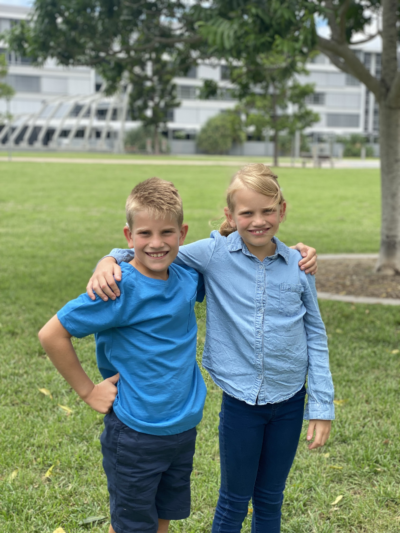
Since connecting with Queensland First Voice centre, Hear and Say, Max has been supported to meet speech and language goals, undergoing cochlear implant surgery in his right ear and since learning to hear, listen and speak.
“Over the past four years, Hear and Say has supported our family through Max’s hearing loss, with tailored listening and spoken language therapy that has reassured us that he can go on to reach his dreams and allowed him to hear, listen and speak beyond what we thought was possible,” said Mr Wuersching.
“It can be daunting for any parent to navigate the unexpected, which is why it is so important that parents listen up this Hearing Awareness Week and understand that with the right support and tools, your child can soak up those small and special moments in life – like the sound of laughter, music or the words, ‘I love you’”.
This Hearing Awareness Week, the Wuersching family and First Voice challenge the public to increase their understanding on how recent advances in technology, such as cochlear implants and hearing aids, are drastically reshaping outcomes for Australians with hearing loss.
The intervention services and support provided by First Voice centres across the country is opening worlds and giving children the ultimate gift – the ability to hear their parents voice for the first time, the sound of the ocean, the power to communicate without restraint and the ability to enjoy a world full of joy and colour.
For more information, head to https://www.firstvoice.org.au/ or call 07 3850 2111.
]]>