
The Art of Sustainable Parenting
Irrespective of whether you see yourself as an eco-consciousness parent, the hope and wish for a bigger, better future for all children is at the heart of every one of us. A growing wave of environmental awareness is sweeping across parents-to-be, especially those in their second trimesters. It is common to start researching, comparing and making informed decisions about what baby products suit your lifestyle. During this time, a common question gets asked: How can we create a sustainable future for our children without compromising style, comfort, and functionality?
In the vast array of options, Bumbleride stands out as a sustainability pioneer: a brand that celebrates 20 years of commitment to sustainable parenting in 2024. Their strollers redefine the parenting experience by seamlessly integrating style, comfort, and eco-conscious living. The brand’s dedication to the environment resonates in every aspect of their prams and strollers, emphasising the use of clean and eco-friendly materials. In this article, we delve into the features that make Bumbleride prams a beacon of hope for environmentally aware parents.
At the heart of Bumbleride’s ethos is the celebration of sustainability. Their strollers are not just a means of transport; they are a statement of intent – a choice to nurture your child’s future and the planet we call home.

Choosing Bumbleride for a Sustainable Tomorrow:
Clean + Eco Materials
Bumbleride’s dedication to sustainability begins with the very fabric of their strollers. Crafted from 100% recycled, non-toxic materials, the fabrics used are OEKO-TEX Standard 100, Class 1 certified, ensuring they are free from harmful chemicals. Textiles, aluminium, and plastics are carefully selected for durability, safety, and minimal environmental impact.
The stroller fabrics are free from fire retardants, lead, phthalates, BPA, polyurethane foam, PVC, vinyl, formaldehyde, chlorine, and PFAS (forever chemicals). Bumbleride believes that clean living starts with clean materials.
Upcycled Fishing Nets and Recycled Plastic
Bumbleride takes sustainability a step further by incorporating upcycled fishing nets into 25% of the plastic components of their strollers. This not only reduces plastic waste but also gives new life to materials that would otherwise harm marine life.
The fabric used in Bumbleride strollers is made from 100% recycled plastic bottles, with 65 bottles used for a single stroller. This commitment to recycling extends beyond materials, emphasising a circular approach to production.
To dive deeper into the specifics of their materials, you can explore Bumbleride’s product materials page.
Bumbleride Stroller Collections
Bumbleride offers diverse strollers, each tailored to different lifestyles and preferences. Let’s explore the key features of some of their standout collections.

Indie – New Collection
Overview:
The Indie collection is designed for those who choose the road less travelled. It is built for all-terrain adventures and boasts three 12″ air-filled tires and all-wheel suspension. The lightweight, compact frame ensures ease of use, while the one-step fold and standing stow make it a practical choice for urban living.
Eco Highlights:
- PFAS-free durable water repellent
- Fabric made from OEKO-TEX Standard 100 certified 100% recycled PET
- Innovative solution dye process conserving water
- 25% of plastic frame components are sourced from recycled fishing nets
Details:
- Ready at birth with infant-ready mode
- All-wheel suspension and air-filled tires for smooth rides
- Spacious cargo basket for storage
- Car seat compatible with various brands

Era – New Collection
Overview:
The Era collection seamlessly combines city living with all-terrain functionality. With a reversible seat ready from day one, it offers an adjustable, non-toxic cork handlebar for comfort and sustainability. The extra-long footwell ensures ample room for your child to grow.
Eco Highlights:
- Cork handle for sustainability
- PFAS-free durable water repellent
- Fabric made from OEKO-TEX Standard 100 certified 100% recycled PET
- Innovative solution dye process conserving water
- 25% of plastic frame components are sourced from recycled fishing nets
Details:
- Reversible seat for various configurations
- Adjustable handlebar made of all-natural cork
- Spacious canopy with UPF 45+ protection
- Car seat compatible with multiple brands

Indie Twin – New Collection
Overview:
The Indie Twin offers a narrow silhouette for parents with multiple children and a smooth push on air-filled tires with all-wheel suspension. The side-by-side seat design allows customisation for each child, making it a lifeline for parents with twins.
Eco Highlights:
- PFAS-free durable water repellent
- Fabric made from OEKO-TEX Standard 100 certified 100% recycled PET
- Innovative solution dye process conserving water
- 25% of plastic frame components are sourced from recycled fishing nets
Details:
- Independent seats for different age ranges
- Compact fold with auto-lock
- Spacious canopies with UPF 45+ protection
- Car seat compatible with various brands

Speed – New Collection
Overview:
Designed for the active parent, the Speed collection is a purpose-built running companion with all-wheel suspension and air-filled tires. The Speed3 Steering offers running, jogging, or walking versatility, while extra reflective elements enhance safety during outdoor adventures.
Eco Highlights:
- PFAS-free durable water repellent
- Fabric made from OEKO-TEX Standard 100 certified 100% recycled PET
- Innovative solution dye process conserving water
- 25% of plastic frame components are sourced from recycled fishing nets
Details:
- 360 swivel, partial swivel, and lock modes for the front wheel
- Ergonomic handle trigger release for easy use
- Spacious canopy with UPF 45+ protection
- Car seat compatible with various brands
Mini Side Board
Compatibility:
The Mini Side Board is compatible with Indie, Era, and Era Twin collections, offering an additional feature for your stroller.

When Can You Run With Baby?
The postpartum period is a delicate phase that demands careful consideration, particularly when it comes to reintegrating physical fitness into the lives of new parents. Experts in postpartum exercise unanimously stress the Importance of a minimum 12-week hiatus before resuming running. This collective emphasis is rooted in the need for physical recovery from childbirth and addressing potential pelvic floor issues integral to overall well-being, recognising the uniqueness of each postpartum body. The nuanced approach, as outlined in a 2021 report in BMJ, underscores the Importance of pelvic floor care, which is often overlooked in postpartum considerations.
The 2020 report in the British Journal of Sports Medicine reinforces this caution, advising a jogging delay for those with symptoms like urinary leakage. Whether or not apparent pelvic floor issues exist, experts advise a gradual return to exercise, recognising the individuality of postpartum bodies. Physician approval before postpartum exercise initiation is paramount, with a comprehensive pelvic health evaluation recommended for all new mothers as a proactive measure in preventing and managing issues like pelvic organ prolapse and urinary incontinence. This collective approach ensures a safe and sustainable return to running, promoting holistic postpartum well-being.

Jogging Strollers for Infants:
Careful consideration is essential when selecting a jogging stroller tailored to the specific needs of an infant. Despite assertions from certain strollers claiming suitability for infants below six months, Bumbleride emphasises the Importance of seeking guidance from a pediatrician before utilising them for jogging activities.
The readiness to resume running postpartum varies from person to person. While one might be physically prepared after three months (emphasising individual differences strongly), the same cannot be said for the baby. This is primarily due to the fact that most jogging strollers cannot fully recline. Consequently, engaging in running activities with a baby is recommended once the infant reaches a minimum age of 6 months. Even at this stage, readiness may vary, and waiting until the baby is around eight months old might be more suitable. The crucial factor here is the development of good head and neck control, which is necessary to endure the speed and turns associated with running while accommodating a baby. If uncertain about the appropriateness of running with a baby, seeking approval from a and healthcare provider is recommended. Additionally, verifying the jogging stroller’s minimum age and weight requirements before starting a running routine is a prudent step before donning your running shoes.

Choosing the Right Jogging Stroller:
-
Ensuring Safety Compliance: Bumbleride and ACCC Standards
Selecting a jogging stroller requires meticulous attention to safety standards, especially those mandated by the Australian Competition and Consumer Commission (ACCC).
-
Critical Safety Features Upheld by Bumbleride
Bumbleride, committed to stringent safety compliance, aligns with standards effective since July 2008. Following Australian Standard AS/NZS 2088:2000, these standards prioritise crucial safety features in prams and strollers.
-
Mandatory Safety Measures in Bumbleride Strollers
Mandated safety requirements, such as a tether strap, fortify child safety by preventing unintended accidents. Bumbleride’s strollers adhere to these requirements, featuring inbuilt restraint harnesses and parking brakes for comprehensive child protection and stability during use.
-
Harness System: Prioritising Child Security in Bumbleride Strollers
When assessing Bumbleride jogging strollers, focus on the harness system. Models with five-point harnesses enhance child security during jogging sessions.
-
Wrist Strap for Added Security
Bumbleride strollers include wrist straps, an additional safety measure preventing accidental movements during runs. If a chosen model lacks this feature, purchasing a separate wrist strap to enhance security is advisable.

-
Adjustable Height for Comfort
Consider Bumbleride jogging strollers with adjustable height handles for a more ergonomic jogging experience. This feature ensures a natural arm position while running, preventing discomfort.
-
Canopy Considerations: Ventilation and Protection
Meticulously evaluate the canopy features of Bumbleride jogging strollers, prioritising models offering good ventilation and effective shielding from sun exposure and light rain.
-
Brake Mechanism: Hand-Operated Control
Examine the braking mechanism, favouring Bumbleride strollers with hand-operated brakes for better control, especially during running.
-
Test Drive Assurance
Before finalising a purchase, conduct a test drive of Bumbleride jogging strollers. This hands-on approach allows performance evaluation, ensuring a seamless running experience without hindrances. Test driving adds an extra layer of assurance before committing to Bumbleride strollers for active parenting needs.
In 2024, as Bumbleride celebrates two decades of excellence, its commitment to sustainable parenting shines brighter than ever. The brand’s eco-friendly strollers are more than just a means of transportation; they are a statement of values. Nurturing Tomorrow is not just a tagline; it’s a lifestyle, and Bumbleride is at the forefront, crafting strollers that embrace the future with open arms.
To view their entire range, visit www.bumbleride.com.au.
Note: This article is for informational purposes only and does not constitute medical, parenting, or professional advice. Consult with a qualified healthcare provider or parenting expert for specific advice.
Media kindly brought to you by Bumbleride
]]>So how do you make sure that dressing your kids up for special occasions is as effortless as possible over these summer holidays? We’ll be answering just that question today by sharing our top tips for dressing even the fussiest kids up for a range of formal parties.
Shop for versatile kids’ formal wear
Kids can be fickle in that their tastes can change rapidly as they grow. And considering that they’re still trying to figure out who they are, their tastes changing on a whim can make a lot of sense. As parents, it’s our job to make sure that our kids feel like they have the right to have options. That’s why it pays to stay flexible when shopping for kids’ formal wear.
Thankfully, there are kids’ clothing stores that don’t just stock trends alone. For instance, when you shop at Minihaha, you can enjoy a wide selection of styles across their range of formal wear. Finding clothes that have a timeless appeal will undoubtedly help your kids take pride in building up their formal wardrobe. As an added bonus, timeless pieces can also be styled in a number of different ways, so you could easily get away with buying just one or two dresses for your kids to cycle through this holiday season rather than buying a whole wardrobe’s worth of fancy formal wear.
Just remember to take their input when shopping for their formal wear as well, both when it comes to style and fit. You want to make sure that your kids feel comfortable in any dresses or suits they’re asked to wear for upcoming formal occasions or even for family portraits.
Invest in a range of accessories
When it comes to dressing kids up for special occasions, you’d be surprised by just what a difference adding a hair clip or other accessories can make. If your toddler demands to wear a tutu over black leggings and light-up shoes, for instance, adding a gold clip or other fanciful accessories can help effortlessly elevate their look from casual to formal-ready.
Your kids may also enjoy shopping for accessories more than they do shopping for clothes. After all, accessories can be held and fiddled with. If you can get your kid excited to pull out their accessories before formal occasions, it can help organically introduce them to the importance of dressing their best during special events like weddings, Christmas lunches, and other family get-togethers.
Keep them comfy in comfortable shoes
Speaking of wearing ‘light-up shoes’, if you know your kids are going to feel more comfortable in their everyday footwear, then why not just bring them along so that they can either wear them all day or even swap into them later in the evening? Even adults bring extra pairs of shoes at events like weddings, so it’s more than reasonable to let your kids step out of their tiny loafers or heels if their feet are feeling sore.
Letting your kids change into comfier footwear later in the evening is also a great way of protecting their dressier shoes so that they can be worn at future occasions. So long as you can get a few snaps of them in their fancy shoes or perhaps even hide their sneakers in photos, it’s no harm done – and all whilst ensuring that your kids stay comfy throughout that formal event. In other words, letting them wear whatever shoes they want to wear can be an easy win-win.
Embrace the art of layering
If your kids are happy to get dressed up until a certain point in the day (when they start to get uncomfortable), then you could opt to layer some more casual clothing under their formal look. For little girls, this can be as easy as putting a t-shirt and leggings under a dress. As for boys, you can easily pop a shirt under their suit and tie.
Layering your kids’ clothing is already a great way to make sure that spills or messes caused by fussy eaters on a revolt don’t end up ruining your day. Think about it – would you rather run out to your car in the middle of a wedding reception to grab a spare shirt for your toddler, or would you rather they already have an extra shirt underneath?
Be patient and stay communicative
Finally, if getting your kids to put on a dress or a suit is proving to be a little trickier than expected, try not to let the stress of the day impact their experience of getting ready for that formal occasion. You want to make sure that your kids are able to maintain positive memories on days of significance to your family, whether it be a wedding, an anniversary party, or any other occasion that’s sure to both be documented in your family photo albums, and remembered fondly by your children’s friends and loved ones.
So if your little one is crying, screaming, or just feeling generally stressed about having to get dressed up in new and unfamiliar clothes, just be there for them. Let them process their emotions in their own time (perhaps even as you get dressed), and then be there to regroup calmly once the storm has subsided. If your kids feel like they do have a sense of agency in that situation and that they can maintain a say in how they get dressed, they’ll be more likely to stay comfortable throughout the day and also have a good time with the rest of you and your family once the event is in full swing.
As you can see, getting your kids used to formal wear requires a little bit of back and forth – from shopping for dresses and suits yourself, to getting kids more interested and involved as they grow up. And truth be told, the best approach should always be decided on a case-by-case basis, with parents thinking critically about how they can feasibly fulfil their child’s own comfort needs alongside making sure that they look picture-perfect on the big day.
Just remember to stay present, patient, and above all empathetic. That way, you can position yourself to better express the excitement that accompanies getting dressed up rather than placing needless emphasis on any stress or time pressure.
]]>Many parents or parents-to-be are aware of the incredible benefits of babywearing and that a safe, comfortable and easy to use baby carrier is a must-have for their parenting tool-kit. With a large range of options available that tick all of these boxes, choosing a baby carrier for your family can seem overwhelming.
The easiest way to select the one that’s right for you is to begin with the type of baby carrier you think you’d be most confident to use.
Below is a summary of the 5 main types of baby carriers to make the process much easier for you
Stretchy Wraps
Stretchy wraps are a popular choice for parents of newborns who are open to purchasing more than one baby carrier.
Once you get the hang of tying them, they are really easy to use. The most loved feature is that once you’ve put it on, you can take the baby in and out without re-tying it.
The limitation with stretchy wraps is that due to the nature of the fabric, they can become uncomfortable when babies weigh around 8-10kg. If your budget only allows for one baby carrier or your baby is already older than 5 months, we suggest skipping the stretchy wrap and purchasing something with a longer lifespan.
If you’d love to start your babywearing journey with the popular stretchy wrap, you can’t go past a Lillebaby ‘Tie the knot’ wrap.
Woven Wraps
If you want something really versatile, super snuggly, and very supportive for a newborn through to toddlerhood and beyond, woven wraps are a great choice. Learning to wrap does involve a bigger learning curve than most of the other options, however once you learn how to do one carry confidently, you’ll be able to use it with ease.
Woven wraps are long (the most popular sizes vary from about 3.6 metres to 4.6 metres) but you’ll be surprised how quickly you can use up this length when tying. It can be a little cumbersome if you’re wrapping/unwrapping when stepping out of the car in the rain, and if you feel like you need something really quick and easy to use you may like to consider a mei tai or a buckle carrier instead.
Our top pick for newborn woven wraps is the Pure Baby Love woven wrap as they incredibly soft straight away and are perfect against delicate newborn skin.
Mei Tai’s
Mei Tai’s are semi structured carriers which have a panel and have 4 long straps coming from it which form the waistbelt and shoulder straps. You simply tie it around you and your baby each time.
Many Mei Tai’s on the market have an adjustable panel that grows with your baby, so infant inserts are not necessary.
Our favourite mei tai is the Fidella Fly Tai. The panel is very adjustable to suit from birth to toddlerhood (the ‘baby’ size), or from 3 months through to toddlerhood (the ‘standard’ size, which extends to be even bigger than the very generous ‘baby’ size)
Ring Slings
Ring slings are great for newborns as they’re quite quick to put on, although they do have a bit of a learning curve. Their limitation is that they only carry across one shoulder so if you have back problems or are planning on purchasing only one baby carrier, we suggest considering something that distributes the weight across two shoulders like all of the other options mentioned above. If you’re wanting an extra carrier to use for quick trips to the shop or folds up really small in your bag as a ‘just-in-case’ then they are a great option.
We love Girasol ring slings or Little Frog ring slings
Buckle Carriers
Buckle carriers are the most popular baby carrier type available, mostly due to their ease of use. They are incredibly quick to put on, and there isn’t much of a learning curve at all. They also tend to be a favourite with most males who are looking for something quick and simple to put on.
It’s important to select a buckle carrier that has the option for a wide base (where the baby sits), to ensure adequate support for the baby’s hips and spine as they grow.
Newborns generally need either a carrier that can fold down to have a narrower base or an infant insert until they are tall enough to fit into a carrier with a wide base (usually around 5 months, but it varies)
Our suggestion for newborns is the Lillebaby Carrier which doesn’t require an infant insert.
Many people agree that it’s worth having at least one buckle carrier in your house as your baby/toddler grows. If you’re looking for something to last from birth through to toddlerhood and beyond that your whole household will be happy to use, a buckle carrier really is a wonderful option.
So there you have it – choosing a baby carrier made simple!
If you have any questions at all, please don’t hesitate to contact us at Nurture Nest
You might also like to read:
Safety Considerations When Using (and Choosing) Your Baby Carrier
]]>The flavour of rhubarb is so yummy and conjures up warm winters and nights by the fire with a rhubarb pie or crumble after dinner.
Rhubarb is super versatile, it can be baked, used in sweets and puddings, as a marinade, jam/chutney, added to ice creams/sorbets and so much more!
This amazing vegetable is now in season, so grab some at your local fruit and veg shop and get cooking.
Did you know?
- The leaves of Rhubarb are poisonous and should never be eaten or given to animals.
- Rhubarb is high in iron and vitamins C and A.
- Rhubarb is a vegetable and not a fruit. Although Americans “in the 1940s, took rhubarb to court and changed its classification to fruit for the purpose of regulations, thus changing the taxes and tariffs associated with it.” (SBS.com.au)
- Rhubarb was only used in 1800’s in the UK and America for cooking. Previously it was used medicinally for digestive issues and as a treatment for cold sores.
- The words, “Rhubarb Rhubarb Rhubarb” is used in acting to pretend you are talking about something but not actually saying anything. Some people use this phrase to also convey silliness and nonsense when they need to. Maybe when all the kids are going silly yell, “Rhubarb Rhubarb Rhubarb!” And see what happens.
Since rhubarb is available now, I wanted to make a few dishes. I was keen, as I have never cooked with Rhubarb before.
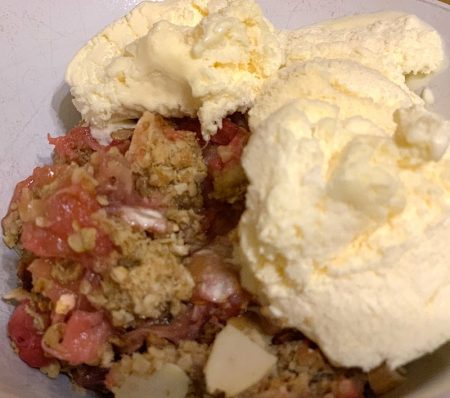
I started my Rhubarb experience with a classic, Apple and Rhubarb Crumble.

Apple and Rhubarb Crumble
Preheat oven to 180°C and 160°C if fan forced oven.
I used the Taste.com.au recipe
Ingredients
- 5 Apples cored and chopped up – I used Pink Lady apples. The recipe initially asked for granny smith apples.
- 6 rhubarb stems washed & trimmed. Cut into 3cm pieces
- 1/3 cup caster sugar
- 1/2 teaspoon Ground Cinnamon
- 1 teaspoon finely grated lemon rind
- 2 teaspoons plain flour
- 1 cup rolled oats
- 1/2 cup plain flour, extra
- 1/2 cup firmly packed brown sugar
- 80g butter – I zapped it in the microwave as it was too hard
- 1/4 cup flaked almonds
Equipment
- Large capacity baking dish
Method
Step 1: Place apple, caster sugar, cinnamon, lemon rind and 2 tablespoons of water in a large saucepan over medium heat. Ideal if covered but I didn’t.
Cook for 5 minutes or until apple starts to soften. Now add the rhubarb and flour. Cook for a further 3 minutes until the rhubarb softens.
Step 2: Transfer apple and rhubarb to the baking dish.
Step 3: Combine oats, extra flour and brown sugar in a bowl. Using your fingertips rub the butter into mixture until it looks like breadcrumbs. Add the almonds.
Add the crumble mixture to the top of the rhubarb mixture.
Bake for 35 minutes or until golden. Cool for 5 minutes, it will be super-hot so be careful. Now eat your yummy dessert.
Rhubarb Compote
Ingredients
- 500 grams of rhubarb
- 100 grams of sugar
- 50 grams of water
- 1 orange juiced and zested

Method
Step 1: Cut up the rhubarb stems into 3 cm pieces
Step 2: Juice 1 orange and get as much zest as you can
Step 3: Add the orange juice, orange zest, water, sugar and rhubarb to a saucepan.
Step 4: Cook for about 10-15mins or until the rhubarb is super soft and the water and juice have reduced. It should look like a sauce.
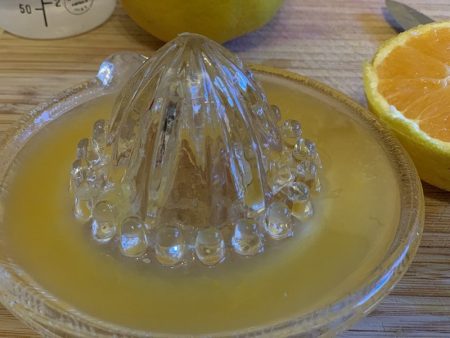
Once cooked take off the heat and allow to cool. You can then add it to an airtight container or use it for a meal straight away.
Rhubarb Marinade – Same as the compote
Use the rhubarb compote to marinade meat. I marinated beef steak, but you could use chicken, pork or fish.

Method
Step 1: Put your chosen meat into a container
Step 2: Smoother the meat with the rhubarb compote
Step 3: Cover the container and put in the fridge and leave for a few hours
Step 4: Cook the meat, be aware that the rhubarb marinade will come off but make sure to add it to the meal, it is so tasty and adds so much flavour.
Rhubarb works well with ginger, honey, chilli, cinnamon, cardamom, coconut, tomatoes, strawberries, apples, pears, blackberries, blueberries, dates, lavender, maple syrup, and custard.
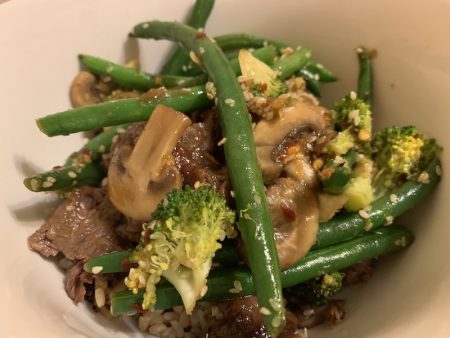
The steak was chopped up and served with broccoli, mushrooms & beans in a chilli and honey sauce with sesame seeds. I used 90-second rice so that made it even easier to make.
It was so yummy and easy to make.
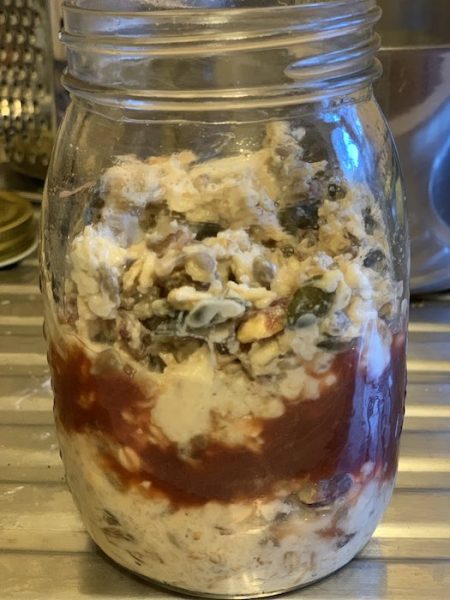
Rhubarb Breakfast Jar
Method
Step 1: Get a mason jar, make sure it is washed and clean
Step 2: Use some oats that you have soaked or oatmeal. Add nuts and anything else you would like with the oats/oatmeal
Step 3: Layer the jar with Oats, Rhubarb Compote (that you made earlier), other fruit and yoghurt.
Step 4: Once the jar is complete put the lid on and put it in the fridge for tomorrows breakfast.
This is a simple and easy way to get breakfast quick and eat it on the go.
You can also create a different compote of Rhubarb and Strawberries or other berries as well. Why not add blueberries to the different layers and some flaked almonds to add a different texture.
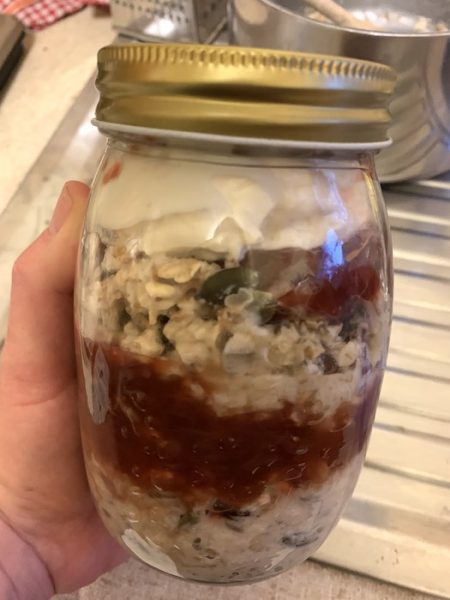
I hope you enjoy these recipes and ideas to add rhubarb to your meals.
Which Rhubarb recipe would you like to try?
Let us know what you create by sending in pictures to our Facebook page.
You may also like to read:
10 Tips for getting kids to eat more fruit and vegetables
]]>It’s a source of protein and monounsaturated fats, making it a perfect food for the whole family. As part of a healthy balanced diet, these ‘good fats’ may help lower cholesterol, reduce heart disease and lower blood pressure,” he added.
Joel recommends choosing a completely natural peanut butter such as Mother Earth.
Here are two recipes that you would surely love to try today.
Crunchy peanut butter slice
Ingredients:
1½ cup oats
½ cup spelt flour, sifted (option to use plain flour)
½ cup brown sugar
110g butter
1 cup Mother Earth crunchy peanut butter
2 tbsp. coconut oil, melted
2 tbsp. rice malt syrup (or honey)
1 tsp. vanilla essence
Pinch of salt
200g dark chocolate, melted
Method:
- Preheat oven to 180°C and line square baking tin with baking paper.
- Place oats, flour, brown sugar and butter into a mixing bowl and gently knead until mixture is well combined.
- Evenly press the mixture into the lined baking tray and place in oven for 15 minutes, or until golden brown.
- Remove tray from oven and allow to cool.
- In a mixing bowl add peanut butter, coconut oil, rice malt syrup, vanilla essence and salt and combine well.
- Pour mixture into baking tray and spread evenly.
- Melt chocolate over the stove, double boiler style (place chocolate in heatproof dish over simmering water)
- Pour melted chocolate over peanut butter mixture and place in fridge for 2 hours or until set.
- Once set, slice and serve.
Makes 12 slices.
Recipe by @the_nutritionguy.
Peanut butter banana smoothie bowl
Ingredients:
1 tbsp. Mother Earth crunchy peanut butter
2/3 cup oats
2/3 cup milk
1 banana, ½ in bowl + ½ for topping
1 heaped tsp. cocoa powder
100g Greek yoghurt
Chia seeds (optional)
Cacao nibs (optional)
Peanuts (optional)
Method:
Add the oats, milk, Greek yoghurt, peanut butter, cocoa powder and banana into a blender and blitz until smooth. Pour contents into a bowl.
Top with ½ banana, chia seeds, cacao nibs, peanuts and Mother Earth crunchy peanut butter.
Recipe by @the_nutritionguy.
You may also like to read:
]]>