Tutors are especially helpful in matters like this. These tutors are individuals who possess the capacity to explain concepts in a way that really sticks. There are two main avenues to explore when seeking assistance: peer tutoring and professional tutoring.
Although peer tutoring is commonly touted as the better option, each has its unique benefits. The key is to find which fits your needs and learning style. So, whether you’re looking for math tutoring in Melbourne or assistance with any other subject, the right kind of tutoring can make all the difference in your academic journey.
Learning Together with Peer Tutoring
Peer tutors are students themselves. So, peer tutoring involves students helping each other learn, with one student being more knowledgeable in the challenging areas.
In some cases, peer tutors are students who have already completed the course or subject you’re taking. In other cases, they are brilliant peers in the same class as you who understand concepts and topics faster or better. Peer tutoring offers the following advantages:
-
Relatability
Peer tutors have been in your shoes not long ago. They understand the challenges you’re facing because they’ve faced them too. Your teacher’s way of explaining concepts may not be helping your learning much. A peer tutor might offer a whole new approach, like using real-life examples to make that concept stick.
Also, working with someone closer in age to you can feel less intimidating. You might feel more comfortable asking questions and exploring different ways to solve problems. This relatability makes the learning process more collaborative.
-
Cost-Effectiveness
Typically, peer tutoring is more affordable than professional tutoring. Many schools offer peer tutoring programs for free or at a reduced cost, making it an accessible option for many students.
-
Flexible Scheduling
Since peer tutors are fellow students, they often have similar schedules to you. It makes them more flexible with meeting times as you both find what works for both of you.
What is Professional Tutoring?
Professional tutoring involves working with someone trained and often certified in tutoring. Even though they are experts in their field, aced the subject inside-out, some professional tutors are still students. Here are some key benefits of professional tutoring:
-
Expertise and Experience
Professional tutors usually have extensive knowledge and experience in their subject areas. They often bring a depth of understanding that guides you through even the trickiest topics.
Professional tutors are also good at spotting learning gaps. If you have a challenge in a particular area, professional tutors are more likely than their counterparts to identify your strengths and weaknesses. They then employ a range of teaching strategies that can offer you the support you need.
-
Structured Approach
Professional tutors typically have a more structured approach to tutoring. Their teaching plan is not restricted to a particular subject matter that’s challenging for you.
It involves providing comprehensive lesson plans and regular assessments according to standardized processes that are beneficial for long-term academic goals. When you’re preparing for an exam, a professional tutor has the right approach to guide you to high scores.
-
Reliability
The professional standing of professional tutors ensures they handle their tutoring like a job. They are often more reliable in terms of availability and consistency. This makes for more regular and ongoing support.
Choosing Between Peer and Professional Tutoring
Your choice between peer and professional tutoring depends on your individual needs, preferences, and circumstances. Here are some considerations to help you decide which fits you best.
-
Learning Style
If you learn best through casual and interactive discussions, peer tutoring might be more effective. For more structured learning, professional tutoring is more suitable.
-
Budget
Learning comes at a cost. This cost varies, depending on the option you choose. If you’re working with a limited budget, peer tutoring is likely the more budget-friendly option. But if you can afford to invest more in your education, professional tutoring might offer a greater range of resources and expertise.
Conclusion
A combination of both peer and professional tutoring can be the best approach. You might start with peer tutoring to get a handle on the basics and then switch to professional tutoring as you progress to more advanced material. Alternatively, you might use peer tutoring for ongoing support and professional tutoring for specific challenges or exam preparation.
]]>You may have heard that following the release of the 2017 NAPLAN results, the United Nations confirmed Australia has free fallen to 39th in a list of 42 advanced countries, which is hard to believe but true.
This clearly shows something is very wrong with our education system. In addition to this, it has highlighted the effects the standardised testing is having on student’s mental health with increased children reporting stress and anxiety.
Every parent wants to provide their children with the best opportunity to build a successful life for themselves, for this reason, many are supplementing their child’s education with home tutoring.
Kiddipedia’s Mission is to help build a bigger, better Australia. To further support to Australian families we have partnered with Tutors Field; an Australian based organization who can help you find a find a local private tutor for subjects including math, science, English, languages and even music in the cities of Melbourne, Sydney, Adelaide, Brisbane and Perth.
What are the benefits of a child having a home-based private tutor?
Tutor or no tutor? That is the question! As a mum of two, one of them still a toddler and the other in her primary school years (and hats off to those coping with more than two!), life is full on enough without having to think about schooling in general, let alone venturing out into the realm of home-based private tutoring.
While I’m sure there are many of you googling the pros and cons of private tutoring, I’m here to reassure you that there are most definitely some benefits to home-based tutoring and this comes from the perspective of being your average parent just wanting the best for their child.
More than once now, I’ve had teachers tell us our child may need some help when it comes to listening and paying attention in class. If you’re nodding your head in agreement you know what happens next, they recommend a pediatrician or some occupational therapy sessions to help with the areas they’re lacking in etc. What I felt was being missed here was that my child didn’t literally have any hearing or language difficulties (apart from your typical selective hearing!) it was more a case of knowing my child loved the social interaction aspect of school more than the learning side of it and a basic case of if she wasn’t interested in it, she wasn’t engaged.
As much as my adult self would love to say to my child ‘Well, I actually agree with you there darling, why should we do something in life if we’re not interested in it?’, the parent self-stopped me in my tracks and reminded me my child had years of schooling ahead of her and unfortunately, in order to prep her for the big wide world out there one day, there’s going to be a lot of things in life she won’t have the slightest interest in, but she’ll have to listen to all the same if she wants to learn and get ahead in life!
Now, enter a private home-based tutoring here!
The pros for us having a good, private home-based tutor were;
- They gave our child that much-needed one on one attention. Like adults, children have different learning styles and work at different paces and a good private tutor can cater their class or session around your child’s learning abilities. If your child is more visual for example, they might use pictures and maps to help them grasp a concept.
- It was convenient. Having a good tutor come to us instead of vice-versa, especially having other children, not only saved us the time and bother of travel but it meant I could get those simple household chores done and dinner ready knowing our child was getting the help and attention they needed and deserved.
- Built our child’s self-confidence. A private home-based tutor should not only be out to improve your child’s marks at school. They can and should set out to build a child’s confidence by helping them set and achieve specific targets which can sometimes even go beyond what teachers ask of them. When our child had specific goals to achieve, she remained stimulated and challenged – which is a necessity for learning!
- Tutors have access to a wide range of resources and teaching methods.
If you’ve hired a qualified, highly recommended tutor who is passionate about helping children learn, they should be knowledgeable on a range on alternative teaching methods such as the RULER approach, Steiner-Waldorf and even Montessori amongst more tradition methods however some of these focus less on structure and more on learning through play and discovering how we actually retain that information so it’s all about them working out what the best method would be for your child.
Overall, we felt that the time and money we put into having a private home-based tutor effectively helped our child focus better in class so we’re stoked with the outcome and she was pretty proud of herself to which of course, made it even more worthwhile!
Choosing a good tutor
On a side note, it’s best to seek advice from people you know who have had good experiences with and can highly recommend good private home tutors, however, more importantly, your child has to get along with them and the whole experience has to be a positive one. When tutoring comes across as being forced by parents and teachers, it could have the opposite effect and your child may be less engaged than if it had been presented to your child in an optimistic way.
What subjects does Tutors Field provide tutors for young children?
Tutors Field is an online community where parents can find and hire experienced tutors across a wide range of subjects, including math, English, music, music, languages, test preparation, and much more.
How does Tutors Fieldwork?
After entering your desired subject and postcode on Tutors Field, you’ll be redirected to an area where you can view a list of nearby matched tutors, together with their full profiles, and pictures.
After clicking on a tutor, you’ll be taken to their profile page, in here you can read a brief bio, browse reviews, and more.
If you locate a tutor who appears to be a good match, you can chat with the tutor via the chat room. Once arrived in the chat room, you can provide your needs with the tutor or ask any questions. All communication is completely secure.
When you are happy to book in your first lesson with a tutor, you only need to pay for a deposit of $25 to secure the lesson and this will be deducted from your first lesson fee. In other words, Tutors Field is completely free for parents.
]]>
Every parent wants the best for their child with the hope they have a happy, healthy and prosperous life, and one that surpasses ours.
Without knowing it, a parent is a child’s first teacher. It is our role to coach, tutor and in-grain essential skills to help prepare and best navigate their lives through challenges. Irrespective of how our lives have played out, it is our duty to make them acquainted with our achievements and disclose the lessons we’ve learnt from in the hope they will not repeat them.
If our children are to grow to have bigger better lives than ours, the ability to avoid bad debt and money stress is a critical life skill to acquire. Whether you are materialistic or not, the strength of our financial smarts is the foundation on which we build our lives.
For many children, their first interaction with money is generally one of observing their parents experiencing financial stress. Not a great introduction we would all agree. Australian households debt is now one of the highest in the world and has steadily risen over the past three decades with the ratio of household debt to disposable income continuing to rise to record highs.
Once children have had a negative exposure with money, we have to rewire the brain to re-introduce the experience to a positive one, not that of worry and stress. If only there was a product on the market to foster a positive introduction to money and learn savings goals.
Practical experiences with real money can help develop discipline and proficiency. As parents opening a bank account for them is usually how we start. This has been standard practice for generations however recently Australians have started to lose trust in the four big banks through their lack of honesty and loyalty to consumers. An example of this is the recent breach of trust by the Commonwealth Bank where retail branch staff fraudulently manipulated children’s accounts in order for staff to meet their targets. It is the belief of many Australians that these financial institutions should do more to help users live happier financial lives whilst they continue to boast about record profit margins.
Cash is important to early development, but in reality, children will not use it. With our busy lives, pocket money often gets forgotten making it difficult for children to build skills in saving. With the introduction of new technologies and contactless payment apps, Australia is moving closer to a cashless society. We’re removing money from the physical world and harming their ability to learn but not providing a viable alternative.
In a world where we are losing trust in banks and simultaneously moving towards a cashless society, how in our digital age do we teach children the value of money?
If only there was a product in the market that bridged the gap and provided parents with a safe, convenient and supervised way to turn pocket money into practical life lessons.
Well, would you believe there is, and it’s called Spriggy!
Spriggy are on a mission to help Australian kids raise their financial skills.
They are fully independent of the banks which, allows them to focus on delivering education to our kids – not a marketing tool for credit cards and mortgages when they are older. How refreshing is that in today’s society?
In the last 18 months, Spriggy has grown to over 115,000 members (how have we not heard of this before) and families getting real results with their kids.

So, how does Spriggy work?
It is a fresh and fun way to teach kids the value of money, how it is earned, how to save for the things they really want and spend wisely. The Spriggy app allows kids to apply real-world experiences in a controlled and transparent way.
Excitingly, Spriggy helps families by encouraging open, honest conversations about money, providing opportunities to teach responsibilities that come along with it and life lessons that are not taught in school. As a bonus, it’s a huge time and stress saver for us busy parents, as let’s face it, life is busy.
Spriggy provides an app for parents where they can:
- View all their kids in one place
- Instantly transfer money
- Set automatic pocket money payment – so no more arguments over what was paid when
- Track spending in real time
- Lock cards instantly if needed
Kids also get an app which includes:
- A child-friendly interface they can understand
- Their own login that can be used on their phone/tablet or from the parents
- Visual savings goals to help develop delayed gratification and an understanding of needs vs wants
- A spending tracker
- Separate savings and spending accounts
Kids also receive a personalised prepaid pocket money card:
- The card is limited to preloaded funds (excluding those in saving), no credit
- Can be locked instantly
- Is powered by Visa so kids can spend their own money in-store, online and at app stores – no more borrowing mums card!
- Is safer than cash with complete visibility on where the funds are spent.

For kids, Spriggy helps build responsibility and independence. It teaches them to make better decisions with their own money while encouraging them to use their visual saving goals.
Kids learn how to balance earning, saving and spending providing a positive experience with money. Over time parents can give more and more responsibility to kids helping them manage larger budgets and extending the tie between pocket money to more closely match the real world.
Learn more about How Spriggy Works
The team at Spriggy identified that kids need real-world experiences that they can relate to. “Spriggy teaches positive savings habits with visual savings goals that help develop smarter spending behaviours” says Mario Hasanakos, Co-founder of Spriggy “Mistakes are good, that’s how we learn – better when they are 8 than 28”
“Spriggy helps teach financial literacy by introducing kids to real, relevant money. Allowing them to experience daily budgeting and building an understanding of needs vs wants all under the supervision of parents. Thus, opening conversations and the taboos around talking about money” says Mario Hasanakos.
“We are of an age now that we can’t leave it to banks and school to teach our kids”
Spriggy is a super convenient tool for parents to stay on top of their kid’s financial education and is safer than using cash – saving time and back and forth to the bank to make deposits. Oh, Spriggy is highly rated by the busy mums of Australia too. Read some of the amazing Spriggy app reviews.
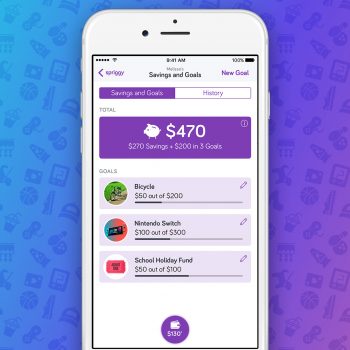
The revolutionary app is available for children aged 8-17 years, and from August 6th, children aged 6-17 years.
“Due to members demand we have extended the age to 6. Many families start the pocket money journey when kids start school, so we have brought this into line.
Many families also did not want to leave one of the kids out of the Spriggy experience and needed a solution that catered for the whole family”
Spriggy, provides parents with an opportunity to build memorable experiences through technology.
It’s heartwarming to know there is a product on the market you can trust and can help make a difference in your child’s life to build a bigger, better future for them, and generations to come.
TRY SPRIGGY WITH YOUR FAMILY TODAY
——————————————-
Resources:
https://www.corelogic.com.au/news/household-debt-levels-continued-climb-throughout-2017#.W0qtaNgzbXQ
http://www.abc.net.au/news/2018-05-19/commonwealth-bank-staff-manipulated-childrens-accounts/9779010
]]>Tutors Field is excited to be part of the education of Australian students and the careers of Australian educators.
]]>