Here are 10 simple and effective ways parents and caregivers can teach children about respect, helping them get along well with everyone they meet.
1. Respect Your Child — Lead by Example
Children learn by watching you. When you treat your child with kindness and respect, they learn what respect looks like. Speak kindly, listen carefully, and show patience even when things get tough. If you want your child to say “please” and “thank you,” use those words yourself. Modeling respect is the first and most powerful lesson.
Example: When your child tells you about their day, stop what you’re doing and give them your full attention.
2. Apologise When You Make Mistakes
Nobody’s perfect — including parents! If you say something hurtful or lose your temper, apologise to your child. This shows them that everyone makes mistakes and that saying sorry is part of respect. It teaches them how to take responsibility for their actions.
Tip: Say something like, “I’m sorry I raised my voice earlier. I wasn’t being respectful, and I will try to do better.”
3. Teach Basic Manners and Social Skills
Simple words like “please,” “thank you,” “excuse me,” and “I’m sorry” are powerful tools for showing respect. Teach your child when and how to use these words. Role-play different situations like meeting someone new or asking for help.
Activity idea: Practice polite greetings with family members or during playdates.
4. Introduce Cultural Awareness
Respect means understanding that people have different traditions, languages, and ways of showing kindness. Teach your child about different cultures and how respect might look different around the world. This builds curiosity and open-mindedness.
For example: Explain how bowing is a sign of respect in some countries, while shaking hands is common in others.
5. Set Clear and Realistic Expectations
Children feel more confident when they know what behaviour is expected. Explain what respectful behaviour looks like for different situations, like visiting a friend’s house or being in class. Follow through with fair consequences if respect isn’t shown, but always explain why.
Example: “At Grandma’s house, we use quiet voices and listen carefully because she needs peace to rest.”
6. Talk About Disrespectful Moments
If your child is rude or disrespectful, wait until they’re calm and talk about what happened. Help them see how their words or actions affect others. Ask how they might have reacted differently and suggest respectful ways to handle similar situations next time.
Try asking: “How do you think your friend felt when you said that? What could you say instead?”
7. Teach Active Listening
Listening well is a key part of respect. Teach your child to look at the person speaking, not interrupt, and show they’re paying attention. Good listening helps children understand others’ feelings and respond kindly.
Practice game: Take turns telling stories while the other person listens carefully and repeats back what they heard.
8. Encourage Open-Mindedness and Celebrate Differences
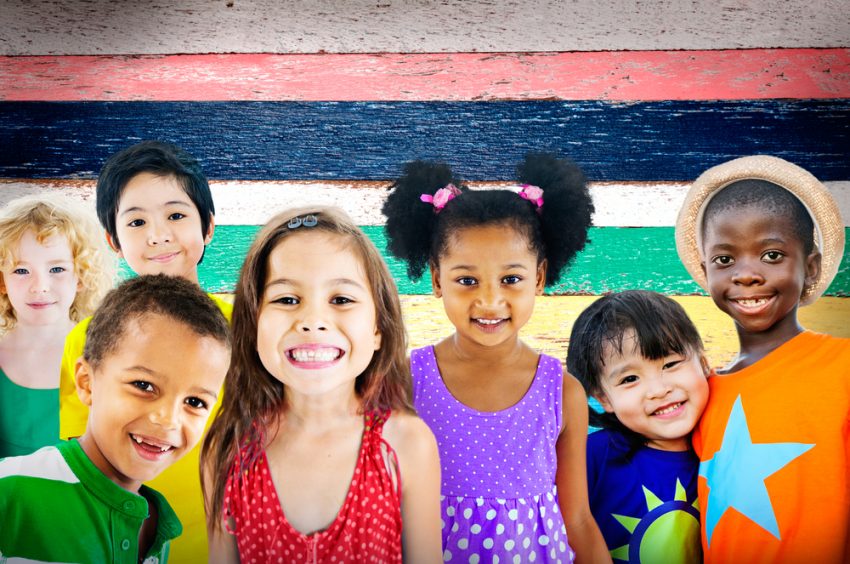
Help your child understand that everyone is unique and that’s a good thing! When children accept differences, like different skin colours, abilities, or interests, they learn to be more respectful. Celebrate diversity with books, movies, and conversations about kindness to everyone.
Suggestion: Read stories about children from different backgrounds and talk about what respect looks like in each.
9. Understand Why Your Child Acts Disrespectfully
Sometimes disrespect is a sign that your child is upset, tired, or frustrated. Ask them what they are feeling when they act out, and listen without judgment. This helps you find solutions together and teaches your child to express emotions respectfully.
Question to ask: “Can you tell me what made you feel upset just now?”
10. Expect Disagreements — Teach Positive Expression
Children will not always agree with others — and that’s okay! Teach your child how to express their opinions politely without being rude. Encourage asking questions instead of demanding, and explain how respect includes listening even when we disagree.
Example: “I understand you want to play now, but can you please wait your turn?”
Respect Is a Journey — Be Patient and Consistent
Teaching respect takes time and effort, but every little step makes a big difference. Celebrate when your child shows kindness and respect, and keep practising together. The skills they learn today will help them build happy, healthy relationships for life.
Quick Tips for Teaching Respect:
-
Use respectful words and tone every day.
-
Show empathy by acknowledging and understanding others’ feelings.
-
Praise respectful behaviour when you see it.
-
Use stories and games to teach respect concepts.
-
Model respect in digital spaces, too (online kindness counts!).
You may also like to read:
Benefits of including kids in household chores
]]>How?
By showing us how to calm the mind and the body. By teaching us how to be more present, rather than worrying about the future or ruminating on the past.
And our kids are no different. Children who meditate have the opportunity to benefit even more, simply by starting from a younger age.
Let’s consider meditation in an all too common childhood scenario – schoolyard bullying.
The Bully:
The child that expresses their feelings by tormenting or intimidating another child is deflecting a lack of self-worth. They have a superficial sense of who they are, or, they’ve modelled behaviour that has taught them that the only way to feel empowered is to make another feel less.
What would happen if the bully learnt to love who they are instead? To develop self-worth and a strong sense of self. How would that change their interactions in the playground? Meditation can guide them here, to feel comfortable and worthy in their own skin.
The Bullied:
The child on the receiving end of domineering behaviour has yet to develop the self-confidence to walk away or seek help. This child is still learning the bully’s behaviour has nothing to do with them.
What would happen if this child learned that they are enough? That they are perfect just the way they are. That they don’t need external validation. Meditation can also help guide this child, in this case, to understand they are worthy of love and respect. That they are worthy simply for being.
I truly understand this situation because I experienced it firsthand. As a child who lacked self-esteem and self-concept, I believed I had less worth than my classmates who ‘appeared’ more confident, more capable, and more inspiring. So when they spoke down to me, laughed at me or excluded me, I started to believe them.
Enter meditation! Meditation changed my life by changing my perspective of my self-worth. Which sparked the drive within me to create a meditation practice specifically for children. So our kids could learn to love themselves deeply and truly, just like I did.
Meditation practices are becoming more readily available and more highly regarded because of the powerful benefits it provides. The power to make both adults and children feel happier, calmer and more content. Less suffering from five minutes a day of being truly present and understanding what it means to be self-aware and have self-respect.
Children can learn and enjoy meditation in many ones. Guided meditation is an easy way to start- you simply press play and listen. Our Meditate With Friends app has guided meditations designed only for children, voiced by children.
Our guided meditations mean your child can listen with you or alone, with the voice of a kind peer to soothe and inspire a feeling of contentment. To learn the greatest lesson meditation teaches us all:
We are enough.
]]>Whenever I have been teaching (or parenting) and I want to unpack and discuss a difficult topic, such as bullying, kids touching each other and/or crossing body boundaries, I always wish I had the ‘perfect’ book with me complete with engaging illustrations and simple language that kids can understand. I remember teaching a class of 8- and 9-year-olds and being told by the girls in the class that they didn’t want to go to camp because the boys would tease them and spy on them, and maybe even look at them in the toilets. At that moment, I wished I had a book on respecting body boundaries and consent – but I didn’t have anything at my fingertips to engage the whole class and unpack the girls’ concerns. It was in that moment that I decided to write, ‘Let’s Talk about Body Boundaries, Consent and Respect’. Children’s books are the perfect medium to unpack difficult topics. All my books have Discussion Questions for parents, teachers and carers to help them scaffold the learning and invite the children to bring their own experiences into the conversation.
All parents worry about tackling difficult topics. They worry they will mess it up. My advice is to do your homework. Find books and resources that help explain the topic before you broach it, so you feel more confident about the upcoming conversation. If you are worried about discussing a certain topic, your kids will be too. They will take their cues from you. So, relax. You’ve got this! Tricky conversations don’t need to be tricky if we begin early enough. For example, we can begin to talk about consent and body boundaries from a very early age. As soon as you child is born, talk to them about what you are doing in relation to their body, e.g. ‘I am just putting your socks on now so your feet will be warm.’ Explain to them that you are their ‘safe’ person and your job is to keep them safe; that means they can talk to you (once they are verbal) about anything at all, and you will always have time for their concerns and worries. Another important hint is to always call the genitals by their correct names from Day One. Make sure to model to your toddler that this is no big deal. There should be no shame, and because they are comfortable using the correct terms, it will be so much easier to discuss puberty and sex when they are older. It is also important that children use the correct terms so if they are every touched inappropriately, they can tell you exactly where.
‘Tricky topics’ that are crucial to talk about with toddlers are body safety, consent, body boundaries, respect, diversity and inclusion, gender equality, racial equality, empathy, talking about feelings, diversity in families. All of these topics can be discussed easily using appropriate picture books.
Top Tips for Having Little Big Chats With Your Kids
- Start early.
- Have ongoing conversations (rather than a one-off lesson) and come back to topics regularly.
- Answer your child’s questions honestly.
- Let your child know they can ask you anything, nothing is off the table.
- Express that you don’t have all the answers, but you will find out more.
- Encourage curiosity.
- Develop your child’s vocabulary early around feelings and encourage them to verbalise how they are feeling, e.g. ‘I feel sad right now. When Paddy pushed me over, I felt sad and a little bit scared too.’
- Make sure other family members and adults respect your child’s body boundary and agency.
- Listen with empathy and patience to your child’s questions and concerns.
- Model the kind of behaviours you want to see in your child.
To find out more about author, educator and advocate Jayneen Sanders and the books and resources that she has written and created via Educate2Empower, please visit www.e2epublishing.info
]]>Waiting out it out until the emotions pass, trying to support your child to find the words to express how they’re feeling.
But getting through it can be easier by introducing your child to Wayapa Wuurrk, earth mindfulness.
Wayapa is a beautiful, gentle movement practice with narrative meditation based on ancient wisdom that connects us deeply to nature. Centred around 14 elements including the sun, moon, wind, eagle, kangaroo, tree, volcano and lightning, it invites us to connect to each aspect and its unique energy and wisdom.
The philosophy behind it is simple yet profound. To connect to nature so deeply, a sense of purpose is activated within us to care for it because the planet doesn’t need us, we rely on it.
The practice itself is always practitioner-led and improves wellbeing, and coordination, creating new neural pathways and assists with regulating emotions through connecting to breath and finding moments of stillness and wonder in every day.
Little nervous systems need a lot of support in the early years. They’re in a constant state of stimulation with their sensory nervous system processing messages from all sensory input. What they can see, taste, touch, sense. Everything is new and not all of it is pleasant.
Too much noise, some scents, textures – all of these things can create dis-regulation in a child. Showing them how to find their way back to their own centre and anchor there can be helpful in regulating emotions.
When shared with children Wayapa is playful. Emotions are unexpressed energy and using movements relating to nature gives children the tools to shift their energy and move into a more supported and regulated state.
Here are 4 ways you can embrace the wisdom of the Wayapa way to support yourself and your child to move through dis-regulated moments with a little more ease.
1. Show them how to connect to breath (when they’re calm)
This can be as simple as placing the hands on the heart space and breathing softly into it.
Do this at the same time and share how you felt after a small moment of quiet and breathing softly and steadily. Invite them to share how they feel, helping them with the words for the feelings.
In moments of dis-regulation you can guide them to this exercise.
-
Expand their ability to express how they feel by using the wind
If they were the wind, how would they feel today?
Gentle like a soft breeze? Or full of energy like a wild, rainy day wind?
Invite them to show you what that looks like, standing and moving the hands and arms in a wind-like pattern. This is a playful exercise and children love it.
-
Encourage mindful moments
Life is busy and it can be tempting to hurry children along so we can carry on being productive.
When we notice a child fascinated by something happening in nature – perhaps a bee collecting pollen from a flower – can you allow them to stay present in the moment? Can you even encourage a fascination with the natural world?
-
Relating our own need to rest to the wisdom of nature
Everything in the natural world requires rest to thrive. The seasons of autumn and winter show us this, the sun rising and setting each day and so does the behaviour of many animals.
The kangaroo is a beautiful example of this. At the peak of a summer day, a kangaroo will find a shady spot and settle down to stretch and rest and wait until the day cools before it carries on with its work. Connecting children to this wisdom helps them understand the importance and value of self care. That to be our best selves we too need to stop.
Try it and let me know what you think! You can reach me on instagram @rachaelbonetti or visit www.rachaelbonetti.com or hear more about expanding our view of wellbeing on the What It Means To Be Well podcast wherever you get your podcasts.
Rachael Bonetti
]]>It was a little more than a week after my daughter Betty was born. We were at home, and I remember my body feeling sore, I couldn’t get warm, and my body began to shiver. I didn’t know if it was severe sleep deprivation or if I was getting sick. In that moment I thought the best thing for me was to go and have a hot shower.
As the water from the shower began to heat up, my body was now uncontrollably shivering. I was in pain, my body so sore as I got under the hot water. Then it happened I was hit with a wave of overwhelming emotion, and I fell to the ground.
Naked, shaking and now uncontrollably crying all I could only think of in that moment.
‘How am I going to be a dad?’
As the emotions subsided and my body began to warm up, I picked myself up off the shower floor and I bottled that experience up. I shoved it deep down inside myself never to see the light of day. I was ashamed, I felt guilty, scared of being judged and I honestly did not understand what had happened to me.
How did I get to this point?
Growing up and still to this day I have only ever seen my Dad cry twice. The first time he hid in the backyard, away from the family. The second time was in front of me, he walked away without saying a word and came back to apologise for crying moments later. I can only imagine in those moments my dad felt ashamed, felt like he wasn’t a man and felt like he was letting me down. What my dad didn’t understand in those moments, I was able to see him be vulnerable, I could tell he was hurting and all I wanted to do was to help.
During childhood, I was never told to man up, to stop acting like a girl, that boys don’t cry or to be a man. My trauma was never about what was said by my parents, it was never about what was said by Dad during those moments, but it had everything to do with the actions I witnessed. Kids will pick up more on your energy and what you do, a lot more than what you ever say. I was witnessing how to suppress your emotions, an action and response that served me for over 30 years.
What I did not understand in that moment almost 4.5 years ago after the birth of Betty, my body was forced to release over 30 years of suppressed emotions. Feelings of inadequacy. Feelings of not being enough. Feelings I had bottled up for years purged from my body as I lay naked on the floor of the shower.
As Dads, as parents what we need to understand is that boys who are unable to express their emotions, will grow into men who are unable to express their emotions who become dads who are unable to express their emotions raising boys who are unable to express their emotions.
My healing begun not when my body purged 30 plus years of emotions but when I began to share my experience, when I began to break down the stigma around men and emotions, when I began to normalize these conversations and when I embraced that true strength lies in vulnerability.
We don’t need to just bring awareness to this cycle, we need to be the ones that break this cycle. Dads, if not us, who? If not now, when? Our kids, our partners, ourselves, need to embrace that we are not perfect, to show we are human and to be real.
Dads, its ok to show our emotions. To free the child we first need to begin by healing the parent.
]]>