Within the realm of mindfulness activities, potion play has become a creative way to introduce self-care and mindfulness to creative young minds. The act of making magical potions during play is a holistic experience for children, encompassing cognitive, emotional, and social development. It’s a magical journey where creativity knows no bounds, and the benefits extend far beyond the enchanted cauldron.
Mindful potion play serves as a creative introduction to self-care, providing young minds with a sanctuary to embrace the present moment, fostering concentration, emotional regulation, and a positive mindset. This enchanted experience becomes more than play; it’s a magical doorway to self-discovery and emotional well-being, where the benefits of mindfulness reach into the realms of imagination and everyday life. In this enchanted space, children not only foster cognitive abilities but also lay the foundation for a positive and resilient mindset, creating a conduit for self-discovery, emotional well-being, and the development of social skills as they share this magical experience with playmates. It’s a transformative journey that extends far beyond the enchanted cauldron, offering children the lasting gift of mindfulness—a superpower empowering them to thrive in both their imaginary worlds and the real one.
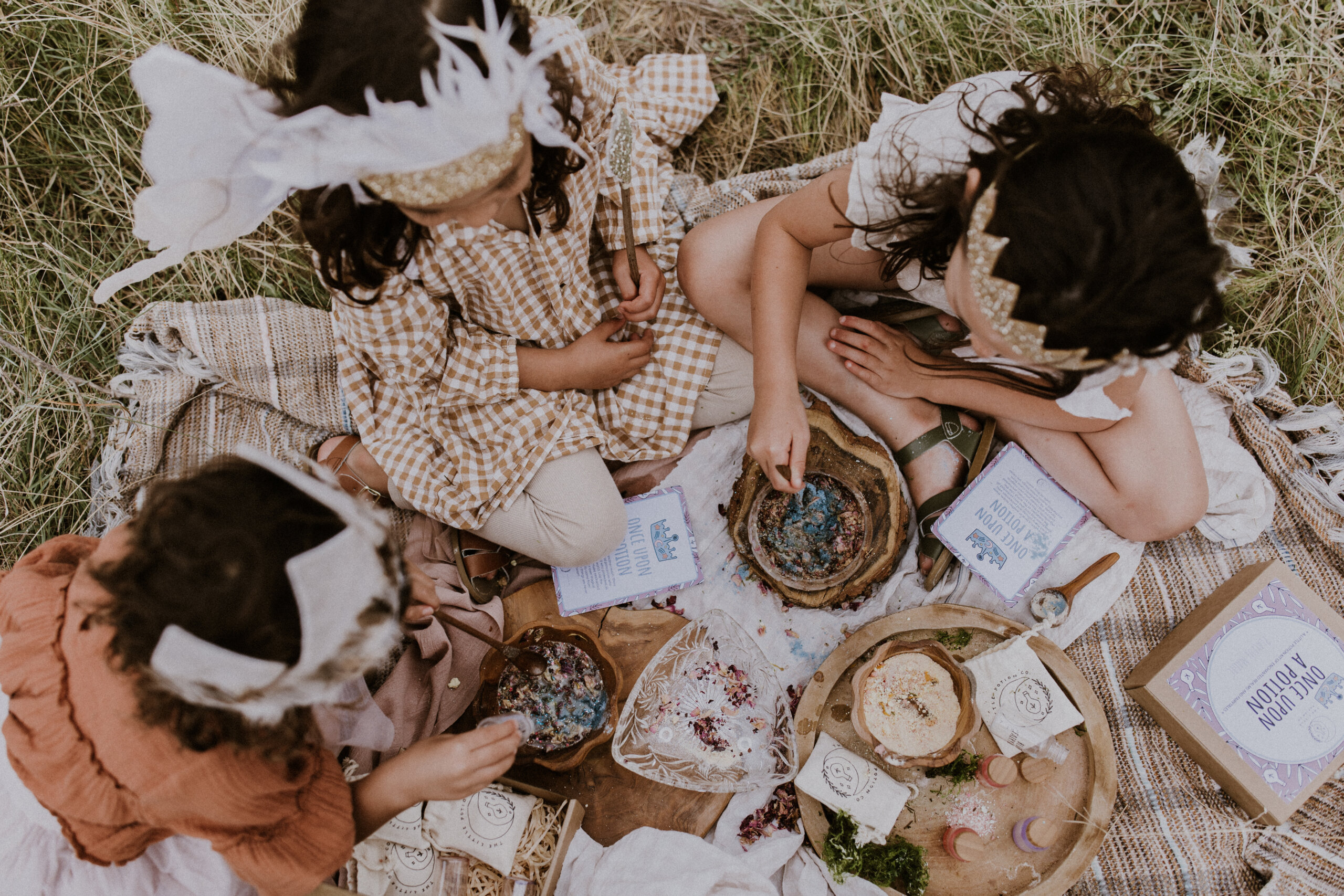
As parents, we all desire the best for our children, and The Little Potion Co. recognises this. At their heart lies the transformative art of mindful potion-making. It’s not merely about blending ingredients; it’s about infusing every potion with intent, turning play into a powerful tool for development. Their whimsical range of magical elixirs and enchanting spells is not just about the play; it’s a gateway to fostering mindfulness—a skill that extends far beyond the realms of wizardry. By engaging in mindful magic, children naturally expand their creativity, fostering cognitive advancements that will serve them well in their academic journey. Each product demonstrates its commitment to making a difference by offering children the tools to navigate life’s challenges with confidence and optimism.
The Little Potion Co. is not just a brand; it’s a magical journey into the heart of childhood. Through mindful magic, positive affirmations, and the essence of potion-making, this range invites children to embrace the beauty of the present, dream big, and build a strong foundation for a future filled with confidence, optimism, and unbridled joy.

Let’s delve into the enchanting benefits of mindful magic and how it serves as a magical catalyst for mindfulness in children.
-
Encourages Mindfulness: A Magical Practice for Young Minds
Picture this: a child, eyes closed, breathing deeply, fully immersed in the moment. Mindful magic engages children in the present moment, inviting them to explore their senses, thoughts, and feelings. Through the enchanting process of potion making and spell casting, children learn to focus their attention on the task at hand, fostering a sense of presence and awareness. Whether they are concocting a bravery potion or visualising their dreams, these magical experiences instil a sense of presence and awareness—a fundamental aspect of mindfulness.
Their potions help kids navigate life’s twists and turns with resilience and joy. Through mindfulness, children develop attention, focus, emotional regulation, and empathy, forming the bedrock of a positive mindset.
-
Creating A Positive Mindset Through Play
Mindful magic, as presented by The Little Potion Co, is designed to infuse play with positivity. From empowering affirmations to courage-instilling spells, each magical element creates a positive mindset. In this enchanted realm, children are equipped to face life’s challenges with optimism and a resilient spirit.
The Little Potion Co.kits are not just toys but gateways to a positive mindset. Through play, children learn valuable lessons about themselves and the world around them. In the enchanting world of The Little Potion Co, visualising isn’t just daydreaming; it’s a potent tool for growth. Their potions enhance focus by encouraging children to envision their dreams—whether it’s boosting confidence, setting goals, or enhancing focus. By engaging in this magical act, children learn the power of intention and the joy of seeing their aspirations come to life.
-
Develops Emotional Regulation
The Little Potion Co’s magical kits provide a safe space for children to express and understand their emotions. Through the exploration of spells and affirmations, children learn to navigate their feelings with curiosity and compassion. This emotional intelligence lays the groundwork for mindful living as children become more adept at recognising and regulating their emotions in various situations.
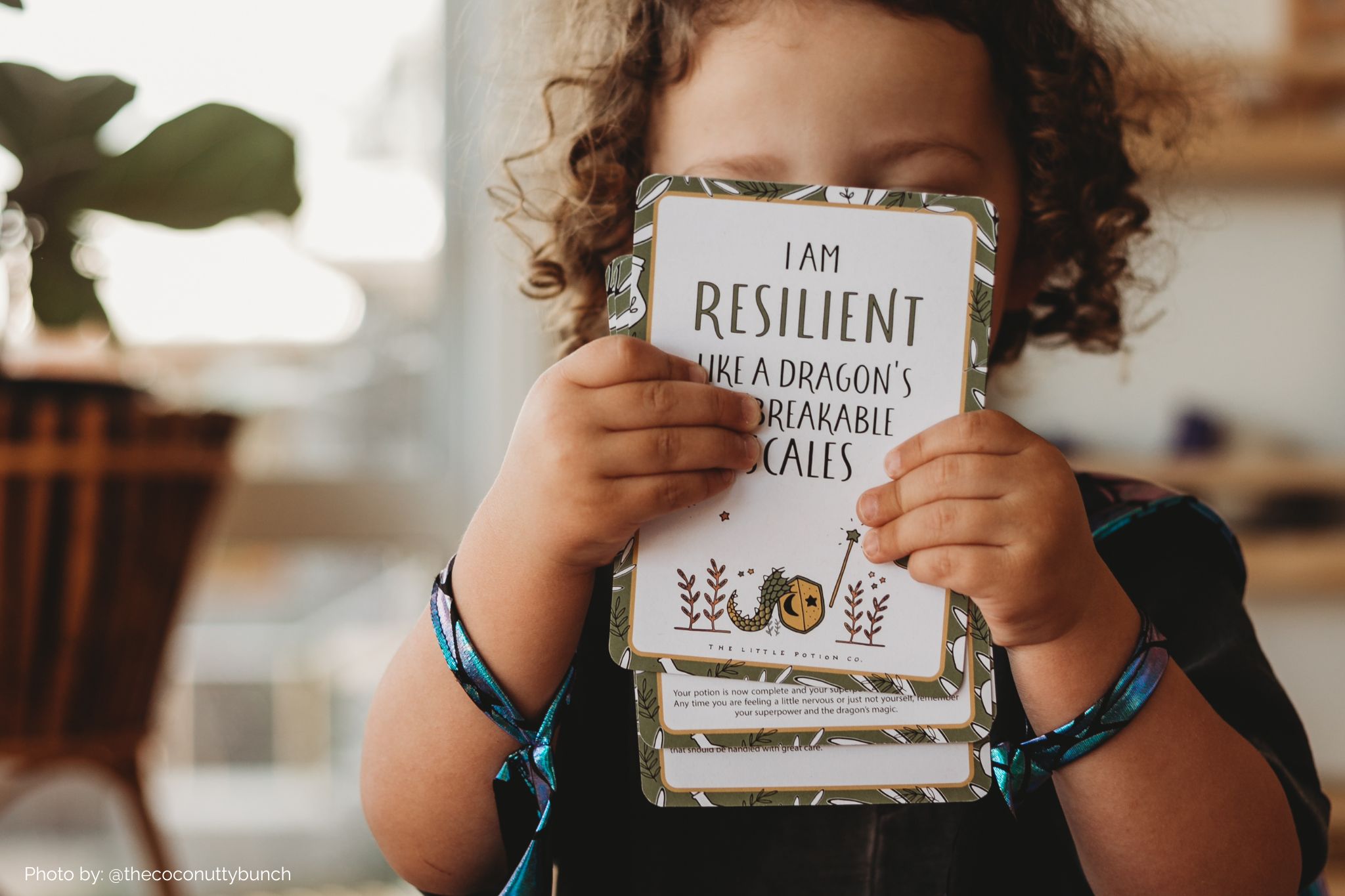
In the enchanting embrace of positive affirmations, children find a shield against life’s challenges. The Little Potion Co’s range reinforces their abilities and potential, reducing stress and empowering them with resilience. These affirmations are more than mere words; they are spells woven into the fabric of self-esteem and positive thinking. Just like spells that cast away the shadows of doubt and insecurity, The Little Potion Co’s range of products serves as a valuable tool for helping children strengthen their self-esteem and positive thinking. These potions, filled with empowering affirmations, reduce stress and fortify a child’s resilience, reinforcing their abilities and potential.
-
Teaches Patience and Resilience
The magical journey with The Little Potion Co is not always about instant results; it’s a process that unfolds with patience and perseverance. Children learn that, just like in magic, good things take time. This understanding cultivates resilience, teaching them to navigate setbacks gracefully and maintain a mindful perspective even in the face of challenges.
-
Enhances Focus and Concentration
Engaging in the intricate potion-making process provides a playful yet structured environment that requires careful attention and concentration. This not only enhances focus but also teaches children the value of being fully immersed and engaged in the present moment. The skills honed through the enchanting rituals of mindful magic transfer into everyday life, helping children concentrate on tasks and activities more efficiently.
-
Sparks Creativity and Imagination
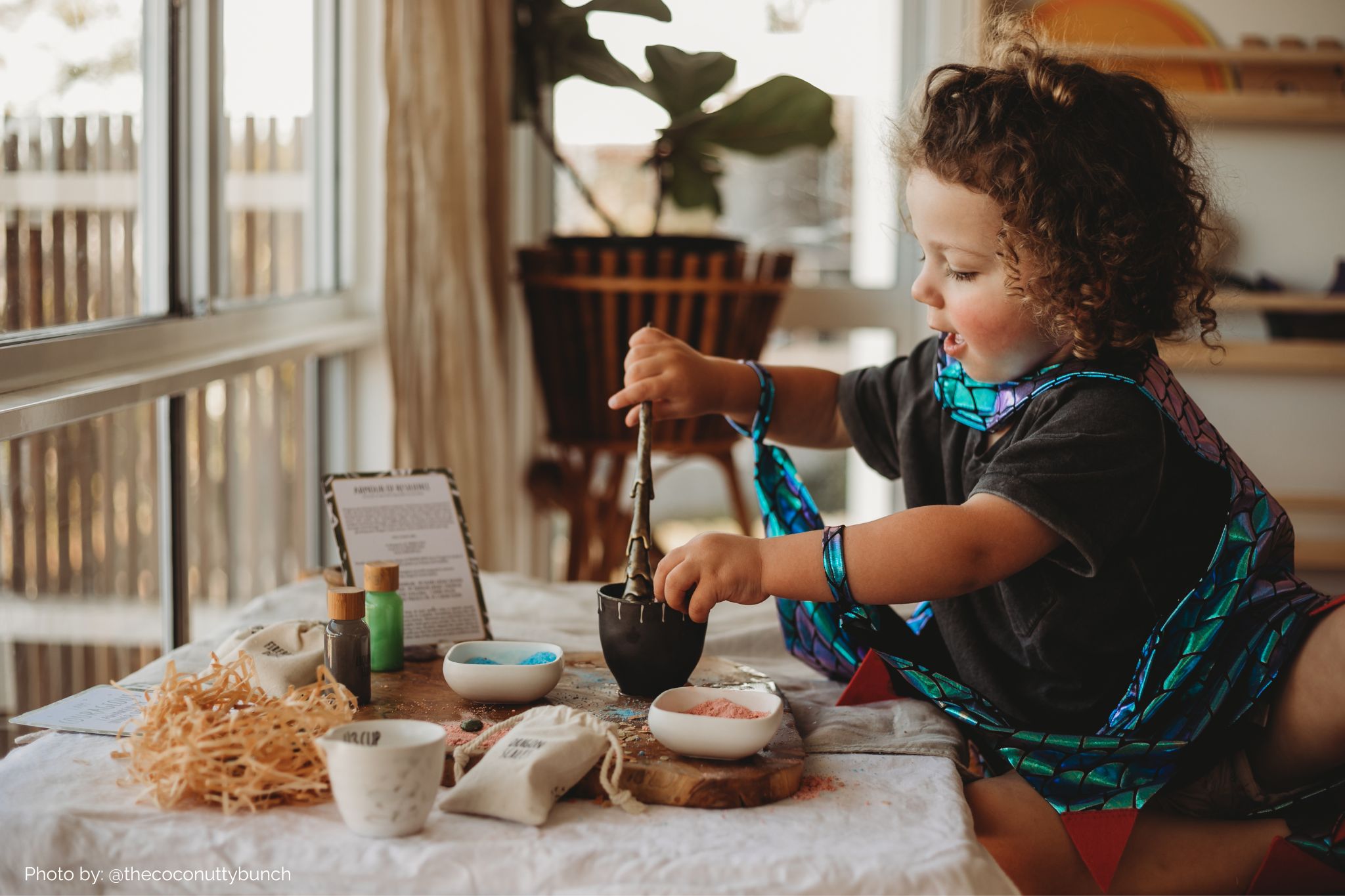
Mindful magic® ignites the spark of creativity and imagination in children. The open-ended nature of potion making and spell casting isn’t just playing; it’s encouraging children to hone into a mindful state of creative exploration, to think beyond the ordinary and embrace the extraordinary. This imaginative exploration fuels the boundless realm of imagination and creativity in children. It fosters a creative mindset, a key component of mindfulness that allows children to approach challenges with innovative solutions and an open heart.
-
Cultivates Gratitude and Positivity
Mindful magic® encourages children to appreciate the beauty in their creations and the joy in their imaginative play. The act of crafting potions and casting spells becomes a gratitude-filled experience, fostering a positive mindset. By acknowledging the magic within themselves and their surroundings, children develop a sense of gratitude fundamental to mindfulness.
-
Instilling a Sense of Wonder and Awe
At its core, mindful magic is about cultivating a sense of wonder and awe. The Little Potion Co’s range sparks curiosity and captivates young minds with the enchantment of possibility. This sense of wonder is a gateway to mindfulness, encouraging children to approach the world with curiosity and appreciation
-
Teaching the Power of Intention
‘Intention’ lies at the heart of mindful magic—something The Little Potion Co infuses into every elixir and spell. However, they understand that intention setting isn’t just about making wishes but crafting a roadmap for personal growth. Each kit teaches children to set clear intentions, fostering a sense of purpose and accountability. The magic isn’t just in the potion, but in the journey of self-discovery it catalyses. Children learn that their thoughts and actions have purpose and impact. This intention understanding is a cornerstone of mindfulness, as it teaches them to approach life with awareness and purpose.
-
Building a Strong Foundation for Emotional Well-being
Mindful magic®, as encapsulated by The Little Potion Co.range, becomes a tool for building a robust emotional foundation in children. They explore and express their emotions through imaginative play in a safe and magical space. This imaginative play becomes a cornerstone for emotional intelligence, teaching them to understand and embrace their feelings with resilience—a fundamental aspect of mindfulness that lasts a lifetime.
Little Potion Co Kits: A Gift of Magic for Every Age
The Little Potion Co.kits are more than presents; they are gateways to a world of magic and self-discovery. Perfect for a broad range of ages, these kits are not just toys but tools for emotional and psychological well-being.
So, let the magic begin, and may every potion brewed be a step towards a brighter, more enchanting future.
Visit The Little Potion Co. today to bring the magic home and empower your little one to develop the lifelong skill of mindfulness.
Media kindly brought to you by The Little Potion Co.
]]>Create simple Mediterranean-style meals
Taking action for better health doesn’t mean you have to deprive yourself. Research has proven that eating traditional Mediterranean-style meals can help reduce the risk of serious disease. Your entire family can enjoy this type of food. Take a look at some of the mouth-watering Mediterranean recipes to know that you can eat healthy without missing out on life’s little luxuries; try these chocolate brownies or healthy style fish and chips.
Trial intermittent fasting
Many people think fasting means depriving yourself of food and living on nothing but water, but this is not true. Two popular types of intermittent fasting are:
1) Time Restricted Eating (TRE) where you consume calories (ie. eat your meals) within a window of time, and not consuming calories (ie. fasting) outside of that window. This gives your system an extended break to repair and burn fat, it doesn’t necessarily mean reducing the amount of food consumed.
2) A 5:2 approach where on two days per week you limit your intake to 800 calories, and the other five days you eat a healthy Mediterranean-style diet.
TRE and 5:2 methods of fasting are encouraged by The Fast 800 programme because of the benefits such as weight loss, improved mental clarity, reduced risk of heart disease and the potential reversal of Type 2 diabetes. Just remember, this one is not suitable for those who are still growing.
Remember to hydrate
As a busy parent, it’s easy to forget to eat, let alone something as simple as drinking water. Humans are approximately 70% water and almost every reaction and process in the body requires H2O to function properly. Water is required for optimal digestive function and detoxification – if there’s not enough water travelling through your body we struggle to excrete waste and metabolites – leading to constipation, urinary tract infections, kidney issues, skin problems and inflammation. Aim for 2 litres a day to help all of your systems operate effectively. You wouldn’t send your child to school without a water bottle, and your health is just as important! Pack a water bottle wherever you go so you’re never caught without.
Increase incidental exercise
The average Australian is sitting for 10 hours a day (lockdowns and longer working hours haven’t helped), but we know that the more moderate physical activity you can do the better. Incidental exercise is movement that is simply just part of your normal routine. If you’re in the office, instead of emailing your work colleague down the hallway, stand up and walk to deliver your message, take the stairs instead of the lift, or get off the train or bus a stop earlier and walk the rest of the distance. At home, walk on a treadmill while binge-watching your favourite Netflix show or instead of meeting up with your friends for a coffee date, go indoor rock climbing or a walk along the beach.
Include resistance training
Resistance training is important because the more muscle tissue you have, the more energy you burn while resting! But you don’t have to become a muscle-rippling bodybuilder. There are many benefits to building more muscle, including being more toned, lowering blood pressure and reducing the risk of developing osteoporosis. You don’t need weights for an effective resistance workout, you can start out using your own bodyweight, or if you struggle with aches, joint pain or balance, try working out in a swimming pool. The water provides resistance and you can use your kid’s pool noodles as weights.
Get a good night’s rest
Did you know that late nights in front of the TV mean you’re more prone to snack and less likely to exercise? You’re then too tired to get up early to exercise, and so the cycle repeats. However, when you get more sleep you’re less likely to crave those starchy, high-carb sneaky treats while the rest of the family is resting. University of Chicago researchers conducted studies on sleep-deprived volunteers and the results showed noticeable changes in healthy hormone levels and increased hunger.
Foster a positive mindset
Mental wellbeing is often overlooked when it comes to hacks for feeling healthier. With today’s global pandemic, your mental health is more important than ever before. There are simple ways you can take care of your mind; try getting up half an hour before the kids wake up, so you can enjoy the serenity and calm of the house, sit outside with a morning cup of tea and listen to the sounds of your neighbourhood. Try a guided meditation or writing in a journal before going to bed to help alleviate stress. Find one positive thing that happened in your day, even if it’s just that you saw something that made you smile.

Gabrielle Newman – BHSc (Nutritional Medicine)
Gabrielle Newman is a Clinical Nutritionist, BHSc (Nutritional Medicine), with a special interest in weight management, hormonal and metabolic health. She has a love of food that stemmed from her previous career as a short order cook, as well as a Permaculture Design Certificate.
Gabrielle is the Nutritionist and Recipe Developer for The Fast 800. She has a passion for making good health attainable and sustainable through educating people to make the right health choices for them.
]]>There’s an important term called ‘Growth Mindset’ developed by Carol Dweck Professor of Psychology at Stanford University and author of Mindset: The New Psychology of Success. In Carol’s words, “Individuals who believe their talents can be developed (through hard work, good strategies, and input from others) have a growth mindset. They tend to achieve more than those with a more fixed mindset (those who believe their talents are innate gifts). “
What exactly does this mean for you, and how can you develop a growth mindset?
We know now that our brains are far more malleable than we thought. Neuroscience research around the brain’s plasticity has shown that connectivity between neurons can change with experience. With practice, we can create new neural network pathways and existing ones can be strengthened. These neuroscientific discoveries show us that we can increase our neural growth by the actions we take. By adopting positive strategies, asking questions, adapting, and practicing, and following positive self-care habits around nutrition and sleep. We can change, it takes time and practice to adopt strategies to support this change.
An important first step is to recognise, we may not have a growth mindset all the time, but learning to recognise when you are stuck in a ‘fixed mindset’ is important. Aim to recognize fixed mindset elements in yourself, reflect on feedback and focus on improving strategies.
Some examples of fixed vs growth :
When we are in a fixed mindset – you tend to want to hide your flaws so to not be judged or labelled a failure. Whereas when we move to a growth mindset, your flaws are just part of your TO-DO list of things to work on. Another example of fixed mindset is sticking with what you know, staying in your comfort zone, to maintain your confidence. Compare that with a growth mindset, where you are comfortable with pushing yourself into the unfamiliar territory so that you are always learning.
When you build the right skills, such as positivity, resilience, mindfulness, you can start to generate more positive emotions, a sense of meaning, and happiness. It takes practice, but the reward is worth it. When you practice a new skill, these skills start to become more natural, and eventually, become automatic (like riding a bike). When these skills become automatic, this is when you start to see change.
Understanding the difference between a fixed and a growth mindset can be helpful for parenting with your children. Praising your children for learning from mistakes and trying their best even if they did not win are important ways of promoting your child’s growth mindset.
Top 3 ways to change your mindset
1. Self-acceptance and self-compassion – no one is perfect all the time. Embrace your uniqueness and imperfection in yourself and in others.
2. Face challenges – start to reframe and shift your perspective around difficult situations, seeing them as a challenge, not something to fear and avoid. Consider that your problem is an opportunity.
Visualisation of challenging events or situations can mentally help you prepare. Neuroscience has also shown us that the brain can’t tell the difference between what’s imagined and what is reality. Through neuroimaging, we can see that there is the same brain activity when we think about an event in our mind (i.e. we visualise) and when the event actually occurs (i.e., reality). Prepare yourself mentally by using visualisation and mental imagery to see yourself confidently dealing with the challenge.
The visualisation process may seem silly when you first begin but practice each day. Repetition is essential to building a new habit for yourself.
You can also use visualisation to change your emotional state – rather than dwelling on negative feelings or worry, use visualisation to pull you out of that state into a more positive calmer frame of mind.
The Mindology app has a session “Visualisation – How to Guide”, the session includes a guide to setting your goals and step by step guide to using visualisation to realise your goals. Download the app on the app store and googleplay.
3. Self-talk and the Inner Critic – what is your inner dialogue like? Are the words and thoughts in your mind positive or negative? Listen to what you are saying and thinking. Censor yourself and become your own guide.
Aim to replace negative thoughts with positive, more accepting thoughts.
We have created a handy workbook to help you start to change that inner dialogue from Inner Critic to Inner Friend. Download our Inner Critic to Inner Friend Guide here https://mindology.mykajabi.com/InnerFriend
Be patient with yourself, learn to develop the belief your capacities and talents are not fixed; they can be improved and change over time. Think of it as a journey of self-care and developing a positive mindset, take the approach that you are building habits around empowering yourself.
CLAIRE ARISTIDES
Founder of Mindology.app
founder and creator of Mindology App an app to calm and empower the mindset available on apple and android. Download the app on the app store and googleplay.
@mindology.app
You may also like to read:
]]>Every day you make choices. Attitude is a choice. To help your child develop a positive mindset they need positive encouragement.
Your child needs to know their strengths and that they can develop any skill they put their mind to.
When you see your child being helpful without them asking, let them know that you have noticed.
Encourage your child by telling them of the positive character traits you see in them as you see them.
Your belief in their ability to overcome any task or challenge goes a long way towards them taking the necessary action.
Words encourage or discourage
Words have a massive impact that leaves an impression throughout their entire life. For the sake of your child’s future mental health, you must use words to encourage your child.
The words you say to your child impact their mindset. They stay in their head and they continue to repeat those words to themselves. Make them positive! As a major role model in their life be mindful of what you say and how you say it.
Children love to please so when you comment on what you see and are likely to repeat it. Every human being does. So praise away. The most effective way is to mention the positive behaviour you see when you see them displayed. This builds their self-esteem as well as their self-awareness.
The research concludes that five positive words expressed outweigh each negative word. So this means saying five positive things for each negative expression that you share. As a parent, it is your responsibility to learn what positive words will liberate your child.
How often do you hear people speak negatively to a child? Words such as ‘stop being stupid’, ‘don’t be stupid’, ‘you’re so naughty’, ‘you’re an idiot’, ‘you’re useless’ and so much more are very damaging. Not to mention unnecessary. It breaks my heart every time I heard someone say this to their child because I know it is breaking a piece of the child’s heart and leaving a lasting, negative, impression on them.
Creating a growth mindset
What is a growth mindset? It’s a belief that your mind can grow and develop. Nothing is impossible. You can learn anything you want to. As a child’s primary role model, you can show your child that you too are learning constantly. Life is all about learning.
A growth mindset is opposite a fixed mindset. A fixed mindset means you have some fixed ideas which you believe to be true and that there is no other option. Whatever you say, or belief is true, until you realise it isn’t.
Certain words, said often, are instilled in the mind. So, make those words positive. Spoken words to you by others as a child are often replayed in your head as an adult. When you feel down I’ll guarantee it is the negative words that some role model, at some stage, said to you.
It is your responsibility, as an adult, to show children what an adult looks like. Children do not recognise that adults and behaving like an adult might be two different things.
Life’s tough sometimes. Everyone has their challenges and the challenge nobody needs, or wants, are negative thoughts about ourselves. At some stage, somebody that you looked up to, said something negative to you, even though they loved you and you know they love you. As an adult, you remember who you looked up to, who your favourite teachers were. You also remember adults you didn’t like – become a favourite for the children in your life.
You may also like to read:
]]>