A Glimpse into the World of Numberblocks
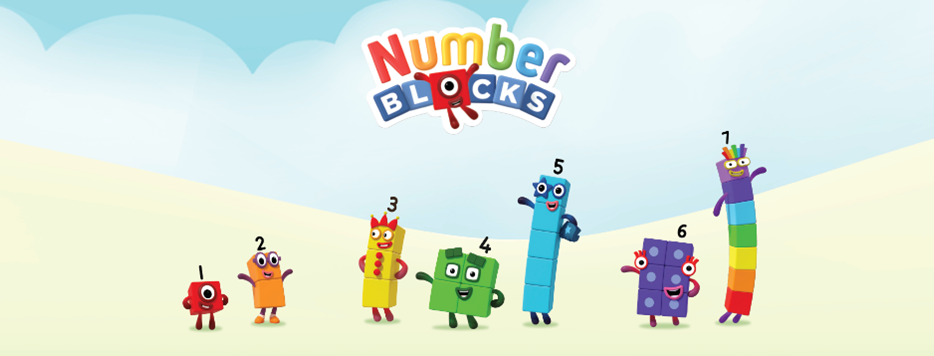
Have you had the pleasure of meeting the Numberblocks? These super-friendly characters are unique in their construction and are more than just adorable characters; they are the key to unlocking the magic of mathematics for young minds. Crafted from blocks that represent their numbers, these friendly creatures breathe life into numerical concepts. Each Numberblock’s personality reflects their number, making the learning process both entertaining and memorable. When One hops on top of Two, they seamlessly meld into Three – a mesmerising example of number magic. The essence of mathematics becomes accessible and tangible when children can witness its workings right before their eyes. Numberblocks embraces this concept by keeping math visual and animated; Numberblocks ensures that those “eureka” moments keep popping.
A Gradual Ascent through Colour-Coded Learning and Hands-on Discovery
hand2mind’s Numberblocks range presents a systematic learning progression, thoughtfully colour-coded to ease children into the world of numbers. These colour-coded levels introduce progressively larger numbers and a carefully curated sequence of key mathematical topics and skills, ensuring that your child builds a natural sense of numbers and a robust foundation in mathematical understanding. At the heart of the Numberblocks range lies the belief that children learn best when actively engaging with their environment. These educational toys are designed to promote hands-on discovery and play, allowing children to intuitively grasp fundamental math skills such as counting, adding, subtracting, multiplying, and dividing. This systematic approach builds a natural sense of numbers and lays a robust foundation for mathematical understanding, fostering a seamless transition into more complex math concepts.
Linking Learning to Fun: From Screen to Playroom
The educational marvel of Numberblocks goes beyond plush characters and building blocks. hand2mind’s commitment to facilitating interactive learning experiences is evident in the range of products available. From puzzle cards and games to Mathlink Cubes, activity sets, and characters with playsets, there’s an educational toy to captivate every young mathematician.
One standout feature of the Numberblocks range is its connection to the TV series. Several products are directly linked to episodes of the show, creating an interactive and immersive learning experience. For example, the 1-10 and 11-20 Mathlink Cubes Numberblocks Activity Sets each offer 30 activities tied to specific TV episodes. This integration ensures that learning is not confined to a classroom or a screen but extends into the realm of play, where little learners can explore, experiment, and internalise mathematical concepts in an enriching and immersive learning environment.
Moreover, the engaging characters serve as companions in exploring mathematical concepts. As children build their own Numberblocks, they simultaneously develop their mathematical comprehension. From One to Ten, these lovable Numberblocks become tools for learning, guiding young minds through fundamental early math skills, such as counting, adding, subtracting, multiplying, and dividing.

Discover the Numberblocks Range: A Treasure Trove of Learning
hand2mind’s collaboration with Numberblocks has resulted in a comprehensive range of educational toys, each carefully crafted to nurture mathematical aptitude. Let’s explore these captivating products available online and at independent retailers across Australia.
- Numberblocks Plush Characters: These cuddly companions bring Numberblocks to life, making learning a warm and comforting experience. Soft and huggable, these plush Numberblocks are perfect for bedtime learning. Children can cuddle up with their favourite Numberblock while exploring mathematical concepts comfortably and reassuringly.
Playing with soft plush toys offers numerous benefits for children. These cuddly companions provide comfort and emotional security, fostering a sense of familiarity and reassurance. The tactile nature of plush toys promotes sensory exploration, helping children develop fine motor skills and tactile awareness. Additionally, imaginative play with plush toys encourages creativity and social interaction as children invent stories, build empathy, and engage in role-playing activities. Soft plush toys often become cherished companions, offering emotional support during moments of stress or transition and aiding in the development of emotional intelligence. These huggable friends contribute to a child’s physical, emotional, and social development, making them a valuable addition to any playtime or bedtime routine.
- Numberblocks Puzzle Cards & Games: Interactive puzzles and games challenge young minds, fostering problem-solving skills and critical thinking. Engaging in interactive puzzles and games challenges children’s minds and promotes problem-solving skills and critical thinking. These activities encourage little learners to analyse, strategise, and make decisions, stimulating cognitive development. By grappling with challenges and finding solutions, children enhance their ability to think critically, develop logical reasoning, and gain valuable problem-solving skills essential for their academic and lifelong success. In cultivating these critical cognitive abilities early on, interactive puzzles and games prepare children for academic challenges and empower them to navigate the complexities of the world with confidence.

- Numberblocks Mathlink Cubes Activity Sets: These sets not only allow children to construct the Numberblocks characters but also provide an opportunity for engaging in hands-on math activities, which significantly benefit cognitive development. Through these activities, children concretely interact with numerical concepts and mathematical operations, fostering a deeper understanding. They manipulate physical objects to solve problems, explore mathematical relationships, and enhance problem-solving skills. This hands-on approach promotes conceptual clarity and reinforces the fundamental building blocks of mathematical comprehension, equipping children with valuable cognitive tools for future learning and academic success.
- Numberblocks Characters & Playsets: Encourage imaginative play as children explore the Numberblocks world and embark on adventures that blend fun with learning.
These offerings are available at various price points, ensuring that there’s something for every budget. They also make for exceptional Christmas presents, captivating young hearts with the magic of learning.
For the Curious Parents: A Call to Action
If you are a parent with a child aged three or older, if you’ve witnessed the joy your child derives from Numberblocks on TV, or if you are searching for fun and educational Christmas presents, then the Numberblocks range by hand2mind is a treasure trove waiting to be explored. These toys offer a transformative way for children to learn mathematics through play, bridging the gap between imagination and understanding. With Numberblocks, you will witness your child’s eyes light up with curiosity and wonder as they dive into a world where numbers are no longer abstract but tangible companions on the path to mathematical mastery; every child can unlock the mathematical marvels of the universe, one block at a time.

Beyond their innovative products, hand2mind has a mission deeply rooted in education. For over 50 years, they have supported teachers, inspired students, engaged parents, and championed hands-on learning experiences. Ideal for parents seeking educational toys to ignite their child’s passion for learning, the Numberblocks range also appeals to TV series fans and relatives in search of engaging and educational Christmas presents.
By choosing Numberblocks, parents and relatives can gift the precious gift of knowledge and joy to the children they hold dear. In the realm of educational toys, the Numberblocks range is undoubtedly at the cutting edge, where fun and learning converge in perfect harmony.
Discover the enchanting world of Numberblocks at all leading independent retailers or conveniently shop online at
https://www.edresources.com.au/?rf=kw&kw=numberblocks
https://www.littleblossomstoys.com.au/collections/numberblocks
Media kindly brought to you by hand2mind
]]>
Anime, or anime-influenced animation, is a diverse creative medium characteristic of unique and recognisable art styles. Typically a hand-drawn and computer-generated animation originating from Japan, Anime’s entertainment value carries a range of themes, making them relatable to a wide range of audiences, including children.
Anime expose children to a wide variety of topics and narratives. Genres like “adventure” and “comedy” are among them. Anime Cartoons use animation and drawing to convey a humorous or satirical message. Cartoons and Anime are great for evoking a sense of motion. As a result, Children often develop a deep love for such art forms by watching them for endless hours at a time.
Subsequently, children and teenagers are a significant percentage of Anime’s large domestic audience. Children are drawn to Anime’s bright visuals, characters’ distinct and exaggerated physical features, including large doe-like eyes, each with many moods, emotions and expressions.
The Anime industry is classified into numerous genres, including adaptations across Japanese Comics (Magna), light novels, video games, and board games, like the new Bakugan Genesis Collection. A key characteristic of Anime is television series with a continuous story arc that carries over multiple seasons and episodes.
Anime has the potential to send powerful messages through the interactions of its characters, the atmosphere of its setting, and the overall feeling evoked by a single episode. The Bakugan Battle Brawlers is an addictive anime series on Prime Video, Disney Plus, Foxtel, etc., for children.
At Kiddipedia, we spoke to the experts at Bakugan to understand the benefits of children watching age-appropriate Anime Cartoons. They have recently launched their brand new Bakugan Genesis Collection, which is the perfect starter pack for Bakugan collectibles. Their premium product has authentic detailing and exclusive character cards to keep your children hooked.
Let’s Dive in!

Benefits of children watching age-appropriate Anime Cartoons like Bakugan Battle Brawlers:
-
Relate to the characters
Characters in Anime tend to be teenagers or young adults. Some adults are present, but they play minor or ancillary roles. Younger viewers are likelier to enjoy Anime if they can relate to the protagonists. They’ll want to see people their age who faced adversity and came out on top, especially during a stressful time like this. Anime gives young viewers hope that they can overcome any obstacle they face.
-
Learning Unexpected Things
To begin, by watching an anime, you can gain insight into the daily routines of a specific group, say, arms dealers. You will see them go from one end of the world to the other, employ bodyguards, and deal with potentially life-threatening situations. If you pay attention, you can gain insight into various exciting and applicable topics from Anime.
-
Learning about Relationships
To be sure, the romantic relationships depicted in most Anime are unrealistic. That much is certain. But the genuine ones can teach you about the sorrow, suffering, and rewards of love. You can take on any challenge in life using Anime as inspiration.
-
Learning about Teamwork
Some shows in the anime genre can teach you valuable lessons about working with others. Among the many things they may guide you are the value of hard work, goal-setting, and regular practice. Similarly, they can encourage you to fight for what you want and assist you in achieving your goals. Anime’s wide range of subject matter and style allows it to impart valuable lessons not found in traditional media.
-
Inspire Creative Thinking
The complexity of anime stories will encourage your child’s imagination and critical thinking skills. Kids can be inspired to try new things and use their imaginations by watching Anime. Kids may be inspired to try their hand at animation, drawing, shading their anime characters, and other forms of creativity after watching an anime series.
-
Teach the Value of Friendship
Many anime series have educational goals, and one of their main goals is to instil an appreciation for friendship in young viewers. Having reliable friends is emphasised in Anime as a lesson for children. The concept of friendship is central to popular Anime. The popularity of anime shows has skyrocketed in recent years due to their promotion of progressive ideas.

Get the Bakugan Genesis Collection and bring some light to your battles.
Until now, this has been the most extensive collection of Bakugan toys. It’s got everything a collector or brawler could want and more! Get ready for a transformation from Bakugan that is nothing short of epic! This Bakugan starter pack is an excellent way to begin a collection of Bakugan playsets, and it also makes a fun birthday present for kids and toys for 6-year-old boys. Astonish your opponents with the brand-new Light-Up Bakugan! Observe as they transform through 7 distinct hues.
Put them on the provided display stands when you’re not using them in battle so that everyone can see how awesome they are! If you want to defeat your opponent quickly, a sneak attack using your Nanogan to boost your Bakugan’s strength is the way to go. Any Bakugan can benefit from the Nanogan’s powerful boost in battle if they attach it to them. Incredible patterns and see-through accents characterise Nanogan.
Create devastating new combinations with each new battle. Get even more out of the game and earn more rewards using the unique Ability cards included in the set. Gather all the Season 4 Bakugan Evolutions figures and create your ultimate squad! Get ready for some serious battles with the brand-new Bakugan Genesis Collection!
Features
- GREATEST COLLECTION EVER:
Everything you need for battle can be found in the Bakugan Genesis Collection. This set includes four exclusive Bakugan, 2 Light-Up Bakugan with stands, six character cards, two exclusive Nanogan, and more!
- 2 LIGHT-UP BAKUGAN WITH STANDS:
These 2 Light-Up Bakugan will bring seven different colours to your battles. An invaluable addition to any Bakugan collection! Use as weapons in combat or display them with the stands provided.
- 4 EXCLUSIVE BAKUGAN:
With these four special Bakugan, you can transform epic proportions. Simply rolling your Bakugan over the BakuCores will cause it to open up and turn from a harmless BakuBall into a dangerous beast.
- 2 EXCLUSIVE NANOGAN
The new translucent Nanogan has unmatched power. If you attach extra power packs to your Bakugan, they will become even more formidable in battle. In other words, you should prepare to fight.
]]>Where did the initial inspiration for Dino Ranch come from?
I grew up in the country as a boy and spent much of my days outside with friends surrounded by cows and horses and the great outdoors. And the one thing I learned about observing ranch life was that you counted heavily on your family unit to be successful. The stronger the family the stronger the ranch. And what was interesting was that the adults depended on the children to handle big important jobs, just as much as each other. So I had always been interested in doing a story about kids on a family ranch. Of course, I have always had a love of dinosaurs so the idea of mixing the two felt really fresh and unique for this age group
How long has it taken to get it from brain to screen, and what’s the process been like for you?
Every show is different and has its own journey to make it to screen. Dino Ranch was, however, the fastest transition from idea to production that I have ever experienced. At every stage people just immediately understood the concept and could see the potential. So the process was very quick. Thankfully we have a wonderful team of artists and storytellers that eagerly jumped on board.
How does the finished version compare with your initial ideas?
Most every show goes through a period of growth or changes direction through the natural cycle of development. Dino Ranch and its characters have not only managed to remain exactly as I had presented them, but has also exceeded my expectations.
What aspects of the show are you most pleased with/excited by?
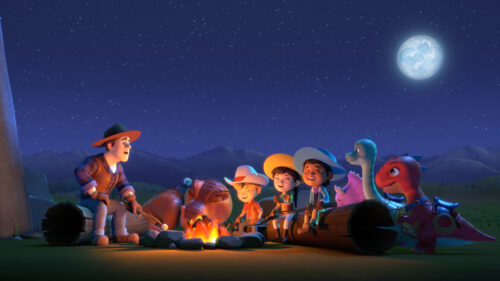
The world itself is unique to this audience as the concept of mixing farming, dinosaurs and cowboys has never been done before. And while we deliver stunning visuals, I think what I’m most pleased about is our characters. Watching our Dino Ranchers interact and bond with their dinosaurs as if they were puppy dogs is what makes the show so appealing and is what drives all our stories.
Dino Ranch promotes teamwork and diversity – why do you feel it’s important to have these kinds of messages in your shows? What else would you like kids to take from them?
Our characters are not only a diverse team but a diverse family. Dino Ranch has strong themes around the importance of family teamwork and how everyone has a role to play in solving a problem. In our show the Cassidys, much like their Dinos, are diverse and reflect that family members can look unique and can come in different shapes, sizes or even come from different places. I think it’s important now more than ever to show that not all families have to look the same.
You obviously love all the characters in Dino Ranch, but do you secretly have any favourites, and if so why?
I would have to say that Biscuit the T-Rex is my secret favourite. Biscuit is the biggest and oldest Dino who protects the ranch from danger like a loyal guard dog. Although his bark is worse than his bite – Biscuit is more like a big old puppy at heart.
Kids worldwide love both dinosaurs and cowboys – for you, what’s the key to their appeal?
Children love to hold special knowledge over adults and I would say that most children can educate their parents on a variety of intricate dinosaur facts. The idea that giants walked the earth millions of years ago sparks a child’s imagination, without the fear of ever running into one. The fact that these creatures got to run around and be big and be wild and be mighty is very appealing to children who are small and often must follow the rules of an adult world. Cowboys, and more specifically ranchers, also share the same appeal of being rough and tumble and free. Our ranchers get to roam in the wild outdoors and get their hands dirty while wrangling a whole host of dinosaur pals, and I think that freedom in nature is particularity appealing at the moment.

Were you a dinosaur fan as a kid, and if so did you have a favourite dino, and why?
I was a Dino fan as a kid and I’m a Dino fan now for all the same reasons. The idea that the world was run by giant monsters is terribly fascinating. But I would have to say my favourite dinosaurs were the ones that lived in the oceans. I would love to have seen what the ocean floor looked like 65 million years ago!
Ditto cowboys – did you play cowboys as a kid, or watch any cowboy shows?
My grandmother’s favourite show was Bonanza and we used to watch it together on many of our visits together. I would say that this show had a big influence in inspiring Dino Ranch and many of the themes came from this old classic.
You’ve created so many hit kids’ shows over the years – what is it that you love about specialising for this market, what are the main challenges – and what’s the secret to creating a hit show?
I grew up in a family of artists who specialised in children entertainment. From DC comics in the 1930s, to Sesame Street, to children’s publishing, I have always been surrounded by children’s stories so it has always come naturally to me. What I love most about kids’ entertainment is simply that a child’s imagination knows no bounds. As a storyteller you can push your creativity further to build new worlds because children are willing to follow you on that ride. And if you are lucky enough to captivate a child’s imagination, and they connect to your show in a positive way, then there is a satisfaction knowing that they might carry that positive memory into their adult lives. Of course, what makes children’s television challenging is that kids are also the most honest critics so you have a small window to grab their interest otherwise they will move onto the next thing.
I’m not certain there is a secret to creating a hit show, and if there was I wouldn’t share! I think the best you can do is be passionate about the story you have to tell. There are so many roadblocks and obstacles and daily challenges in making a tv show that your passion for your idea needs to be the north star that everyone follows.
]]>
A common scenario:
Your child chooses their ‘favourite book’ once again. You begin to feel frustrated because there are so many titles on the bookshelf they could choose instead. Consider if it’s because they are reading it to you. Could they be hesitant to read a more difficult and unfamiliar book? Offer to read the new book to them instead, while steering them towards another title. If that fails, try delving deeper into your child’s favourite story. Remember to keep it fun. It’s not meant to be a test but rather, a rich conversation where kids’ ideas, vocabulary and oral language are developed.
Try a few of these fun suggestions ideas:
Have you read your own favourite childhood book to your own child?
Turn it around and share your favourite childhood book. Kids love hearing about their folks when they were little kids and listening to how old Dad was and what he was thinking when he read it all those years ago. Abe Books is a great site if you wish to chase up good used, out of print and new editions of a favourite book.
Talk to them about where you read it or, who read it for you. Describe the scene all those years ago. Liken it to a time-travel experience in movies; where you were, how old you were, what you liked and what it reminded you of. Read the book to them and ask what they think. It’s OK if their opinion differs. That’s what sharing is all about. It’s all about the intimacy of sharing and connecting ideas.
Oh, remember ‘Harry the Dirty Dog?’ I look back and smile because now, my family has its own ‘Harry the Dirty Dog’ but his name is Wally!
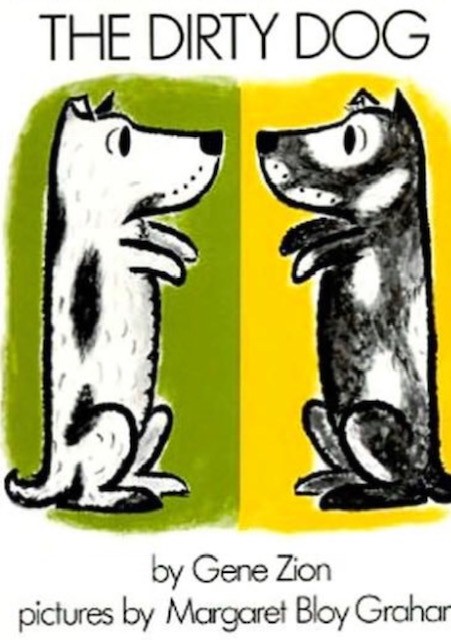
New York: Harper and Bros 1956.

Wally- our West Highland Terrier 2019.
Connect stories and characters to real life examples to develop comprehension:
‘Do you know anyone at school who has a little white dog?’
‘Does Annabelle’s dog have spots?’ ‘Is he often dirty or is he clean? How do you think he gets dirty?’
‘Does he like baths or does he try to run away from Annabelle?’
Useful questions
to ask
while reading
your child’s favourite book
for what seems to be,
the 100th time:
I wonder who wrote this book? Do you know the author’s name? Discuss. (Find their name on the cover and say it if your child can’t read it. Look for a note about the author that might be inside the dustjacket of the book.)
Do you know if they’ve written any other titles? Google the author and discuss after reading it.
Leading to borrowing other titles from a library or, buy them as a gift or a reward for their efforts.
What do you think about the characters? Why? Do you have a favourite character?
Do the characters remind you of anyone you know? Why? Share your own comparison. ‘The grandpa in the story reminded me of my own Pop because he used to work on his old car! I rode in that car when he finished it…’
Is there a main character? What makes you think that?
Encourage discussion about whether the characters are people, animals, fantasy creatures etc.
Why do you think (say the author’s name) wrote this book? Discuss.
There really are no right answers, just rich language and expression of your child’s opinions and being heard.
Is the book illustrated by the author or, is it someone else? How do you know?
Discuss how the author’s name is usually first and the illustrator is second on the cover but if there’s just one name, they’ve probably talented and have done both the writing and the art.
Does this book remind you of any other books or characters? E.g. Andy Roid is a young boy just like Zac Powers.
Is there anything you’d change about the story or the illustrations? Why? Pretend you are the author; can you think of a different ending? What else could happen instead? (As an adult, you could offer an alternative ending also.)
If we invited (say the author’s name) over for dinner to our house, what would you say to them? Why?
Open-ended questions like this last one are ideal for setting the scene, allowing children to think divergently. (They might surprise you or themselves!) If they can’t answer this type of question, that’s OK. You can incidentally model your thinking by sharing your opinion. E.g. ‘If Enid Blyton came to dinner tomorrow night, I’d ask if she had a huge tree in her backyard, just like the Faraway Tree, or, if she visited a tall forest with her parents and imagined the tree and curious people living inside the tree. I remember wondering about this when I was a kid.’
This might prompt your child to expand on a question they would like to ask their favourite author. (You know your child best and how much time to spend on this type of question.)
So now that you have unpacked your child’s favourite story and have dug deeper into the layers, your child has begun to consider the ‘author’s intent’- which is higher order thinking. It will prepare them to think about why authors write about what they write. Enjoy your next story-time!
You may also like to read:
]]>