How can parents help promote STEM and STEAM education at home?
In the twenty-first century, the prevalence of STEM (Science, Technology, Engineering and Math) and STEAM (Science, Technology, Engineering, Arts and Math) education in the classroom have become increasingly valued. This is due mainly to their ability to instil knowledge of how to problem solve, think critically and use creativity—preparing opportunities for children that open educational pathways for careers to work in industries that are expected to grow.
Many leading educators have proclaimed using STEAM in school to be an essential strategy for teaching in the modern era. Through simple questioning and promoting a sense of wonder, parents can lay the groundwork for their children’s development of essential STEM abilities.
To help us learn how we can promote STEM and STEAM education at home, we immediately turned to our Active Play Specialist friends at Plum Play. They are on a mission to encourage play that stimulates learning, growth, and development in addition to pure enjoyment. Having seen firsthand the positive impact STEM has on children, Plum Play has designed an engaging line of high-quality outdoor playsets and toys that incorporate STEM concepts in various ways.
Let’s discuss parents’ role in promoting STEM and STEAM education at home and how tools like Plum Play can facilitate this goal.
What is STEM/ STEAM education?
It’s an approach to teaching that employs STEAM (science, technology, engineering, art, and math) principles to monitor students’ progress toward learning goals and developing critical thinking skills. Young people participating in Stem/Steam programs are given the resources they need to build their unique approaches to addressing challenges, demonstrating data, and drawing connections between disciplines.
To keep up with the times, educational practices must also evolve. The skills of critical thinking and problem-solving are emphasised, and students are prepared for careers in expanding sectors.

What are the benefits of STEM and STEAM?
-
Increases team collaboration
In the real world and business, complex challenges often necessitate the collaboration of multiple individuals. To this end, STEM curricula place a premium on group work and project completion, emphasising cooperation and leadership development among young people.
-
Develops communication skills
Communication abilities are crucial in all aspects of life. Successful adults have developed the ability to discuss and transmit complicated ideas with others while simultaneously learning from one another. Through engaging in STEM group activities, students can develop interpersonal skills such as effective communication, open-mindedness, and providing and receiving constructive feedback.
-
Fosters the development of analytical abilities
A STEM curriculum’s content stimulates students’ imaginations and encourages them to think critically. One engages in critical thinking by actively forming ideas, applying them, analysing them, and evaluating them based on observations, experiences, reflections, reasoning, or communication.
This means that rather than relying on rote memorisation, students will be expected to actively engage with the information to understand the problem and develop a logical solution. The workplace expectations are more like those that students would face in the real world. Therefore exposing them to real-world scenarios as early as possible in their schooling will help them be more prepared for the job.
-
Boosts curiosity
Children are encouraged to ask “why” and “how” inquiries are better equipped to tackle STEM challenges. Students will be able to use their creativity and originality in the context of STEM. Students that take an active interest in their studies are the ones who ultimately lead to breakthroughs in research and development.
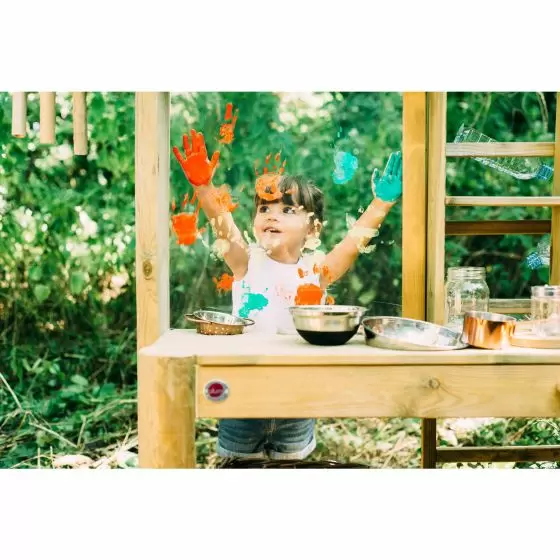
Ways parents help promote STEM and STEAM education at home:
The years between birth and age five are crucial for a child’s brain and nervous system to mature. As there appears to be no ideal time to expose children to STEM activities, experts advise getting them started on at-home projects as soon as feasible.
-
Focusing on Hands-on Projects
DIY STEAM activities encourage active learning at home. These classes encourage students to broaden their horizons and develop their critical thinking and problem-solving capacity. Projects that allow kids to construct, create, or explore are the ones that kids remember most fondly.
Your children will have a blast getting their hands dirty with the Plum Discovery Mud Pie Kitchen. In the Discovery line, fun and education meet in the perfect balance. As they squish, mix, and shape a mud pie, kids may learn about the world around them, try new things, and develop essential skills.
-
Including Real-World Problems
Climate change, energy consumption, and recycling are just a few potential points of study. Problem-solving in the real world can be as easy as figuring out how to get a plant more light. Alternatively, they can be as challenging as coming up with novel methods of energy capture.
-
Fun and Exploration
Learning goals and good test scores shouldn’t be the only motivation for incorporating STEM activities into the home; rather, the emphasis should be on the child’s enjoyment while learning about the world and their passions. Inspire your kid to be curious, creative, and exploratory by encouraging them to ask questions, think of solutions, and try new things. The knowledge of scientific truths will develop together with their age and development. They will also grow in their enthusiasm for discovery and adventure.
Giving children a DISCOVERY CREATE & PAINT EASEL from Play Plum is an excellent way for parents to encourage their children to engage in fun activities while also helping them develop essential skills like problem-solving and creative thinking.
This product is an excellent way for kids to explore their creative sides and express themselves. There are places on the easel to keep your paintbrushes, watercolours, and other art supplies handy. There’s a bamboo wind chime and a growth station little gardeners can use.
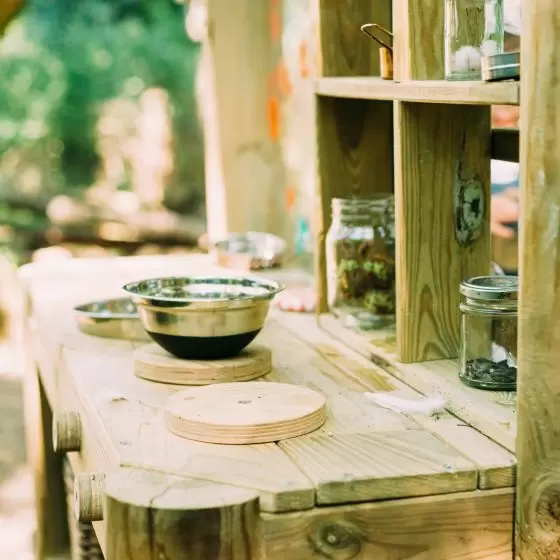
Successfully introduce STEM/STEAM education to your children with Plum Play’s range.
By introducing their children to the new line from Plum Play, parents can help their children develop the skills they’ll need to become the innovators and dreamers of tomorrow. The team at Plum Play believes that play can and should promote learning, growth, and development in addition to straightforward enjoyment. Their mission is to make a world full of promise where people can shop confidently, knowing that their purchases are safe, high-quality, and environmentally responsible. Plum Play’s activity toys encourage exploration and innovation in a risk-free and entertaining setting, giving kids more freedom to play while giving them a break.
Parents can encourage their children’s creative thinking at home by flipping the focus of standard learning principles to emphasise hands-on experiences and real-world applications. Intent on elevating your kid’s educational experience to new heights? To receive 20% off your purchase, enter coupon code KIDDIPEDIA20 at checkout.
]]>My parents valued play. When my mum heard about the pirates, she offered scarves and carboard tubes for telescopes, helped us make eye patches and gave us paints to decorate them.
We were all sporty and over the years, my dad added structures in the garden. We had horizontal bars at two heights, one so high it would rightly make modern parents blanch. We scaled them, hanging, swinging and spinning like whirligigs.
Research indicates that healthy permanent networks are formed in rich stimulating environments. What you provide within your wonderfully diverse family, is important for children’s healthy growth and brain development. And because play is so absorbing to children it is invaluable for learning.
But, as the descriptions above suggest, adults have a significant role resourcing play and adapting it as children grow.
Very young children focus on their own activity or play in parallel beside their peers. Later they develop interactive play. All play educates. It might be simple sensory learning, seeing that things topple over when pushed, or spill if not carried correctly. But the real gold is in social play.
Social play can be free play, without any involvement of adults, mediated play, where adults get intermittently and intentionally involved, or directed play, where adults take the lead. All of these are valuable.
In free play, children utilise their current knowledge and learn from their friends. They collaborate, negotiate, plan and enact ideas.
In mediated or directed play, an adult provides vocabulary, information, equipment and suggestions to raise complexity and understanding. Reading to children fuels play. Board, card or formal games like hide-and-seek teach a range of skills like attention and self-regulation.
Play elevates emotional intelligence because children learn how what they say and do affects others’ moods and emotions. Play is a safe space to practice skills and explore roles. It’s wonderful to be the bossy boots when you’re normally shy or feel what it’s like to move like a cat, all feline and furry. My daughter nearly resigned from kindergarten when she was cast in a play as a dog, not a cat. It was a tempestuous day, with a lot of foot-stamping and tears. After strong negotiation, she got her whiskery wish. She’s a qualified vet today!
Play is excellent for building knowledge about how the world works. Pouring water ‘tea’ improves fine motor skills at the same time as forming one’s identity as an attentive host. I recently watched in awe as two four-year-old boys carried baby dolls in exactly the right parental posture and gently put them down for their nap. That was just before they morphed into Jedi knights wielding lightsabres!
Here are four ways to provide play that also encourages learning.
Maths sorting fun
You may have inherited a tin of buttons from your grandmother. Any collection of small items offers a fun way to learn maths. Ask your child to explain his or her choices when placing items in groups. The sorting can be based on simple criteria like colour, size and shape, but also encourage exploration of texture, width, height and number. It’s excellent for fine-motor planning whilst emphasising analysis and comparison.
Puppetry
Paper bag or sock puppets are an age-old way to tell stories and simple to construct. Naming a puppet, providing a persona and imagining what they’ll get up to are wonderful ways to stimulate language and creativity.
Obstacle course
Design a fun, challenging obstacle course. Get the kids to help you cut holes in boxes, arrange cushions to roll on, tape lines on the floor for distance jumping and select furniture to crawl under. They love timing themselves doing circuits as they exercise their large muscles. And what’s stopping them from graphing the results? Number of circuits against time.
Giant bubbles
Outdoor play with giant bubbles on a day that is not too sunny and the air is still, is something they ask for again and again. There are many recipes for the mix and great ways to make giant wands. Just google giant bubbles! Children need perseverance to master a new skill. And this is one worth the effort. Once you’ve dipped your wand in the mix, hold your arms up and move back at just the right speed to release the iridescent magic.
The value of play cannot be overestimated. Creating an environment where there is a balance between free, mediated and directed play will ensure permanent benefits for your children. Toys alone will not ensure quality learning. Your attention, interest and rich, sustained conversations are infinitely more important.
Lili-Ann Kriegler (B. A Hons, H. Dip. Ed, M.Ed.) is an education consultant and author of Edu-Chameleon. Lili-Ann’s primary specialisations are in early childhood education (birth-9 years), leadership and optimising human thinking and cognition. Her current part-time role is as an education consultant at Independent Schools Victoria and she runs her own consultancy, Kriegler-Education. Find out more at https://kriegler-education.com
]]>